
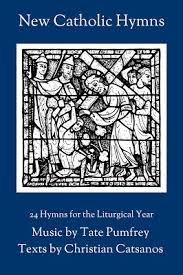
A traditional gem from a young composer: a review of “New Catholic Hymns”
It is unusual to encounter newly-written sacred music that appeals to traditional hymnodic taste; perhaps it is unsurprising that when such music does appear, it frequently comes from young composers. In any event, following a generation’s worth of sentimental worship songs, the recently-published New Catholic Hymns: 24 Hymns for the Liturgical Year is a traditional gem. The product of a collaboration between Canadian composer Tate Pumfrey and Australian writer Christian Catsanos – both in their twenties – the booklet contains twenty-four hymns which may be sung throughout the Church year, one for each liturgical season as well as for major feasts such as the Ascension, All Saints and All Souls, and Christ the King. Also represented are feasts like Candlemas and Gaudete and Laetare Sundays.
Prevailingly traditional in sound, the hymns do not fall prey to modernising tendencies. Perhaps their most prevalent influence is the English composer Ralph Vaughan Williams, whom Pumfrey cites on his website as an inspiration. A number of the hymns recall Williams’ stately High Anglican style, for example “O Blest the Man Who Eats of Thee” (#17). Arguably the triumph of the collection, this hymn boasts a beautiful melody complemented by rich harmony and illustrates majestic text which reads like seventeenth-century poetry. (The hymn can be heard on YouTube.) “Salve Regina! Hail Thou Queen!” (#21), on the other hand, in both text and melody might sit next to classic Marian hymns like “Immaculate Mary” or “Hail, Holy Queen, Enthroned Above”. (This hymn is also on YouTube.) Yet other hymns call to mind Genevan psalm tunes like “O People That on Earth Do Dwell”. While a couple of hymns are harmonically a little weaker, the vast majority are worthy of a place in any hymnal.
As for the texts, in a time when many publishers are simplifying old hymns into everyday language, Catsanos’ poetry flies in the face of that trend. While contemporary worship music tends towards free-form poetry and irregular verses, there is none of that here. The metre is steady and strict, leading to word choices and order that are sometimes pleasingly archaic, or rather timeless, as in “Hail, Thou King of Risen Splendour” (#13):
All my feeble faults dispelling,
All my sorrow turned to joy,
All my fear and darkness quelling,
Thus my gladsome song employ:
For the gates of heaven’s portal,
By Thy sure Ascension power,
Now are oped by Thee Immortal,
In the glory of this hour!
Although a few verses have their imperfections, the above comparison to seventeenth-century poetry holds true for most of the text. For many traditionally-minded Catholics, such elegant poetry is by far the most preferable in a hymn.
The liturgical use for New Catholic Hymns is mixed. A significant minority of the hymns would be difficult for congregations to sing due to their more complicated melodies. The majority, however, follow traditional styles closely enough that they could be rapidly learned by anyone familiar with classical hymns. (In fact, this reviewer’s own parish has sung more than one of them at Sunday Mass.) The harder ones could be sung by the choir, so a church choir might well invest in this booklet as a resource for offertory or Communion pieces. The main downside would be for the organist, since the paperback booklet does not stay open by itself on the rack. But this is a small concern and easily remedied.
Modern worship music typically stresses the emotional side of faith, the personal relationship with God. While that aspect holds an essential place in spiritual life, there is a tendency today to focus on this, to the exclusion of theological richness, and to put too much emphasis on the self instead of God. Through beautiful words and music, the hymns in New Catholic Hymns redirect the focus of praise and worship back to God Himself.

Saint Kateri , Canada’s Protectress
This was the title given to Saint Kateri Tekakwitha, by Pope Benedict XVI, when he canonized her on October 28th, 2012, along with six others, in Saint Peter’ Square (she had been beatified by Pope John Paul II back in 1980). With Saint Joseph as our protector, along with the Canadian martyrs, we seem to[…]Continue reading→

Remembering Father Alphonse de Valk
(Today marks the sixth anniversary of the death of Father Alphonse de Valk, C.S.B., a faithful, courageous and indefatigable Basilian priest, pro-life-and-family apostle, and the founder of Catholic Insight magazine. Here is what we wrote those on his entering into eternity five years ago, as we continue to remember him in our prayers and thoughts)[…]Continue reading→

My Name is Bernadette
April 16th is a propitious day, for besides the anniversary of Father de Valk’s death, who founded Catholic Insight in its print form decades ago, and the commemoration of the ‘two Benedicts’, mentioned in accompanying posts, today we also recall Saint Bernadette Soubirous, the young visionary to whom the Virgin Mary appeared numerous times at[…]Continue reading→
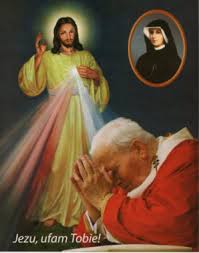
Canonizing Sister Faustina and Divine Mercy
HOMILY OF THE HOLY FATHER MASS IN ST PETER’S SQUARE FOR THE CANONIZATION OF SR MARY FAUSTINA KOWALSKA Sunday, 30 April 2000 1. “Confitemini Domino quoniam bonus, quoniam in saeculum misericordia eius”; “Give thanks to the Lord for he is good; his steadfast love endures for ever” (Ps 118: 1). So the Church sings on the Octave of[…]Continue reading→

Divine Mercy Sunday – An Echo of Every Mass
Reach out your hand and put it in my side. Do not doubt but believe’… ‘My Lord and my God!’ (Jn. 20:18)). Today is Divine Mercy Sunday, and as we celebrate the end of the Easter Octave, we contemplate the wounded side of our Saviour, the Church’s source of life. On Good Friday in the[…]Continue reading→
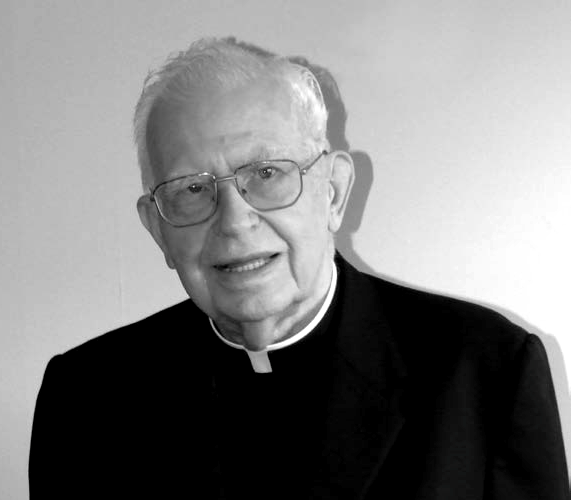
First Holy Communion: Sermon from May 16, 1943
Here is a sermon from the good old days by +Rev. Msgr. Vincent Nicholas Foy (August 14, 1915 – March 13, 2017), from 1943. Readers may recall that Pope Saint Pius X, by the decree Quam Singulari in 1910, lowered the customary age of reception of Holy Communion – after the rigours of the plague[…]Continue reading→
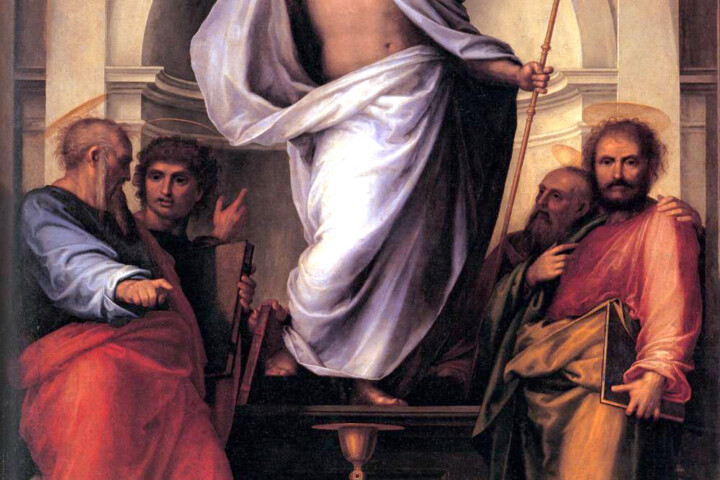
In the Glorious Light of Easter, Alleluia!
Set your minds on things that are above, not on things that are on earth, for you have died, and your life is hidden with Christ in God. When Christ who is your life is revealed, then you also will be revealed with him in glory (Col. 3:3-4). The Resurrection of Our Lord and Saviour[…]Continue reading→
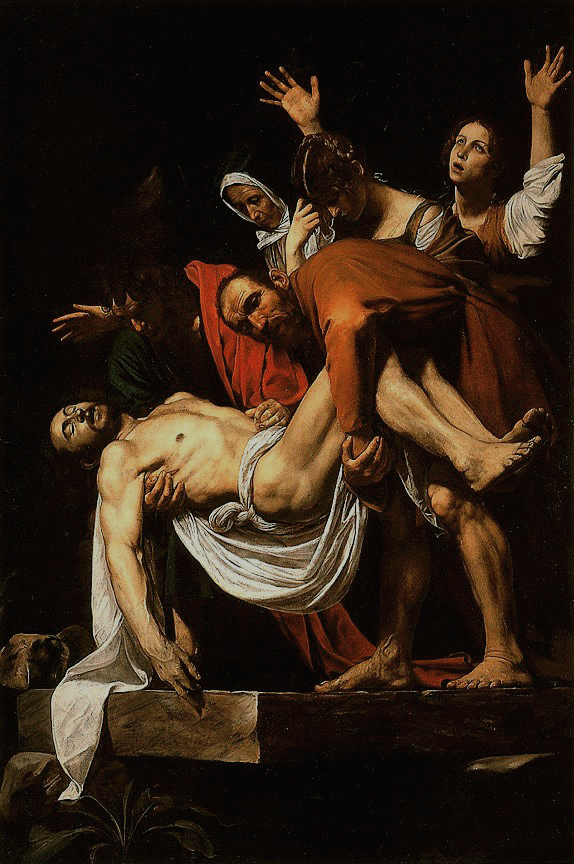
An Ancient Homily for Holy Saturday
The time between Good Friday and Easter Sunday is one of waiting, in silence, as the world wonders – anticipates – what will happen, after the death of Christ. We re-live this time each year in the anamnesis of our liturgy, and in turn look forward to the glorious re-creation of all things at the[…]Continue reading→
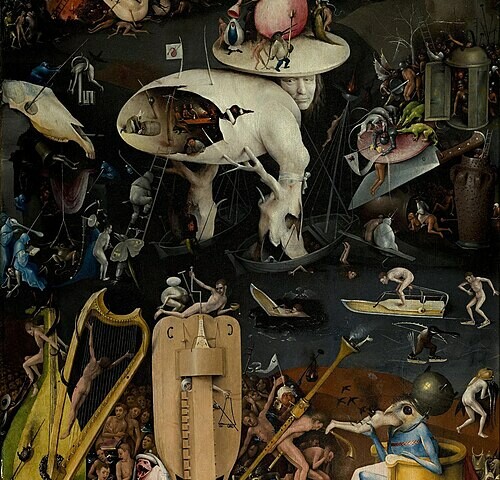
Europe’s Long Descent
(As we meditate on this day on Christ’s burial, and His descent into hell, it is fitting to ponder here with contributor Peter Marcus how the world seems to be heading there as well. The difference is that, although God cannot ‘redeem’ hell, nor those therein, He can and did redeem the world. There is[…]Continue reading→
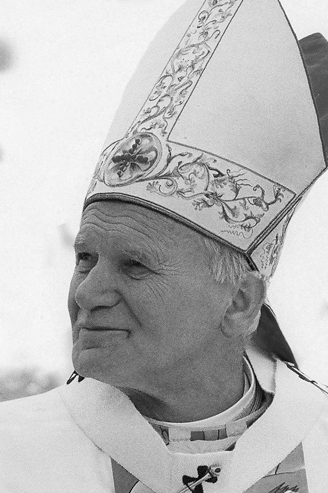
Pope Saint John Paul II’s First Good Friday Homily
ADDRESS OF HIS HOLINESS JOHN PAUL II AT THE CONCLUSION OF THE STATIONS OF THE CROSS AT THE COLOSSEUM Good Friday, 13 April 1979 When we make the Way of the Cross from one station to the next, in spirit we are always at the spot wherethis journey had its “historical” place: where it[…]Continue reading→