
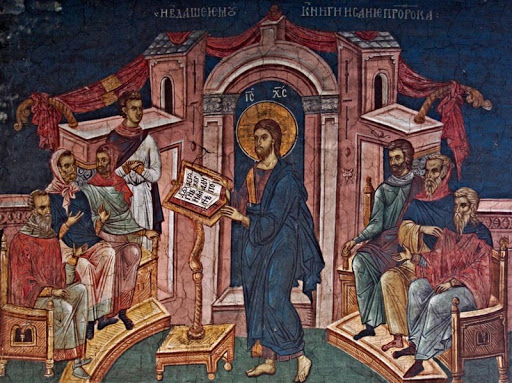
Putting on the Mind of Christ
“Have this mind among yourselves, which was in Christ Jesus”
St. Paul wrote to the Philippians. I dare say that most Christians have no idea what this entails. Our minds do not simply borrow noble ideas from the teaching of Christ and adopt them as our own. Rather, we each need a new mind — the mind of Christ.
Our entire human nature, including our minds, have been wounded by original sin. We live in the flesh, which according to St. Paul does not refer to the body, but our whole fallen nature. Without Christ, we think and act according to the flesh. “Those who are in the flesh cannot please God.”
What kind of mind do we have apart from Christ? In one sense, it is the mind of Adam and Eve, but more specifically, it is the mind of our parents. How often people with difficult parents vow never to be like them but end up reproducing the dysfunction of their parents. One man has a father who is angry and judgemental, and the son becomes the spitting image of his father. One woman has a mother who is bitter and resentful and the daughter manifests the same disposition. It is not a conscious choice. We may wish to be different from our parents, but without putting on the mind of Christ, our pure human will power is insufficient. Such is one aspect of the bondage of original sin.
Our minds are also infected with a distorted view of God. For children, their parents are like God. It is natural and inevitable that children will unconsciously project unto God the characteristics of their parents. From the example cited above, the children of this particular father will develop the impression that God is also angry and judgemental. It matters little if in catechism class or Catholic school they learn the truth about Jesus in their intellect. Their subconscious has already been formed by their earliest experiences of their parents. Without a profound interior conversion at some point in their lives (learning to put on the mind of Christ), they will carry this false image of God into adulthood and even to the grave.
At a deeper level, we are also influenced by the mind of Satan. The catechism states that “by our first parents’ sin, the devil has acquired a certain domination over man, even though man remains free.” The minds of Adam and Eve were corrupted by the deceptions of the devil — the lie that God cannot be trusted. This distorted thinking, and our whole fallen nature, is transmitted down through the generations through our own parents then to each one of us. If to some degree we have the mind of Satan — Lord have mercy! — we will require an antidote of greater potency: the mind of Christ.
For healing and conversion, the first step is to recognize that we are laden with an intractable predicament in our minds. We fail to clearly perceive the true nature of God. It is essential to focus the light of awareness into previously buried, unconscious assumptions about God. Some people find it helpful to compose a list of the influential people in their lives growing up (parents, clergy, teachers) and the false perceptions of God that others may have communicated to them. In another column they counter it with the revealed truth of God in Scripture and Tradition. Integrating these insights into our daily reflections aids us immensely in the renewal of our minds.
Then we must admit our powerlessness to grant ourselves a new mind. Of course we have free will and can choose to center our minds on the good. As St. Paul wrote, “Whatever is true, whatever is noble, whatever is right, whatever is pure, whatever is lovely, whatever is admirable . . . think about such things.” Notwithstanding, it requires constant recourse to the grace of Christ. Apart from Christ, our capacity to change ourselves is limited. Accordingly, we must learn to put on the mind of Christ.
How do we do this? We can begin with prayer, and the recognition that the word of God is the mind of Christ. Constant meditation on Scripture, especially the Gospels, reveals to us the mind of Christ; day by day, we can assimilate His way of thinking, feeling and acting. Another approach is simply spending time in His Presence in the Blessed Sacrament, where Christ works invisibly but powerfully to reform our hearts and minds in His image. In receiving Holy Communion, we are united with the whole Christ, including His mind. It is also worth mentioning that the practice of charity and acts of mercy towards others also moulds our minds in Christ’s likeness.
There are also specific prayers for the renewal of the mind. I quote from Henri Lemay, who has 50 years of experience with the Charismatic renewal (and also received training from Francis and Judith MacNutt and John and Paula Sanford, the founders of Elijah House). “Lord, I do not want my carnal mind. Put to death in me my mind . . . Bring me around to thinking like you. I receive your Word as a true reflection of what you think.” “Lord, I do not want my thoughts. I want your thoughts. I believe I have your mind in me. May your mind live and reign over my thoughts, feelings and my passions.”
Such prayers are beneficial but the actual task of putting on the mind of Christ can be daunting and frightening. Why? Because we must give up the illusion of control in our own minds. As Christ Himself reminded us, “Those who lose their lives for my sake will find it.” In a sense, we must lose our minds, or at least that part emanating from original sin and not conformed to Christ.
Furthermore, we must learn to put on the mind of Christ in order to be ourselves. Apart from union with Christ we are left to ourselves, with minds clouded and confused by the lies inherited from the evil one, Adam and Eve, and our own parents. Just as we discover genuine freedom through obedience to God, we will find our authentic selves — and our right minds — when we put on the mind of Christ.
We can gain courage for this work of conversion by considering the compassion of Christ. He had mercy on St. Paul, whose mind was originally hell-bent on persecuting Christians. When Christ appeared to him, Jesus spoke the gentlest of reproaches, “Saul, Saul, why are you persecuting me?” Paul’s temporary blindness is a symbol of the renewal of his mind — the death of his old way of thinking to put on the mind of Christ. St. Paul also spent three years in the Arabian desert, deepening his knowledge and love of Christ. We should not expect instant miracles of a new mind. Taking every thought captive in obedience to Christ is the work of a lifetime. Nonetheless, we can dare to hope that daily contact with the Person of Christ will result in a progressive transformation, until we can pronounce, in the words of St. Paul, “We have the mind of Christ.”

Remembering Father Alphonse de Valk
(Today marks the sixth anniversary of the death of Father Alphonse de Valk, C.S.B., a faithful, courageous and indefatigable Basilian priest, pro-life-and-family apostle, and the founder of Catholic Insight magazine. Here is what we wrote those on his entering into eternity five years ago, as we continue to remember him in our prayers and thoughts)[…]Continue reading→

Divine Mercy Sunday – An Echo of Every Mass
Reach out your hand and put it in my side. Do not doubt but believe’… ‘My Lord and my God!’ (Jn. 20:18)). Today is Divine Mercy Sunday, and as we celebrate the end of the Easter Octave, we contemplate the wounded side of our Saviour, the Church’s source of life. On Good Friday in the[…]Continue reading→

Saint Stanislaus of Szczepanów
We celebrate Saint Stanislaus today (+ April 11, 1079), in light of this Easter Octave, a bishop and martyr who accepted the episcopacy only at the direct order of Pope Alexander II. He proved a wise and courageous leader of his flock, put to death by his own king, Boleslaus, for rebuking the monarch’s ‘immoral[…]Continue reading→

First Holy Communion: Sermon from May 16, 1943
Here is a sermon from the good old days by +Rev. Msgr. Vincent Nicholas Foy (August 14, 1915 – March 13, 2017), from 1943. Readers may recall that Pope Saint Pius X, by the decree Quam Singulari in 1910, lowered the customary age of reception of Holy Communion – after the rigours of the plague[…]Continue reading→

In the Glorious Light of Easter, Alleluia!
Set your minds on things that are above, not on things that are on earth, for you have died, and your life is hidden with Christ in God. When Christ who is your life is revealed, then you also will be revealed with him in glory (Col. 3:3-4). The Resurrection of Our Lord and Saviour[…]Continue reading→

An Ancient Homily for Holy Saturday
The time between Good Friday and Easter Sunday is one of waiting, in silence, as the world wonders – anticipates – what will happen, after the death of Christ. We re-live this time each year in the anamnesis of our liturgy, and in turn look forward to the glorious re-creation of all things at the[…]Continue reading→

Europe’s Long Descent
(As we meditate on this day on Christ’s burial, and His descent into hell, it is fitting to ponder here with contributor Peter Marcus how the world seems to be heading there as well. The difference is that, although God cannot ‘redeem’ hell, nor those therein, He can and did redeem the world. There is[…]Continue reading→
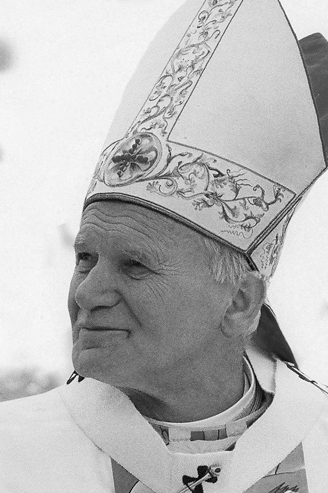
Pope Saint John Paul II’s First Good Friday Homily
ADDRESS OF HIS HOLINESS JOHN PAUL II AT THE CONCLUSION OF THE STATIONS OF THE CROSS AT THE COLOSSEUM Good Friday, 13 April 1979 When we make the Way of the Cross from one station to the next, in spirit we are always at the spot wherethis journey had its “historical” place: where it[…]Continue reading→
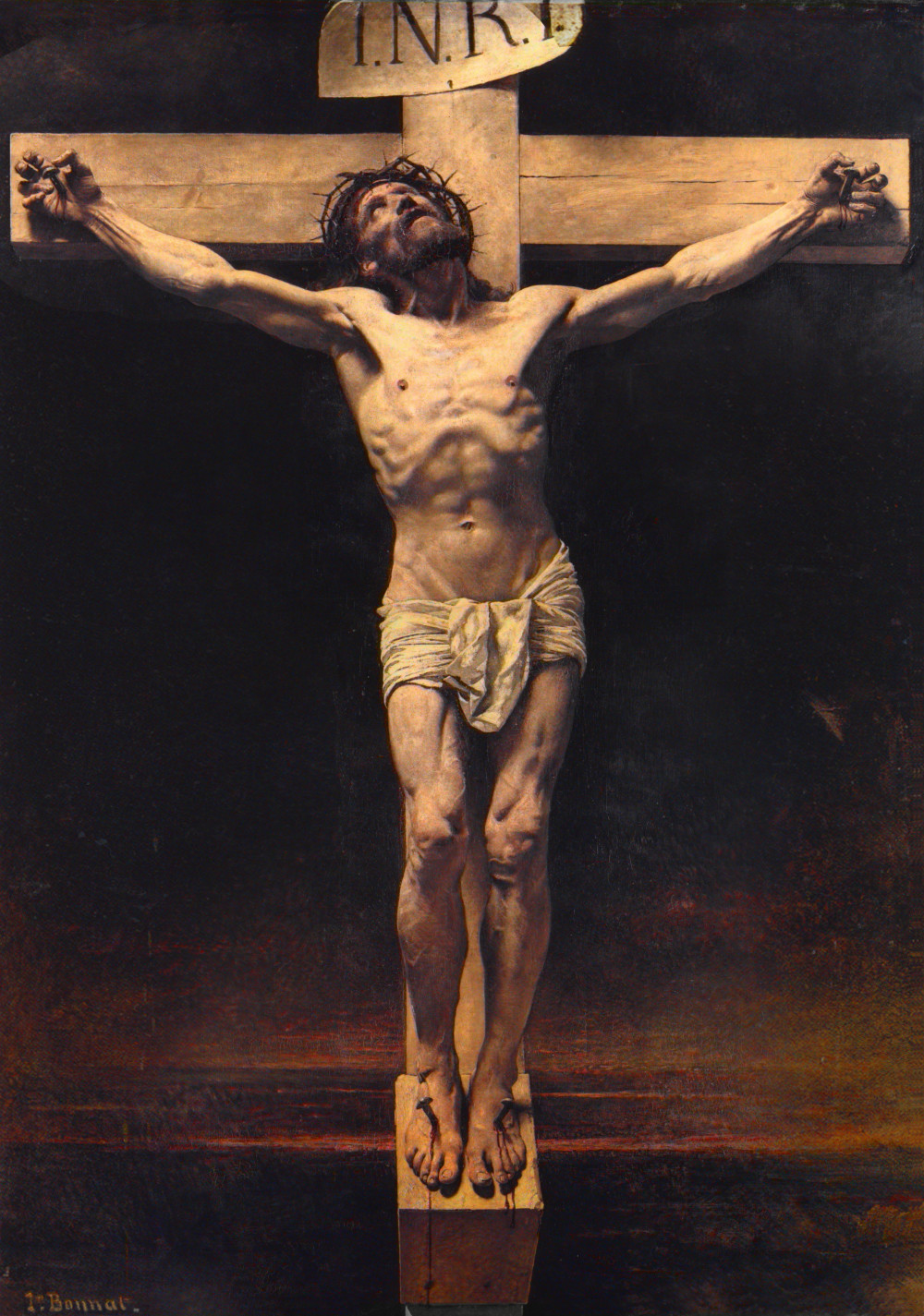
A Meditation for Good Friday: How To Undo the Effects of Sin?
Cardinal Newman, now Saint John Henry Newman, was a towering figure of nineteenth-century Catholicism who is almost universally admired. I say “almost” because not everyone likes him. I knew a priest once, Arthur Caulkins, who has become disenchanted with Newman. As an undergraduate Arthur had been enamoured of Newman, and this interest continued when he[…]Continue reading→
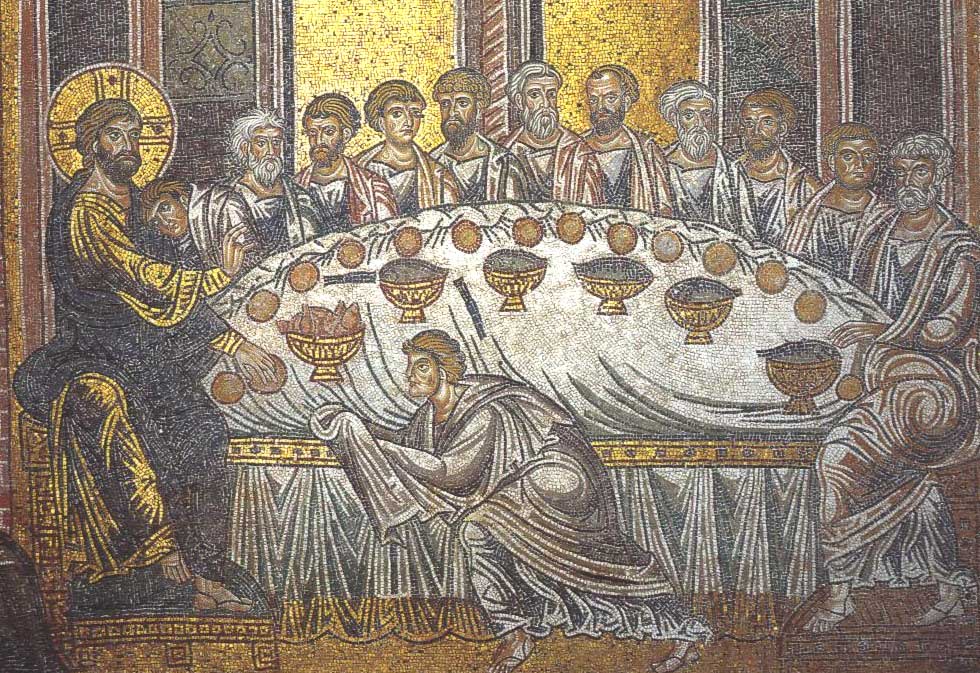
Pope Benedict’s Last Holy Thursday Homily
MASS OF THE LORD’S SUPPER HOMILY OF HIS HOLINESS BENEDICT XVI Basilica of St John Lateran Holy Thursday, 5 April 2012 Photo Gallery (Video) Dear Brothers and Sisters! Holy Thursday is not only the day of the institution of the Most Holy Eucharist, whose splendour bathes all else and in some ways draws it to[…]Continue reading→