
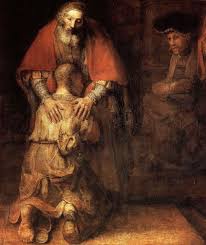
Agape Love
Theresa of Avila wrote that “love is like a perfume-filled room.” Could it be that we can only describe such an ineffable concept using symbol and metaphor?
It is often said that God is love. Indeed, the seemingly most straightforward answer we have to the question of what is God is found in 1 John 4:8, “Whoever is without love does not know God, for God is love.” One must realize that love is not a name, rather it describes a relationship. Again, particularly in the Gospel of John, the love commandments are explicit in their emphasis on reciprocity within the fellowship of believers, “If I, therefore, the master and teacher, have washed your feet, you ought to wash one another’s feet. I have given you a model to follow, so that as I have done for you, you should also do” (Jn 13:14-15).
The Greek word agapé is often used to describe the type of love so often professed in the New Testament, especially in the love commandments of the Johannine writings. Agapé describes a type of love for another in which one seeks nothing back in return—a self gift. It is not an abstract concept, but rather appears to describe a way of life. It is, in particular, a way of living among people who form a particular tradition or community.
The Christian tradition, with its doctrine of the Holy Trinity, sees God as a relational being: the Lover, the Beloved, and the Love between them. From all eternity God gives love, receives love, and is love. For this reason, agapé is perhaps the least wrong reason for thinking about the mystery of God.
How does one get in touch with a relational God? The obvious answer is by entering into a relationship. One cannot do it alone. One can view this notion of love as communion between God, self, and others. As such, the primary and essential location of agapé is embedded within the community of believers, “For where two or three are gathered together in my name, there am I in the midst of them” (Mt 18:20). Thus, the church serves as a focal point to sustain Christian love. It is a community in which the generosity of one is encouraged and rewarded by the generosity of others. It serves to raise itself both upward toward God and inward toward fellowship of those that share in the vision of God.
Agapé is embodied in the church, and as such has an essential social function to be open to all. Christian love is participatory and mutual within the koinonia or fellowship of the faithful. It is, however, not exclusive. The goal of Christian love is always to bring the stranger into fellowship. This social nature of the agapé community is nurtured by a life of worship, both liturgy and scripture being necessary for its ongoing sustenance.
By God’s entering into history (Incarnation), the church takes on a historical dimension. The community has as one of its main purposes to pass on the memory of agapé and its traditions from generation to generation. The intimacy of mutual love between God, self, and neighbor is necessary if the history of the faith community is not to be cut short. The church thus sustains agapé in the history of salvation.

Remembering Father Alphonse de Valk
(Today marks the sixth anniversary of the death of Father Alphonse de Valk, C.S.B., a faithful, courageous and indefatigable Basilian priest, pro-life-and-family apostle, and the founder of Catholic Insight magazine. Here is what we wrote those on his entering into eternity five years ago, as we continue to remember him in our prayers and thoughts)[…]Continue reading→

Divine Mercy Sunday – An Echo of Every Mass
Reach out your hand and put it in my side. Do not doubt but believe’… ‘My Lord and my God!’ (Jn. 20:18)). Today is Divine Mercy Sunday, and as we celebrate the end of the Easter Octave, we contemplate the wounded side of our Saviour, the Church’s source of life. On Good Friday in the[…]Continue reading→

Saint Stanislaus of Szczepanów
We celebrate Saint Stanislaus today (+ April 11, 1079), in light of this Easter Octave, a bishop and martyr who accepted the episcopacy only at the direct order of Pope Alexander II. He proved a wise and courageous leader of his flock, put to death by his own king, Boleslaus, for rebuking the monarch’s ‘immoral[…]Continue reading→

First Holy Communion: Sermon from May 16, 1943
Here is a sermon from the good old days by +Rev. Msgr. Vincent Nicholas Foy (August 14, 1915 – March 13, 2017), from 1943. Readers may recall that Pope Saint Pius X, by the decree Quam Singulari in 1910, lowered the customary age of reception of Holy Communion – after the rigours of the plague[…]Continue reading→

In the Glorious Light of Easter, Alleluia!
Set your minds on things that are above, not on things that are on earth, for you have died, and your life is hidden with Christ in God. When Christ who is your life is revealed, then you also will be revealed with him in glory (Col. 3:3-4). The Resurrection of Our Lord and Saviour[…]Continue reading→

An Ancient Homily for Holy Saturday
The time between Good Friday and Easter Sunday is one of waiting, in silence, as the world wonders – anticipates – what will happen, after the death of Christ. We re-live this time each year in the anamnesis of our liturgy, and in turn look forward to the glorious re-creation of all things at the[…]Continue reading→

Europe’s Long Descent
(As we meditate on this day on Christ’s burial, and His descent into hell, it is fitting to ponder here with contributor Peter Marcus how the world seems to be heading there as well. The difference is that, although God cannot ‘redeem’ hell, nor those therein, He can and did redeem the world. There is[…]Continue reading→
Pope Saint John Paul II’s First Good Friday Homily
ADDRESS OF HIS HOLINESS JOHN PAUL II AT THE CONCLUSION OF THE STATIONS OF THE CROSS AT THE COLOSSEUM Good Friday, 13 April 1979 When we make the Way of the Cross from one station to the next, in spirit we are always at the spot wherethis journey had its “historical” place: where it[…]Continue reading→
A Meditation for Good Friday: How To Undo the Effects of Sin?
Cardinal Newman, now Saint John Henry Newman, was a towering figure of nineteenth-century Catholicism who is almost universally admired. I say “almost” because not everyone likes him. I knew a priest once, Arthur Caulkins, who has become disenchanted with Newman. As an undergraduate Arthur had been enamoured of Newman, and this interest continued when he[…]Continue reading→
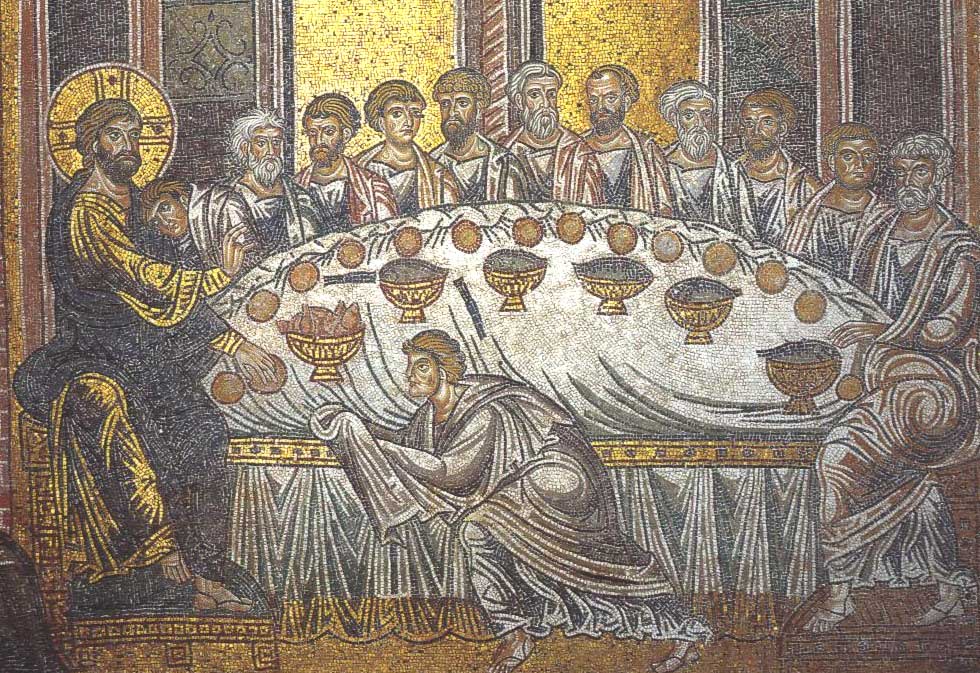
Pope Benedict’s Last Holy Thursday Homily
MASS OF THE LORD’S SUPPER HOMILY OF HIS HOLINESS BENEDICT XVI Basilica of St John Lateran Holy Thursday, 5 April 2012 Photo Gallery (Video) Dear Brothers and Sisters! Holy Thursday is not only the day of the institution of the Most Holy Eucharist, whose splendour bathes all else and in some ways draws it to[…]Continue reading→