
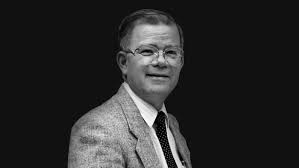
The Lawyer Who Put the Logic of Darwinism on Trial: Phillip E. Johnson’s Gift to Posterity
On the first of November, at the age of 79, Phillip E. Johnson died at his home in California. Johnson was a gifted author who produced many fruits. By his late 20s he was a professor of law at the University of California, Berkley. He studied at both Harvard and the University of Chicago. In his 30s he underwent a divorce and became rather disillusioned with his life. Although being well published in his field, he began to see the meaninglessness of life in the absence of any ultimate purpose. At the age of 38 he converted to Christianity, this profoundly changed the way he viewed life, the universe and humanity’s place within it.
Evolving Our Thinking About Evolution
In 1987, during his sabbatical in London, England he stumbled upon two diametrically opposed books on evolution written by scientists. The first was The Blind Watchmaker by the famed vociferous atheist-zoologist, Richard Dawkins, which is still one of the best popular books making the case for Darwinism. The second, Evolution: A Theory in Crisis was written by a little-known Australian geneticist/medical doctor, Michal Denton, who was an agnostic. Johnson was more persuaded by the argumentation put forward by Denton. Denton’s book at the time was the most thorough scientific critique of Neo-Darwinism. Johnson saw Dawkins’s rhetoric as a mask for covering deep seeded scientific problems in a failing theory.
Several years after this period of deep reflection on Neo-Darwinism/Darwinism, he published his seminal book: Darwin on Trial, which was reviewed widely, albeit critically, by both scientists and philosophers, including the late paleontologist Stephen J. Gould. Soon after, he was dubbed the godfather of intelligent design (ID). For those unfamiliar with the term ID, it is the study of the effects of intelligence including the universe itself and that which is contained within it. In other words, that intelligence (mind) best explains the existence of complex-information rich structures and processes over that of purely undirected and naturalistic accounts.
Please note that this essay is not an endorsement of all of what Johnson had argued for, nor a denial of evolutionary processes, or that evolution, in the sense of universal common descent has indeed taken place, but it is an acknowledgement of his profound impact since the 1990s on the debate regarding origins. I am confident in stating that even his strongest detractors cannot deny this fact; he framed questions pertaining to the origin of life, organisms, organelles etc., in a fresh new light which brought a critique of naturalism’s unnecessary stronghold on science. Naturalism, i.e., metaphysical naturalism is the view that nature is all that exists. Methodological naturalism, on the other hand, is a method employed in the sciences which only makes use of natural causes to explain all phenomena within the universe. The two are distinct, but Johnson argued that the former, for all intents and purposes, was equivalent to the latter. Although, I do not full embrace his position, Johnson rightfully rejected the famous biologist Richard Lewontin’s candid statement about scientific materialism and its allegedly necessary stranglehold on science:
It is not that the methods and institutions of science somehow compel us to accept a material explanation of the phenomenal world, but, on the contrary, that we are forced by our a priori adherence to material causes to create an apparatus of investigation and a set of concepts that produce material explanations, no matter how counter-intuitive, no matter how mystifying to the uninitiated.
Moreover, that materialism is absolute, for we cannot allow a Divine Foot in the door. The eminent Kant scholar Lewis Beck used to say that anyone who could believe in God could believe in anything. To appeal to an omnipotent deity is to allow that at any moment the regularities of nature may be ruptured, that miracles may happen.
Additionally, Johnson centralized the importance of the question of the how biological and chemical evolution happened for a popular audience – something that scientists to date have failed to provide plausible detailed accounts of. It is noteworthy, that a growing number of scientists including evolutionary biologists have questioned the efficacy of the modern synthetic version of Charles Darwin’s theory, Neo-Darwinism, that of the combination of random mutation and natural selection as a means to explain the existence of every living organism including all of its accompanying biological features.
Mere Dilettante or Skillful Logician?
Phillip Johnson was often dismissed by his critics for not being a scientist. This is a facile way of dismissing inconvenient arguments, i.e., to demonize one’s opponent and label them a mere dilettante with respect to the subject in question. For instance, the late physicist, Mark Perakh, who authored the book, Unintelligent Design, devoted a whole chapter titled “A Militant Dilettante in Judgment of Science” critiquing Johnson’s work. It’s interesting to note that Charles Darwin’s formal postsecondary educational background was in medicine and theology, not biology. Likewise, his mentor, Charles Lyell, the founder of modern geology and a famous advocate of uniformitarianism – the notion that the earth was shaped by slow processes still presently acting – was originally a professional lawyer. So, it is possible for an outsider or a non-trained scientist to have a long-lasting impact within a given scientific domain. Johnson’s contribution to the origins debate was not a scientific one but one of applying logic to broad sweeping claims. This is where his training as a legal expert helped cut through much of the presuppositions which bolster the thinking of countless evolutionary biologists and their scientistic and naturalistic inclinations.
The Legacy
In Darwin on Trial he was able to demolish the popular misconception which seeks to pin Biblical truths against scientific knowledge. There are many approaches and typologies to examine the relationship between science and theology, as exemplified in Ian Barbour’s seminal text, Religion and Science. Johnson, himself, sought an approach of critiquing aspects of Darwinism while leaving the door open to the question of design which had been predominantly closed to scientists with respect to their research. Throughout the majority of the twentieth century there had been a bifurcation between a scientist’s beliefs, if they were a theist, and their research. A practice popularized by Stephen J. Gould with his NOMA approach which placed science and theology into separate non-overlapping domains. Although this was never the case since scientists have always brought presuppositions regarding the world into their research whether knowingly or unknowingly. However, in recent years, scientists and philosophers have been emboldened by Johnson’s legacy. Consequently, they have sought to bring to the fore the notion of design into the origins debate and their scientific research; the Biologic Institute in Seattle would be an example.
Ever since Johnson published Darwin on Trial there have been scores of seminal documentaries produced such as Unlocking the Mystery of Life and The Privileged Planet, and books and articles published supporting ID and critiquing Neo-Darwinism and naturalism more broadly. He was able to organize and unite thinkers with the same dissatisfaction for naturalism (both methodologically and metaphysically) such as Michael Behe, Stephen C. Meyer, William A. Dembski, Jonathan Wells, Michael Denton and many others.
Johnson was able to rally a number of good speculative scientists and philosophers who shared similar discontents with both scientific materialism and Neo-Darwinism. The discontents, although in some cases inspired by theological presuppositions, were nonetheless scientific in their approach. Johnson ignited a quiet revolution within the halls of academia throughout the world. Comprising a growing number of scientists who have been chipping away at the edifice of both methodological and metaphysical naturalism. Johnson’s gift to posterity was the revival of the design question, not only among a group of renegade scientists, and free thinkers, but also within popular consciousness for the past 25 years. As Johnson had always insisted: good science follows the evidence wherever it leads; and good pedagogy asks the right questions, as he stated in his book The Right Questions: Truth Meaning & Public Debate: “the questions I am asking are the ones they should be asking, and that their education to this point has prepared them to ask the wrong questions [instead of] the right ones.” So, we bid farewell to Johnson, the man who has been rightfully dubbed, “Darwin’s nemesis.”

Remembering Father Alphonse de Valk
(Today marks the sixth anniversary of the death of Father Alphonse de Valk, C.S.B., a faithful, courageous and indefatigable Basilian priest, pro-life-and-family apostle, and the founder of Catholic Insight magazine. Here is what we wrote those on his entering into eternity five years ago, as we continue to remember him in our prayers and thoughts)[…]Continue reading→

Divine Mercy Sunday – An Echo of Every Mass
Reach out your hand and put it in my side. Do not doubt but believe’… ‘My Lord and my God!’ (Jn. 20:18)). Today is Divine Mercy Sunday, and as we celebrate the end of the Easter Octave, we contemplate the wounded side of our Saviour, the Church’s source of life. On Good Friday in the[…]Continue reading→

Saint Stanislaus of Szczepanów
We celebrate Saint Stanislaus today (+ April 11, 1079), in light of this Easter Octave, a bishop and martyr who accepted the episcopacy only at the direct order of Pope Alexander II. He proved a wise and courageous leader of his flock, put to death by his own king, Boleslaus, for rebuking the monarch’s ‘immoral[…]Continue reading→
First Holy Communion: Sermon from May 16, 1943
Here is a sermon from the good old days by +Rev. Msgr. Vincent Nicholas Foy (August 14, 1915 – March 13, 2017), from 1943. Readers may recall that Pope Saint Pius X, by the decree Quam Singulari in 1910, lowered the customary age of reception of Holy Communion – after the rigours of the plague[…]Continue reading→

In the Glorious Light of Easter, Alleluia!
Set your minds on things that are above, not on things that are on earth, for you have died, and your life is hidden with Christ in God. When Christ who is your life is revealed, then you also will be revealed with him in glory (Col. 3:3-4). The Resurrection of Our Lord and Saviour[…]Continue reading→

An Ancient Homily for Holy Saturday
The time between Good Friday and Easter Sunday is one of waiting, in silence, as the world wonders – anticipates – what will happen, after the death of Christ. We re-live this time each year in the anamnesis of our liturgy, and in turn look forward to the glorious re-creation of all things at the[…]Continue reading→
Europe’s Long Descent
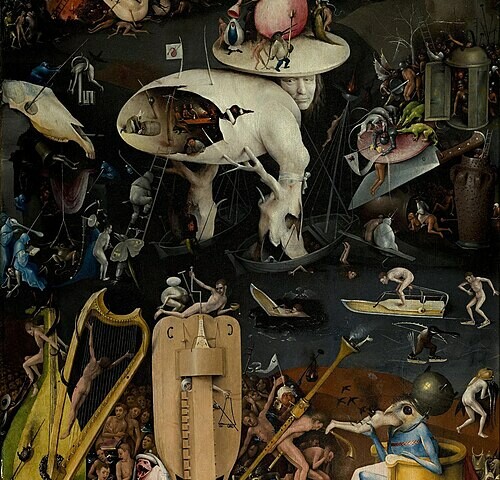
(As we meditate on this day on Christ’s burial, and His descent into hell, it is fitting to ponder here with contributor Peter Marcus how the world seems to be heading there as well. The difference is that, although God cannot ‘redeem’ hell, nor those therein, He can and did redeem the world. There is[…]Continue reading→
Pope Saint John Paul II’s First Good Friday Homily
ADDRESS OF HIS HOLINESS JOHN PAUL II AT THE CONCLUSION OF THE STATIONS OF THE CROSS AT THE COLOSSEUM Good Friday, 13 April 1979 When we make the Way of the Cross from one station to the next, in spirit we are always at the spot wherethis journey had its “historical” place: where it[…]Continue reading→
A Meditation for Good Friday: How To Undo the Effects of Sin?
Cardinal Newman, now Saint John Henry Newman, was a towering figure of nineteenth-century Catholicism who is almost universally admired. I say “almost” because not everyone likes him. I knew a priest once, Arthur Caulkins, who has become disenchanted with Newman. As an undergraduate Arthur had been enamoured of Newman, and this interest continued when he[…]Continue reading→
Pope Benedict’s Last Holy Thursday Homily
MASS OF THE LORD’S SUPPER HOMILY OF HIS HOLINESS BENEDICT XVI Basilica of St John Lateran Holy Thursday, 5 April 2012 Photo Gallery (Video) Dear Brothers and Sisters! Holy Thursday is not only the day of the institution of the Most Holy Eucharist, whose splendour bathes all else and in some ways draws it to[…]Continue reading→