
The Fire of Faith on Earth
‘And yet, when the Son of man returns will he find faith on earth?’ (Lk. 18:8). ⧾
Last Sunday, the anniversary of the last apparition of Our Lady at Fatima in Portugal, in our meditation we dwelt on some of the miraculous events associated with the miracle of the sun and the prophecies of Our Lady, some of which were fulfilled not long afterwards; namely the start of a another and more destructive war, the spread of communism and the annihilation of nations. Understood as political atheism we can see how communism has caused and continues to cause much distress and loss of life. The failed socialist policies of communism inevitably lead to absolute government rule and when the state rules absolutely, it demands its citizens worship government, not God. When the state rules absolutely, God becomes an absolute threat to authority (Mike Pompeo, US Secretary of State, 2019).
We would be mistaken to think that Fatima’s prophetic mission is complete (Pope Benedict XVI, May 13, 2010). Fatima is the overwhelming revelation of the greatness of God’s infinite love and mercy for us poor sinners, illuminated in the mystery of the Immaculate Heart of Mary, God’s masterpiece. We have witnessed and continue to experience the eclipse of religion through relativism and the marginalization of religious voices from public discourse. Pope Benedict rightly described what we are experiencing as a dictatorship of relativism which does not recognize anything as definitive and whose ultimate goal consists solely of satisfying the desires of one’s own ego. What this means is that everyone becomes his own god. In such an environment, social cohesion becomes an impossibility and in time the State rules absolutely. Our world has already experienced the mass apostasy spoken of in Sacred Scripture. I doubt that there is a family anywhere that has not been in some way touched by this sad reality; family members who no longer practice the faith, religious indifference if not outright hostility and a terrible and scandalous loss of the sense of the sacred. Hence Our Lord’s question: ‘And yet, when the Son of man returns will he find faith on earth?’ (Lk. 18:8).
Please God, were Our Lord to return here and now, He would find in us profoundly grateful and adoring hearts filled with faith, obedience, humility and charity; virtues best exemplified in the Immaculate Heart of Mary. These virtues rightly foster our spiritual life but they are just as important when practised also as civic virtues. What kind of a nation do we wish to be in the eyes of God? This perhaps, is the most important question to pose ourselves as we cast our votes in the general election on Monday. The Judeo-Christian roots of our country are undeniable despite the best efforts of politicians to obfuscate and deny this reality. All the social and educational services that we enjoy in our country have their origin in the Catholic Church; yet as these institutions reject their Catholic roots; they are no longer places of enlightenment and healing. No they have become countersigns; places where minds are not illumined by the truth and bodies weakened by sickness and age are irreverently violated by an unnatural death. The message of Fatima is more than ever relevant for Canada today.
We venerate Our Lady as Queen of Prophets, and it is most significant that Our Lady chose Fatima in Portugal to issue her prophetic call to conversion to the whole world. In 1646, King John IV of Portugal and all his people had promised their fidelity to Our Lady under the title of the Immaculate Conception and since that time she has been proclaimed Queen and Patroness of Portugal: for this reason, Portuguese kings did not wear a crown, since it was reserved exclusively for Our Lady. This is more than a quaint point of history or piety. It expresses a desire to imitate the disposition of Our Lady before God: Behold, I am the servant of the Lord. The king too is God’s servant – and so is anyone in a position of authority over others, including the prime minister – whether he acknowledges it or not. Dieu est le Roi. God is the King. This was the assertion of the Catholics who rose up in rebellion against state tyranny during the French Revolution.
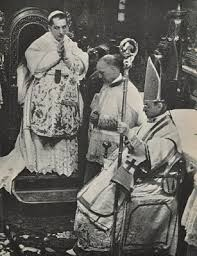
Another significant point of history worth noting is the fact that on the very date of the first apparition of Our Lady at Fatima, May 13, 1917, in Rome Eugenio Pacelli was receiving episcopal consecration from Pope Benedict XV. In time, Cardinal Pacelli would become Pope Pius XII as the Second World War prophesied by Our Lady was breaking out in Europe. His long pontificate (1939- 1958) was particularly marked by the events of Fatima: by the unparalleled destruction of human life caused by the political atheism of communism and fascism in its different expressions, and by the attack on the faith not only from without but also from within the Church. Sadly, the great loss of faith that we have experienced was also prophetically seen by Pope Pius XII: I am worried by the Blessed Virgin’s messages to Lucy of Fatima. This persistence of Mary about the dangers which menace the Church is a divine warning against the suicide that would be represented by the alteration of the faith, in her liturgy, in her theology and her soul…. I hear around me innovators who wish to dismantle the Sacred Chapel, reject her ornaments and make her feel remorse for her historical past. His biographer notes that at this point in the conversation, the gaze of the Pope became supernatural, and endowed with an irresistible mystical force; and in answer to an objection from a Cardinal, he said: A day will come when the civilized world will deny its God, when the Church will doubt as Peter doubted. She will be tempted to believe that man has become God. In our churches, Christians will search in vain for the red lamp where God awaits them. Like Mary Magdalene, weeping before the empty tomb, they will ask, ‘Where have they taken Him?’ (Roche, Pie XII Devant L’Histoire, p. 52-53).
A day will come when the civilized world will deny its God. That day has already come and the culture of death that we struggle against seeks the destruction of the Catholic Church whose task it is always to preach the Gospel of salvation and to foster the culture of life. The red lamp spoken of by Pope Pius XII is the Sanctuary lamp that burns before the Tabernacle, the place where God awaits us. In far too many churches this lamp is hard to find, if it be found at all. We have experienced the alteration of the faith, [the] liturgy, theology… and now, the attempt to subject the Church to political, worldly causes thus denying her primary work of preaching the Gospel of salvation and of life. We are now facing an existential crisis, a battle for the very soul of the Church. Enemies of the Church have infiltrated the Church, and they seek to reduce the Mystical Body of Christ on earth to nothing more than an agency of the United Nations. It pains me that in most of our churches not a word has been said about this. What a gross dereliction of duty on the part of pastors! I have spoken to you about these matters in very clear terms and you have been attentive with the utmost patience in [receiving this] teaching (2 Tim. 4:2).
In the midst of all this confusion and opposition, the red lamp that burns before the Tabernacle must be our point of reference as we live our lives. The honour and reverence that we give to God truly present among us in the Blessed Sacrament of the Altar is the best antidote to the errors of our times, be they human errors or religious errors or heresies. Is there anything more consoling than to know that God is truly here among us; calling us to conform our hearts to His own gentle and humble Heart? Here, we learn to make reparation for the outrages, sacrileges and indifference by which He is offended; and we learn to imitate God’s tender love for poor sinners. Here, we will not be led astray; and here, from this point of reference the Son of Man will definitely find faith when He returns. May Our Lady obtain for all of us the grace of final perseverance. ⧾

Remembering Father Alphonse de Valk
(Today marks the sixth anniversary of the death of Father Alphonse de Valk, C.S.B., a faithful, courageous and indefatigable Basilian priest, pro-life-and-family apostle, and the founder of Catholic Insight magazine. Here is what we wrote those on his entering into eternity five years ago, as we continue to remember him in our prayers and thoughts)[…]Continue reading→
Divine Mercy Sunday – An Echo of Every Mass
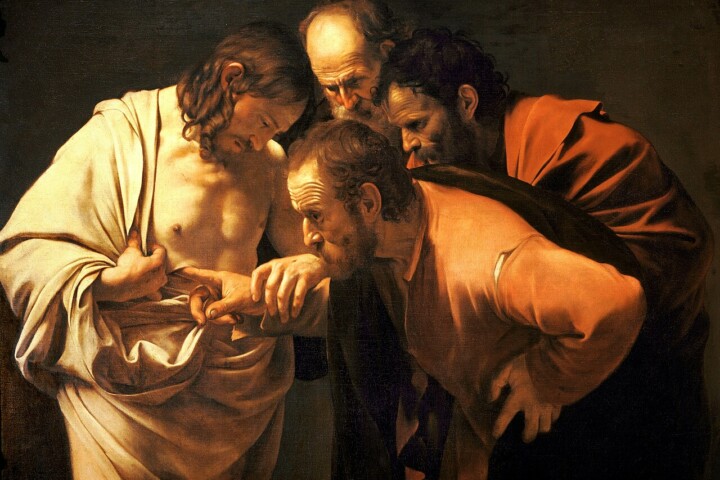
Reach out your hand and put it in my side. Do not doubt but believe’… ‘My Lord and my God!’ (Jn. 20:18)). Today is Divine Mercy Sunday, and as we celebrate the end of the Easter Octave, we contemplate the wounded side of our Saviour, the Church’s source of life. On Good Friday in the[…]Continue reading→

Saint Stanislaus of Szczepanów
We celebrate Saint Stanislaus today (+ April 11, 1079), in light of this Easter Octave, a bishop and martyr who accepted the episcopacy only at the direct order of Pope Alexander II. He proved a wise and courageous leader of his flock, put to death by his own king, Boleslaus, for rebuking the monarch’s ‘immoral[…]Continue reading→
First Holy Communion: Sermon from May 16, 1943
Here is a sermon from the good old days by +Rev. Msgr. Vincent Nicholas Foy (August 14, 1915 – March 13, 2017), from 1943. Readers may recall that Pope Saint Pius X, by the decree Quam Singulari in 1910, lowered the customary age of reception of Holy Communion – after the rigours of the plague[…]Continue reading→
In the Glorious Light of Easter, Alleluia!
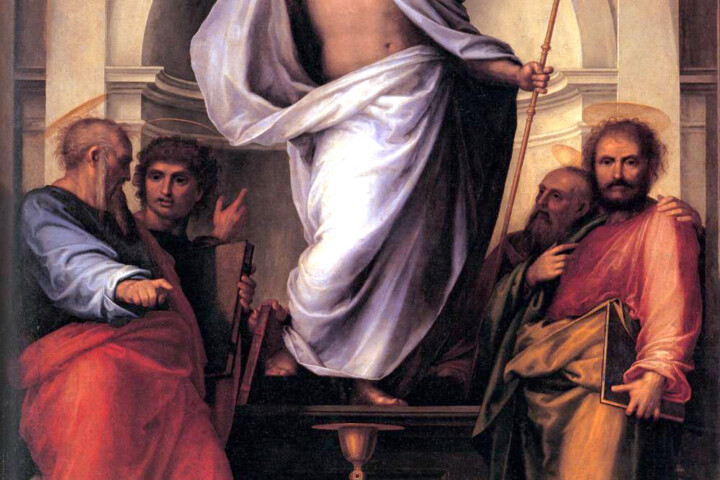
Set your minds on things that are above, not on things that are on earth, for you have died, and your life is hidden with Christ in God. When Christ who is your life is revealed, then you also will be revealed with him in glory (Col. 3:3-4). The Resurrection of Our Lord and Saviour[…]Continue reading→
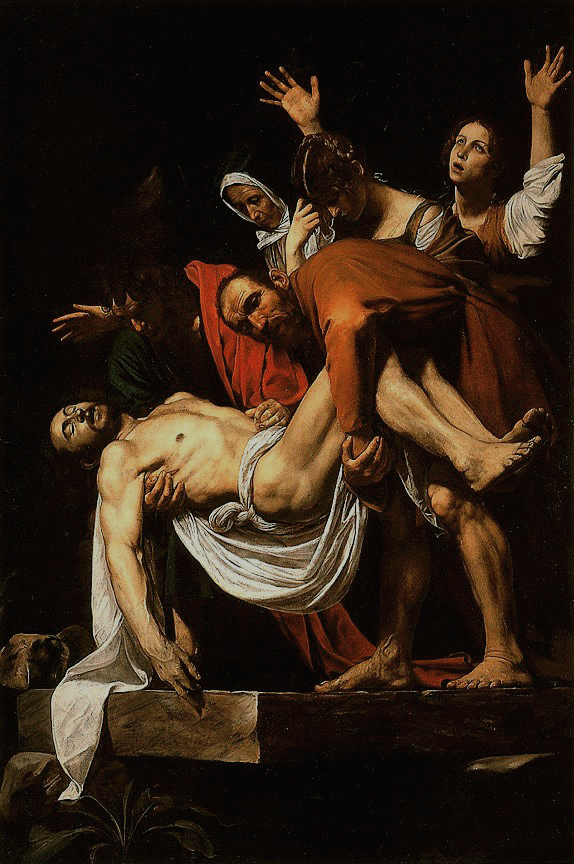
An Ancient Homily for Holy Saturday
The time between Good Friday and Easter Sunday is one of waiting, in silence, as the world wonders – anticipates – what will happen, after the death of Christ. We re-live this time each year in the anamnesis of our liturgy, and in turn look forward to the glorious re-creation of all things at the[…]Continue reading→
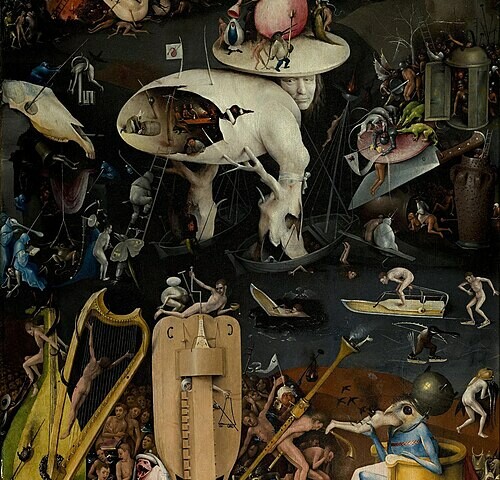
Europe’s Long Descent
(As we meditate on this day on Christ’s burial, and His descent into hell, it is fitting to ponder here with contributor Peter Marcus how the world seems to be heading there as well. The difference is that, although God cannot ‘redeem’ hell, nor those therein, He can and did redeem the world. There is[…]Continue reading→
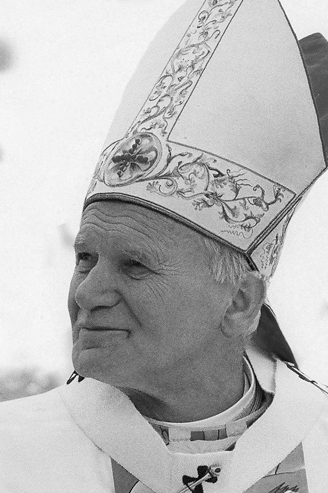
Pope Saint John Paul II’s First Good Friday Homily
ADDRESS OF HIS HOLINESS JOHN PAUL II AT THE CONCLUSION OF THE STATIONS OF THE CROSS AT THE COLOSSEUM Good Friday, 13 April 1979 When we make the Way of the Cross from one station to the next, in spirit we are always at the spot wherethis journey had its “historical” place: where it[…]Continue reading→
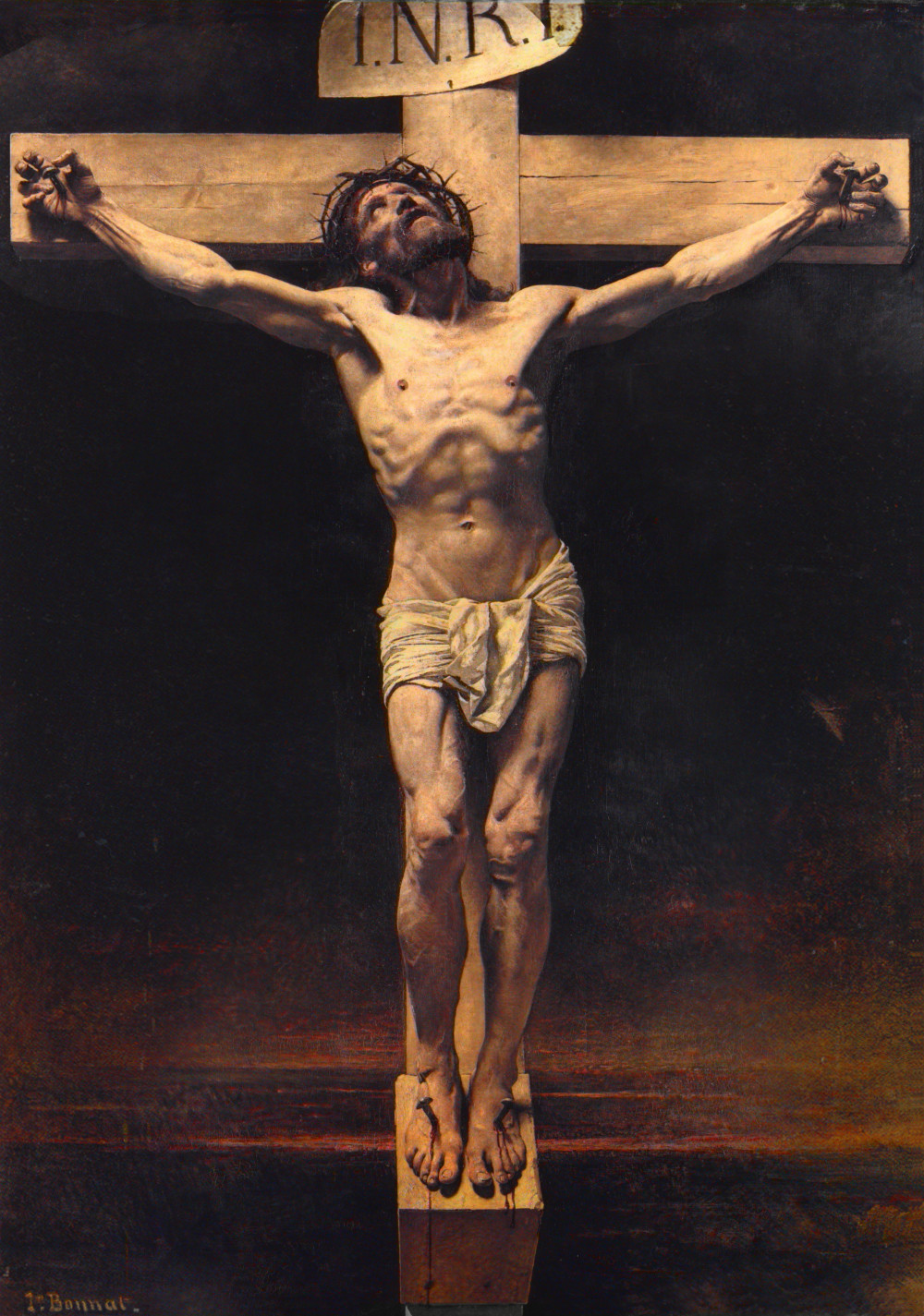
A Meditation for Good Friday: How To Undo the Effects of Sin?
Cardinal Newman, now Saint John Henry Newman, was a towering figure of nineteenth-century Catholicism who is almost universally admired. I say “almost” because not everyone likes him. I knew a priest once, Arthur Caulkins, who has become disenchanted with Newman. As an undergraduate Arthur had been enamoured of Newman, and this interest continued when he[…]Continue reading→
Pope Benedict’s Last Holy Thursday Homily
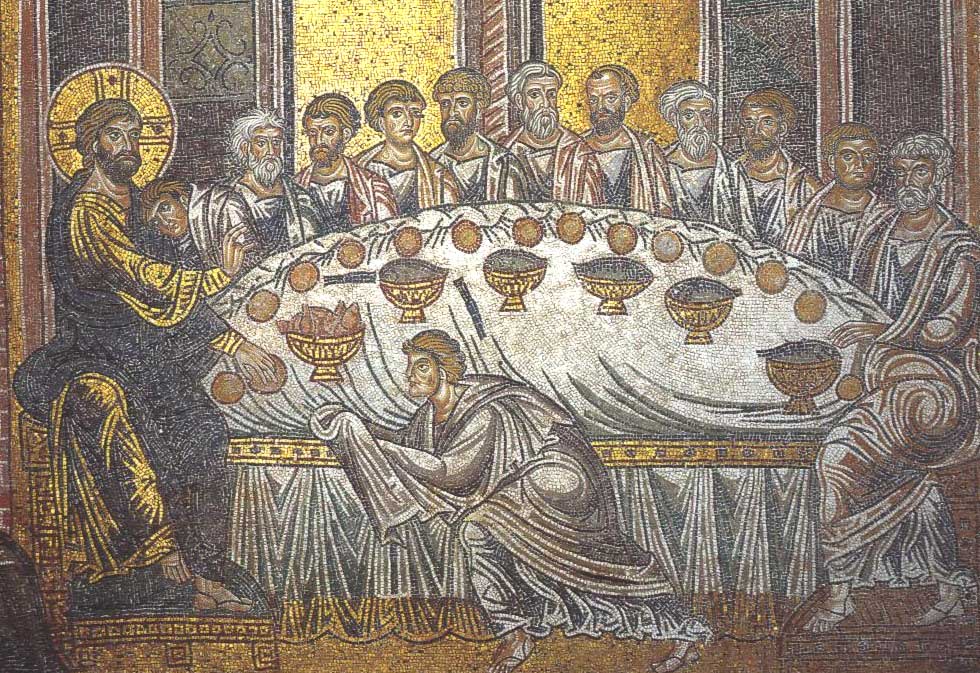
MASS OF THE LORD’S SUPPER HOMILY OF HIS HOLINESS BENEDICT XVI Basilica of St John Lateran Holy Thursday, 5 April 2012 Photo Gallery (Video) Dear Brothers and Sisters! Holy Thursday is not only the day of the institution of the Most Holy Eucharist, whose splendour bathes all else and in some ways draws it to[…]Continue reading→