
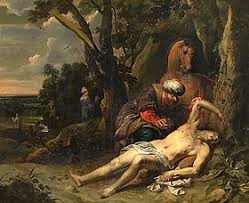
The Good Samaritan and Thirsting for God
Take care of him and when I come back, I will repay you whatever more you spend. (Lk. 10:35).
The parable of the Good Samaritan is the answer to this question: ‘And who is my neighbour?’ (Lk. 10:29). Our Lord expands the definition of neighbour beyond the bounds of nationality or race. This well-known parable is clearly understood as a lesson in morality: we are bound to do good to all, without distinction; especially if assailed by misfortune or violence. In this manner we are able to collaborate with the Church’s efforts to bring aid and relief to the poor and suffering everywhere. I think we can safely assert that on the whole the Church continues to lead the way in the care for the least of this world. This is clearly the moral lesson of the parable.
There is however a deeper spiritual lesson conveyed by this parable. At the theological level, that is, at the level of spiritual realities, by means of an allegory this parable summarizes the whole mystery of salvation. This is the interpretation of three of the greatest Church Fathers of the Western Church; St. Ambrose, St. Augustine and St. Jerome: The Good Samaritan is Jesus. The man who has fallen into the hands of thieves represents human nature subjugated by the devil. Neither the law nor the prophets can help. Only the Saviour can heal the spiritual wound of humanity. The inn is the Church; the oil and wine poured on the wounds are the sacraments. Individually and collectively we are the innkeeper. ‘Take care of him; and when I come back, I will repay you whatever you spend.’ Our Lord will return and reward our goodness. This interpretation of the parable helps us to appreciate its meaning beyond its very obvious moral implications. This interpretation of the parable speaks to the spiritual wounds of humanity which, if untreated, are the source not only of physical or material ills but also of even more destructive spiritual ills.
Materialism has done great damage in our time and many people deny the existence of our spiritual nature; what we commonly refer to as the soul (anima). The soul created in God’s image is a spiritual reality that seeks its own fulfillment; just as our bodies require and are satisfied with good food, rest, exercise and so on. Our souls thirst for the living God. This is how we have been constituted by our Heavenly Father. St. Augustine says that God thirst to be thirsted for. This does not mean that God needs us, but because He is love and mercy God desires to give and to share life. God’s thirst helps us to understand man’s thirst. The mystery of St. Augustine’s insight reveals a truth about us, about the human person. Man also thirsts; for meaning, purpose, for justice, and ultimately, this thirst can only be satisfied by God – even if in our confusion we try to satisfy this yearning with other things, like money or power or pleasure.
Our souls thirst for God and our Scriptures reveal this truth. In the course of time the symbolic union between physical thirst and spiritual thirst became so rooted in the Hebrew mind that in Hebrew the word nefesh can mean both thirst and soul. So the concept of soul in the Hebrew mind implies thirst. Thus the Psalms present us with an understanding of the human person as a living thirst for God. So the Psalmist declares: As the deer yearns for flowing streams, so my soul longs for thee, O God (Ps. 42). And, O God, thou art my God, I seek thee, my soul thirsts for thee; my flesh faints for thee, as in a dry and weary land where there is no water (Ps. 63). And, I stretch out my hands to thee, my soul thirsts for thee, like a parched land (Ps. 143:6).
We need God just as much as our bodies need water. Humans are fundamentally and essentially religious, self-transcendent. The material even in overabundance never fully satisfies us. This is why one can speak of the gods of atheism. By force of necessity we need something to believe in; and so atheism too has its gods: communism, fascism, Nazism, materialism, environmentalism. But these can never satisfy. Indeed, because they deny God altogether or His primacy of place, they are ultimately destructive of persons. All these ideologies have a distorted understanding of the human person.
The Church’s mission as it concerns the development of the human person individually and even collectively is to satisfy our thirst for the living God. Her mission is principally spiritual. Our Lord Himself declared: Man does not live on bread alone but by every word that proceeds from the mouth of God (Mt. 4:4). In Himself, Our Lord reveals and unites these two dimensions of our human thirst for God and His thirst for us. God thirsts to be thirsted for. On the Cross, in His agony Our Lord cried out, ‘I thirst’; ‘Sitio’.
The month of July, dedicated as it is to the mystery of Our Lord’s Precious Blood invites us to contemplate Our Lord in His Passion. And as I do every year, I make mention today of the Sisters Adorers of the Precious Blood, the first contemplative community founded in Canada by the Venerable Mother Catherine Aurelie of the Precious Blood. This Institute was the fruit of her response to Our Lord’s cry from the Cross: ‘I thirst’. In what is known as The Sitio, her legacy to her daughters, she wrote: The mysterious Sitio which the Divine Crucified One made resound from the height of His cross has found an echo in my poor heart. I have meditated on it, I have relished it, I have understood it, and I, in turn, have cried out in burning ecstasy: ‘I thirst’.
It is possible that, in imitation of Our Saviour by means of prayer, deep personal prayer, we also can also unite these two dimensions of God’s thirst for us and our thirst for Him. Through a life of devout humility and of reverent worship, through prayer and penance for those who do not yet know the salvation of God and for those who are indifferent to what God has done for us in Christ Our Lord, we can develop and deepen in ourselves the spirit of reparation that seeks to bring healing to a suffering humanity. We can adore, we can imitate and we can repair. We can restore and heal.
This is the mission that we all share in the inn that is the Church. Here, in the worship of the living God in Christ, we savour God Himself as the most beautiful reality of human existence. Here, if we are properly disposed, our hearts are opened to universal love; that is, to the love of the Father and the Son and the Holy Spirit, who loves all men and desires only their salvation. In the attention that we give to these spiritual realities, we thereby manifest the primacy of the spiritual in our lives and with Our Eucharistic Lord we unite the two dimensions of this thirst for God and of God. In heeding Our Lord’s invitation we satiate not only our thirst but also learn to serve the world in the corporal and spiritual works of mercy, and to make intercession and reparation for those who do not yet know the salvation of God; and, for the indifferent. ‘Take care of him – that is, generously care for this humanity destined for grace and glory but too often weakened, wounded and confused by sin – take care of him and when I come back, I will repay you whatever more you spend.’ (Lk. 10:35).

Remembering Father Alphonse de Valk
(Today marks the sixth anniversary of the death of Father Alphonse de Valk, C.S.B., a faithful, courageous and indefatigable Basilian priest, pro-life-and-family apostle, and the founder of Catholic Insight magazine. Here is what we wrote those on his entering into eternity five years ago, as we continue to remember him in our prayers and thoughts)[…]Continue reading→

Divine Mercy Sunday – An Echo of Every Mass
Reach out your hand and put it in my side. Do not doubt but believe’… ‘My Lord and my God!’ (Jn. 20:18)). Today is Divine Mercy Sunday, and as we celebrate the end of the Easter Octave, we contemplate the wounded side of our Saviour, the Church’s source of life. On Good Friday in the[…]Continue reading→

Saint Stanislaus of Szczepanów
We celebrate Saint Stanislaus today (+ April 11, 1079), in light of this Easter Octave, a bishop and martyr who accepted the episcopacy only at the direct order of Pope Alexander II. He proved a wise and courageous leader of his flock, put to death by his own king, Boleslaus, for rebuking the monarch’s ‘immoral[…]Continue reading→

First Holy Communion: Sermon from May 16, 1943
Here is a sermon from the good old days by +Rev. Msgr. Vincent Nicholas Foy (August 14, 1915 – March 13, 2017), from 1943. Readers may recall that Pope Saint Pius X, by the decree Quam Singulari in 1910, lowered the customary age of reception of Holy Communion – after the rigours of the plague[…]Continue reading→

In the Glorious Light of Easter, Alleluia!
Set your minds on things that are above, not on things that are on earth, for you have died, and your life is hidden with Christ in God. When Christ who is your life is revealed, then you also will be revealed with him in glory (Col. 3:3-4). The Resurrection of Our Lord and Saviour[…]Continue reading→

An Ancient Homily for Holy Saturday
The time between Good Friday and Easter Sunday is one of waiting, in silence, as the world wonders – anticipates – what will happen, after the death of Christ. We re-live this time each year in the anamnesis of our liturgy, and in turn look forward to the glorious re-creation of all things at the[…]Continue reading→

Europe’s Long Descent
(As we meditate on this day on Christ’s burial, and His descent into hell, it is fitting to ponder here with contributor Peter Marcus how the world seems to be heading there as well. The difference is that, although God cannot ‘redeem’ hell, nor those therein, He can and did redeem the world. There is[…]Continue reading→
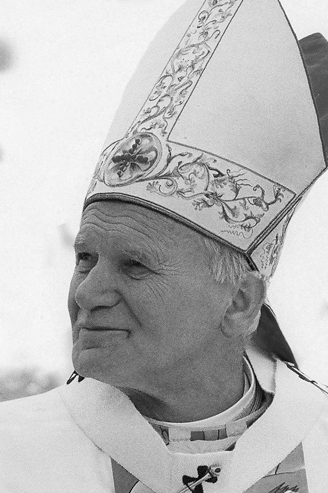
Pope Saint John Paul II’s First Good Friday Homily
ADDRESS OF HIS HOLINESS JOHN PAUL II AT THE CONCLUSION OF THE STATIONS OF THE CROSS AT THE COLOSSEUM Good Friday, 13 April 1979 When we make the Way of the Cross from one station to the next, in spirit we are always at the spot wherethis journey had its “historical” place: where it[…]Continue reading→
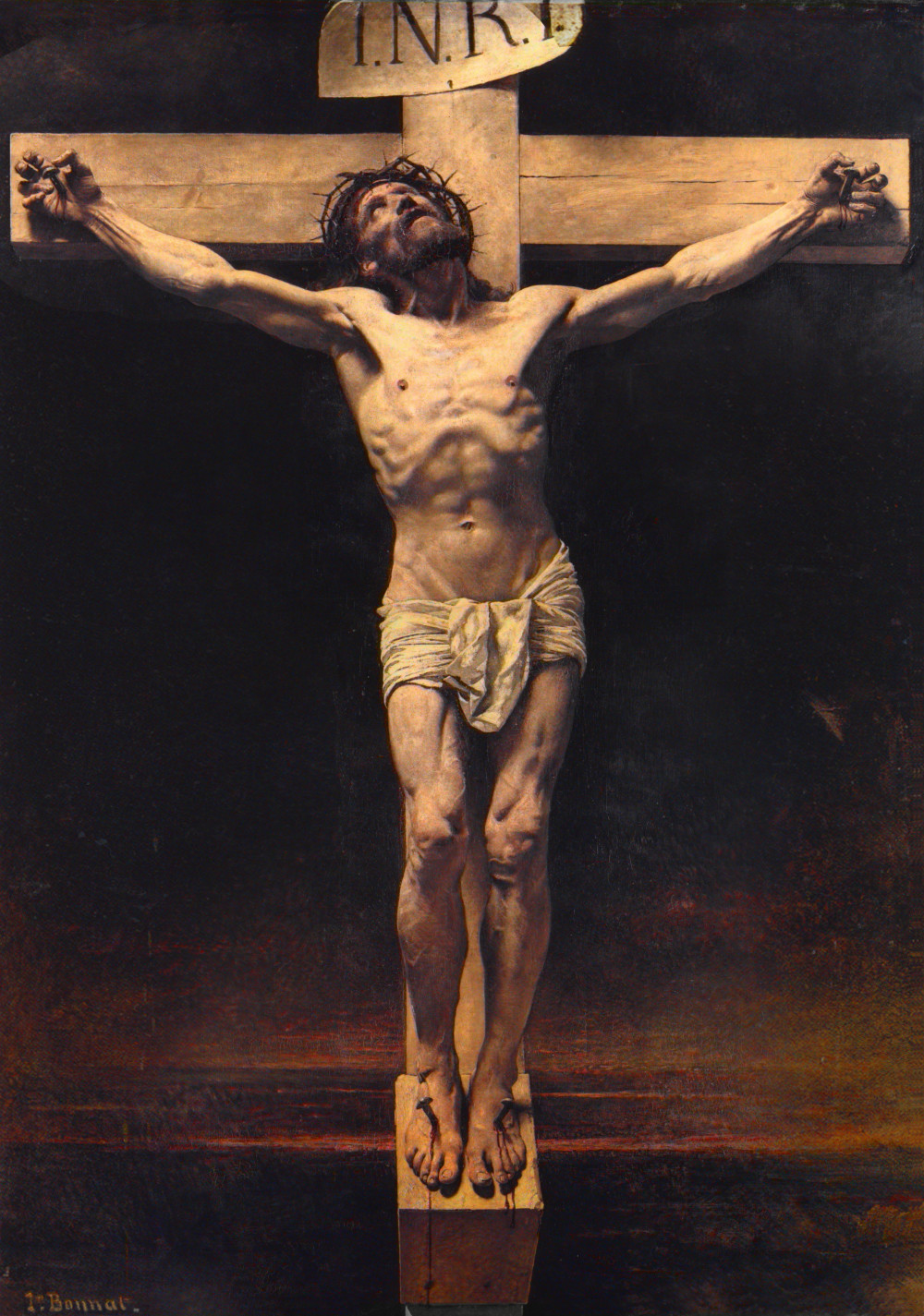
A Meditation for Good Friday: How To Undo the Effects of Sin?
Cardinal Newman, now Saint John Henry Newman, was a towering figure of nineteenth-century Catholicism who is almost universally admired. I say “almost” because not everyone likes him. I knew a priest once, Arthur Caulkins, who has become disenchanted with Newman. As an undergraduate Arthur had been enamoured of Newman, and this interest continued when he[…]Continue reading→
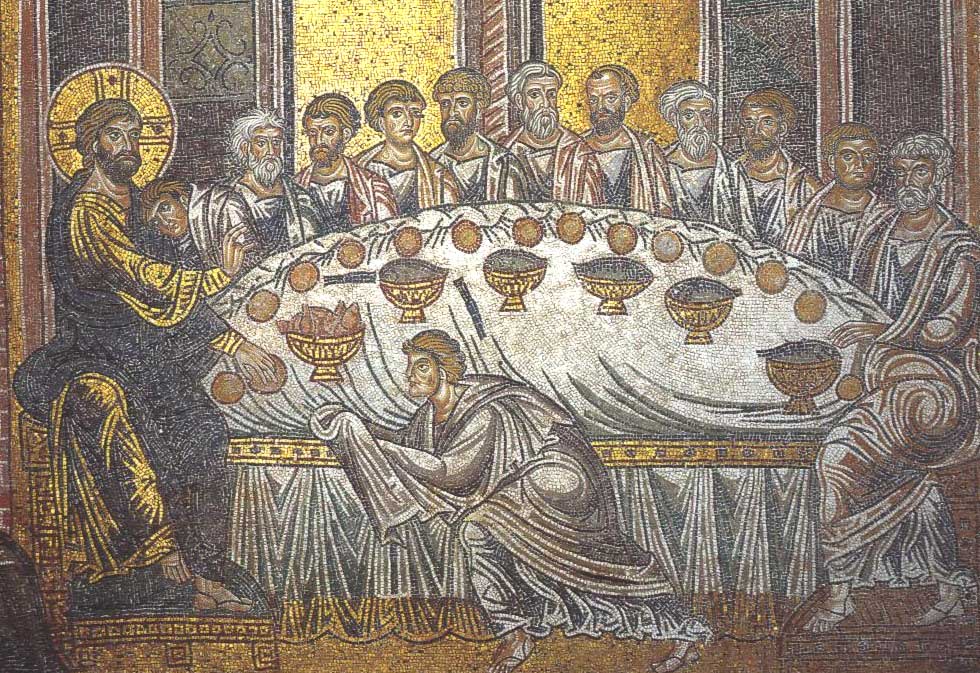
Pope Benedict’s Last Holy Thursday Homily
MASS OF THE LORD’S SUPPER HOMILY OF HIS HOLINESS BENEDICT XVI Basilica of St John Lateran Holy Thursday, 5 April 2012 Photo Gallery (Video) Dear Brothers and Sisters! Holy Thursday is not only the day of the institution of the Most Holy Eucharist, whose splendour bathes all else and in some ways draws it to[…]Continue reading→