
The Real and Present Presence of Christ
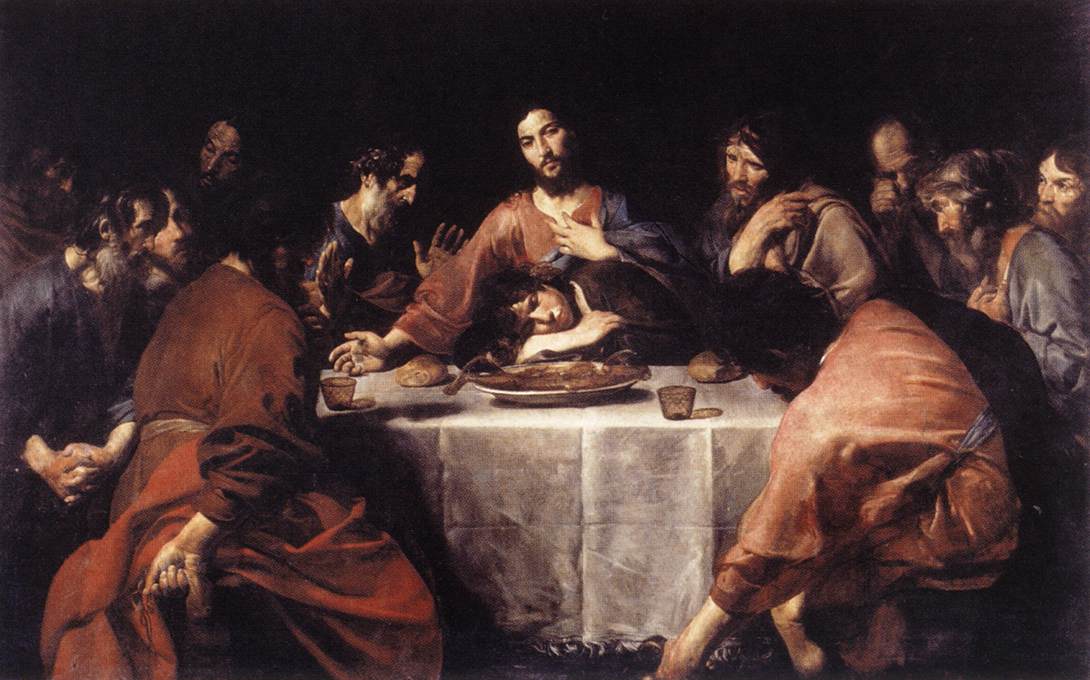
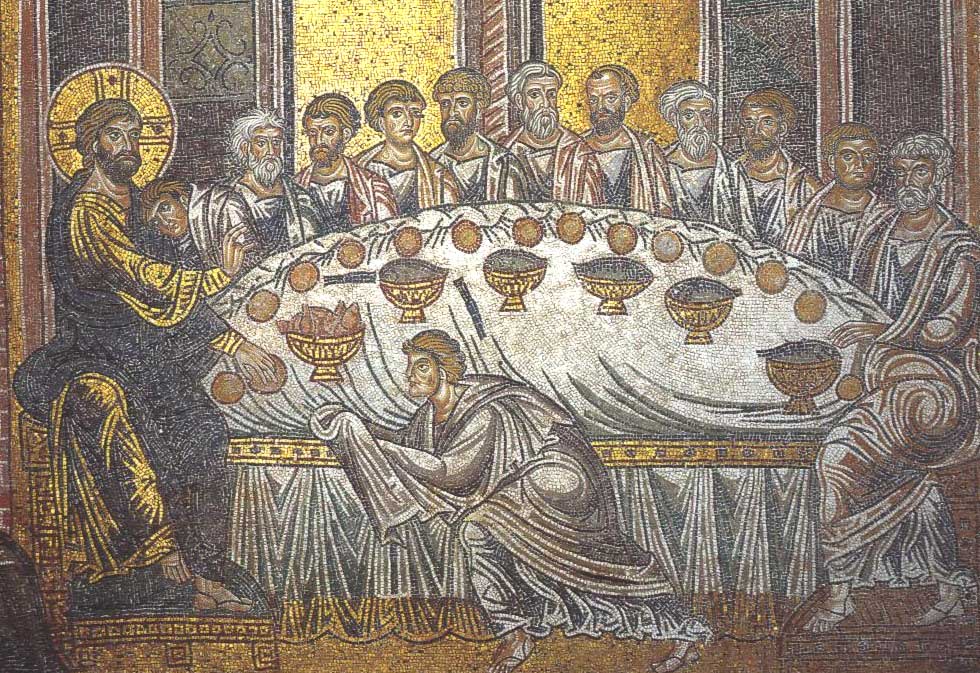
Often, the simplest facts are the most important—and the most frequently unadverted to. Take the Last Supper, for instance. Obviously, the Apostles had to be present in order to participate in it. Wonderful as it was, it would have been of no benefit to Peter if he had decided not to attend. And yet, this seemingly trivial observation takes us into the heart of our faith, viz., that in Jesus, God, who is everywhere, was located at a given place, at a given time. That’s what we mean when we say that Jesus Christ was God incarnate, in the flesh, here and now. The implications of this fact are important. For one thing, it means that two thousand years ago in Palestine to encounter God in Christ you had to go where he could be found, for he was here and not there, present today and not yesterday or tomorrow. People recognized and acted on this fact. Recall the paralytic lowered through the roof when the house was too full to permit access through the door; or the crowds that followed Jesus into the desert; or Zacchaeus in his sycamore three; or the woman who came to anoint Jesus in the house of Simon the Pharisee.
A second implication of the physical presence of God in the man Jesus is this: that Jesus rose from the dead in that self-same body. In other words, in the risen Christ, God is still located physically. The holy women encountered him at the tomb, and the two disciples on the road to Emmaus. Thomas touched his wounds in the upper room, and Jesus fed the Apostles on the shore of the Lake of Galilee.
And here’s a third implication; his having kept his body means that still today the Godhead is located in the man Jesus. If we wish to have contact with Jesus we must go where he is to be found, we must see him and hear him and touch his body. But where is it to be found? How can he be present in the flesh to the millions of believers around the world? He himself has told us how: “Take and eat; this is my body. “Take and drink; this is my blood.” He is present here on the altar under the species of bread and wine. That’s why I come to Mass: he’s here and I want to be where he is. And thus, the doctrine of what is known as “the real presence” is the inevitable consequence of the Incarnation itself. Christ is also in the words of Scripture as they are proclaimed at Mass; we hear him speak. And in the assembly, for as Saint Paul tells us, the Church is the body of Christ.[1] He is thus present as concretely and as really as he was during his earthly life, and it would be as foolish for me to stay away as it would have been to remain in my room when news came that Jesus was in town that day, preaching and working wonders. I’ve on occasion heard people say, “I go directly to God,” a statement that makes me shudder in that it implicitly denies the role of Jesus, “the sole mediator between God and man.”[2]
A final implication of the Incarnation is that entire sacramental system, which as Catholics, we identify as the essence of our religion. As Christ acted, so does the Church. He spoke, touched, anointed and blessed; and so does the Church. God gave us a pattern in the life of Jesus, which we have the consolation of following in the seven sacraments, of course, but also in what I may term a sacramental mentality or, better, a sacramental spirituality.
[1] Eph 1.22-23.
[2] 1 Tim 2.5.

Remembering Father Alphonse de Valk
(Today marks the sixth anniversary of the death of Father Alphonse de Valk, C.S.B., a faithful, courageous and indefatigable Basilian priest, pro-life-and-family apostle, and the founder of Catholic Insight magazine. Here is what we wrote those on his entering into eternity five years ago, as we continue to remember him in our prayers and thoughts)[…]Continue reading→
Divine Mercy Sunday – An Echo of Every Mass
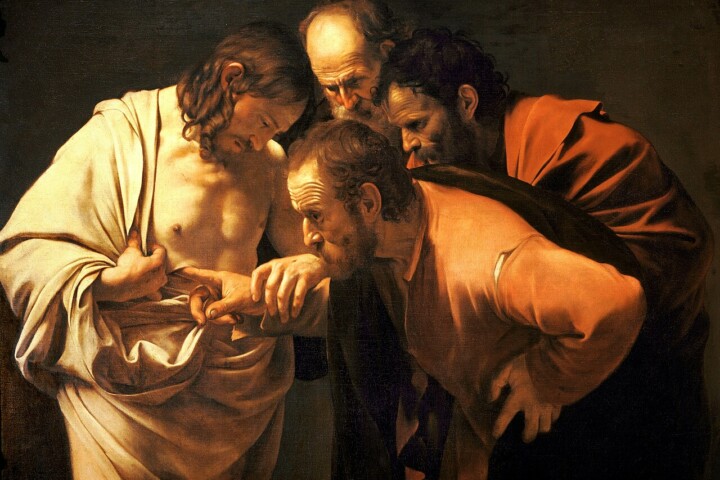
Reach out your hand and put it in my side. Do not doubt but believe’… ‘My Lord and my God!’ (Jn. 20:18)). Today is Divine Mercy Sunday, and as we celebrate the end of the Easter Octave, we contemplate the wounded side of our Saviour, the Church’s source of life. On Good Friday in the[…]Continue reading→

Saint Stanislaus of Szczepanów
We celebrate Saint Stanislaus today (+ April 11, 1079), in light of this Easter Octave, a bishop and martyr who accepted the episcopacy only at the direct order of Pope Alexander II. He proved a wise and courageous leader of his flock, put to death by his own king, Boleslaus, for rebuking the monarch’s ‘immoral[…]Continue reading→
First Holy Communion: Sermon from May 16, 1943
Here is a sermon from the good old days by +Rev. Msgr. Vincent Nicholas Foy (August 14, 1915 – March 13, 2017), from 1943. Readers may recall that Pope Saint Pius X, by the decree Quam Singulari in 1910, lowered the customary age of reception of Holy Communion – after the rigours of the plague[…]Continue reading→
In the Glorious Light of Easter, Alleluia!
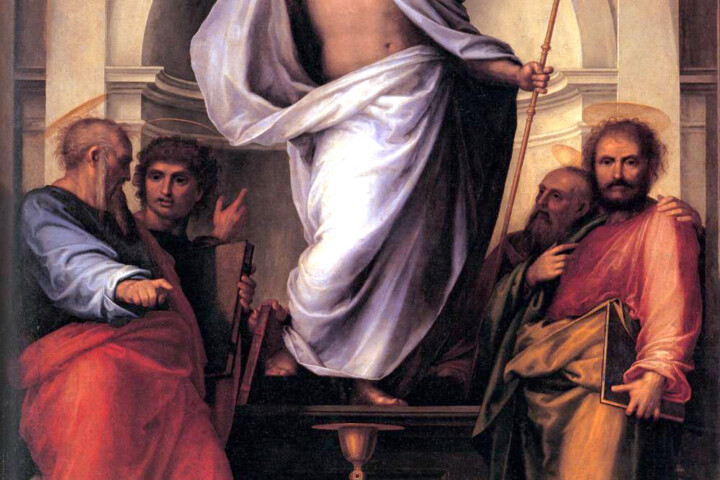
Set your minds on things that are above, not on things that are on earth, for you have died, and your life is hidden with Christ in God. When Christ who is your life is revealed, then you also will be revealed with him in glory (Col. 3:3-4). The Resurrection of Our Lord and Saviour[…]Continue reading→
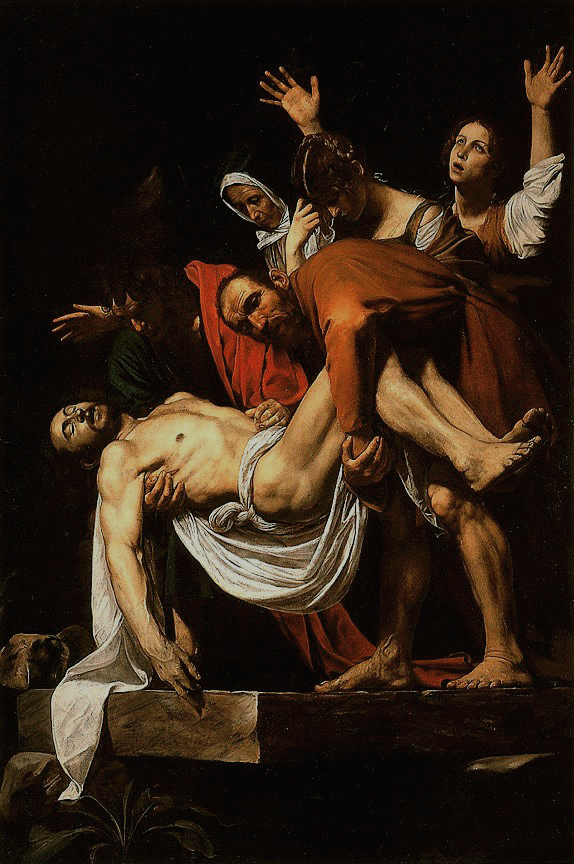
An Ancient Homily for Holy Saturday
The time between Good Friday and Easter Sunday is one of waiting, in silence, as the world wonders – anticipates – what will happen, after the death of Christ. We re-live this time each year in the anamnesis of our liturgy, and in turn look forward to the glorious re-creation of all things at the[…]Continue reading→
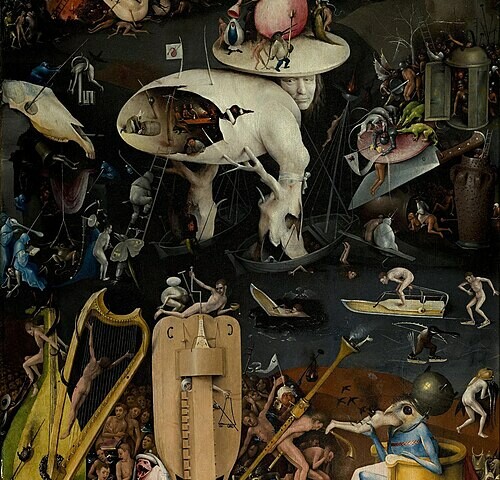
Europe’s Long Descent
(As we meditate on this day on Christ’s burial, and His descent into hell, it is fitting to ponder here with contributor Peter Marcus how the world seems to be heading there as well. The difference is that, although God cannot ‘redeem’ hell, nor those therein, He can and did redeem the world. There is[…]Continue reading→
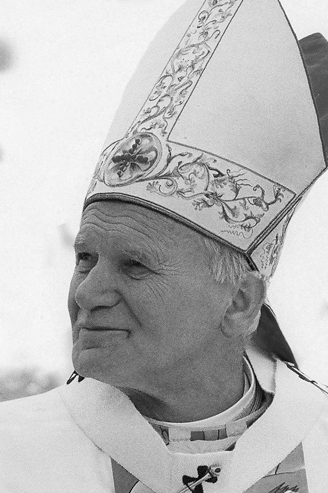
Pope Saint John Paul II’s First Good Friday Homily
ADDRESS OF HIS HOLINESS JOHN PAUL II AT THE CONCLUSION OF THE STATIONS OF THE CROSS AT THE COLOSSEUM Good Friday, 13 April 1979 When we make the Way of the Cross from one station to the next, in spirit we are always at the spot wherethis journey had its “historical” place: where it[…]Continue reading→
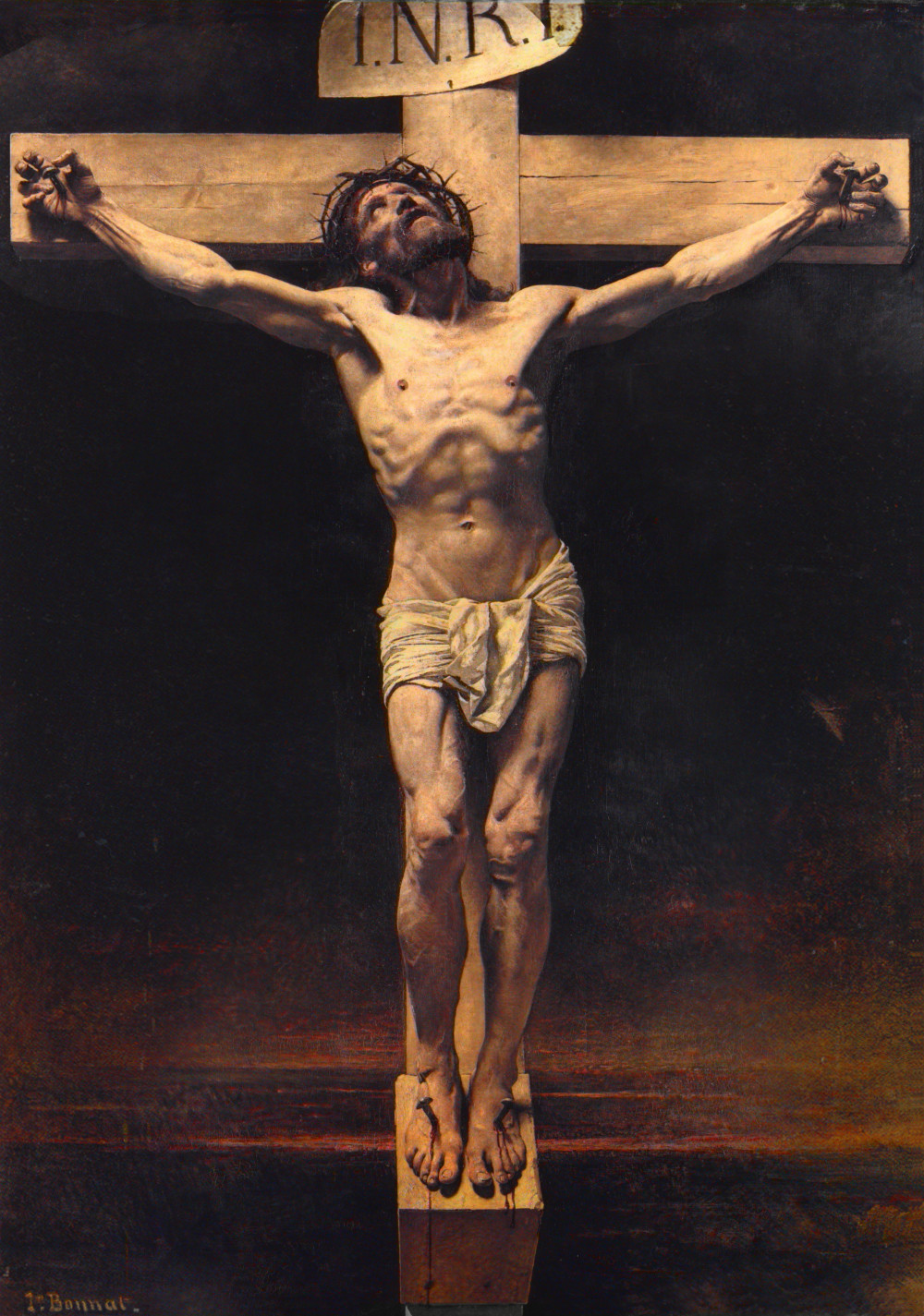
A Meditation for Good Friday: How To Undo the Effects of Sin?
Cardinal Newman, now Saint John Henry Newman, was a towering figure of nineteenth-century Catholicism who is almost universally admired. I say “almost” because not everyone likes him. I knew a priest once, Arthur Caulkins, who has become disenchanted with Newman. As an undergraduate Arthur had been enamoured of Newman, and this interest continued when he[…]Continue reading→
Pope Benedict’s Last Holy Thursday Homily
MASS OF THE LORD’S SUPPER HOMILY OF HIS HOLINESS BENEDICT XVI Basilica of St John Lateran Holy Thursday, 5 April 2012 Photo Gallery (Video) Dear Brothers and Sisters! Holy Thursday is not only the day of the institution of the Most Holy Eucharist, whose splendour bathes all else and in some ways draws it to[…]Continue reading→