
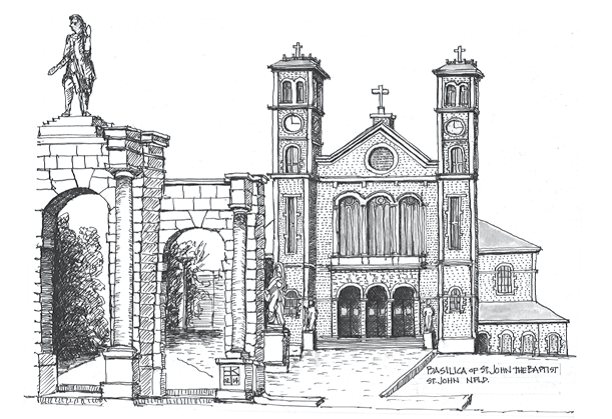
Ritual and Boredom
More times than I can count I have been told by young men and women that they do not attend Mass because they find it boring. It’s the one statement that cannot be argued against because whatever one says in reply will also be boring. I may not find it so, but I cannot deny that someone else does. Two reasons are advance to demonstrate why Sunday worship is tedious in the extreme.
The first is that it’s always the same, week after week. That complaint really amounts to noting that the Mass is a ritual, and as such will be repetitive: that’s simply what a ritual is. Furthermore, as human being we thrive on ritual. Think for a moment about a wedding—the ceremony, the reception, &c. Is there a more stereotypical event imaginable, from the gown and tuxedos to the maudlin, sometimes risqué talks at the banquet. Or funerals, which exhibit a similar need for a conventional mode of expressing sympathy and grief. We are human beings and as such we need social conventions in order to function. To take a trivial case, it is very important to greet a friend or, in a shop, a customer. “How are you?” is the most common way of establishing rapport, as I discovered once when I broke the pattern. I was buying a newspaper and, being convinced that the clerk was not really interested in the state of my health, I made no response to her automatic query, “How are you?” My silence unnerved her, and she repeated her question in a louder voice: “HOW ARE YOU?” I foolishly replied, “Why do you ask?” She then shouted, “BECAUSE I WANT TO KNOW!” I muttered something and slunk from the store. Anyway, rituals, simple or complex, are everywhere. Think of sporting events, concerts family get-togethers at Christmas or for a reunion. Without well-established patterns of interaction, we cannot function.
This utterly human need for ritual has been honoured by God in our worship. How consoling it is to know how to behave when we come into his presence. And he has given us the words and action we need if we are to relate to him with the love and reverence that are his due. The age-old rituals of the Mass and the sacraments are a source of consolation and comfort in that we recognize that Jesus himself is the agent here, active through the dialogue between the priest and the people and present in word, in sacrament and in the very assembly which is the body of Christ made visible in his members. I might note, too, that there is variety in our Sunday worship, as the seasons of the Church year—Advent and Christmas, Lent and Easter—progress, each with its special prayers and readings. There is also much to be said in favour of those prayers that do not alter in the course of the year, such as the Our Father, the “Lord, have mercy,” and the final blessing. They never change because we can never exhaust their meaning, their significance for us. Certainly, the Lord’s prayer is infinitely rich; and I need each day to repeat, “Lord, have mercy.” Even the fact that it’s repeated tells us something, for repetition intensifies a sentiment. There’s a big difference between saying “I love you” and saying, “I love you; I love you!” . . . or, for that matter, “I hate you; I hate you!”
I have tried to show that the ritual element of the Mass is an insufficient reason for calling the Mass uninteresting. What then, would be the real cause of the boredom that many young men and women experience the moment they enter a church? It is simply this: they are not interested in religion, in revelation, in the Gospel. Where interest exists no amount of repetition can deaden the enjoyment of the player. I have seen youngsters go up and down the curved surfaces of a skateboard rink over and over again, although the monotony of the exercise would be unbearable for anyone out of his teens. If interest is the antidote to boredom, we should be examining what it is that we find intriguing enough about our worship to bring us out every week. A moment’s thought identifies the motive that animates us. It is that we find a resolution to those profound dilemmas that characterize human beings in their most serious moments: Why was I born and why am I still alive? What is morally right and what is morally wrong? What is human destiny? What do I owe to my fellow man in the family and in friendship, in service or in need? How can I please God? A certain maturity is required first even to be aware of these matters and then to search for an answer that we know can be found only through our contact with God through the ministry of his Son who sends his Spirit to direct the hearts of his followers. Perhaps, when the video game loses its appeal and the skateboard is put aside, an ache will awaken in the soul of an adolescent that will bring him to search out, or rather to be found by the Good Shepherd who is never far from those who desire to know him.
This would be a good place to stop, wouldn’t it? But like most preachers, I have to ramble on after the point has been made and made again. What prompts me to try your patience in this way? It is that I realize that I have neglected to comment on the very interesting texts of today’s Mass. Let me now rectify that omission, for I trust that I have convinced you that the Bible is supremely interesting. Today’s opening reading, from the book of Proverbs, is noteworthy in two ways. First, it describes a woman who, to use contemporary jargon, can be said “to have it all”: as a successful career woman, the CEO of the family firm, so to speak, for we read that she in charge of trading with the neighbouring Canaanites. But she also has a husband, children and servants, for whom she functions as what we would call the estate manager. The second reason for attending to a reading from the book of Proverbs is the relative rarity of hearing it read at Mass. Despite the fact that it was one of the most popular books of the Bible in the early Church, it appears only once a year, and then in passages which contain no proverbs although these are the main feature of the book. Open your Bibles to Proverbs when you go home, and you will find a veritable handbook for the virtuous life. Moving on to Saint Paul’s first letter to the Thessalonians, we encounter a selection that is in continuity with what we have been hearing for the last few Sundays: readings appropriate for the close of the Church year in that they describe the end times: judgement, heaven and hell, themes picked up in a Gospel that describes these events in the form of a parable. We find it consoling in the generous reward it provides for the faithful servants and then terrifying in its description of what happens to others who are “useless”: outer darkness where there will be wailing and gnashing of teeth. Enough said

Saint Kateri , Canada’s Protectress
This was the title given to Saint Kateri Tekakwitha, by Pope Benedict XVI, when he canonized her on October 28th, 2012, along with six others, in Saint Peter’ Square (she had been beatified by Pope John Paul II back in 1980). With Saint Joseph as our protector, along with the Canadian martyrs, we seem to[…]Continue reading→

Remembering Father Alphonse de Valk
(Today marks the sixth anniversary of the death of Father Alphonse de Valk, C.S.B., a faithful, courageous and indefatigable Basilian priest, pro-life-and-family apostle, and the founder of Catholic Insight magazine. Here is what we wrote those on his entering into eternity five years ago, as we continue to remember him in our prayers and thoughts)[…]Continue reading→

My Name is Bernadette
April 16th is a propitious day, for besides the anniversary of Father de Valk’s death, who founded Catholic Insight in its print form decades ago, and the commemoration of the ‘two Benedicts’, mentioned in accompanying posts, today we also recall Saint Bernadette Soubirous, the young visionary to whom the Virgin Mary appeared numerous times at[…]Continue reading→

Canonizing Sister Faustina and Divine Mercy
HOMILY OF THE HOLY FATHER MASS IN ST PETER’S SQUARE FOR THE CANONIZATION OF SR MARY FAUSTINA KOWALSKA Sunday, 30 April 2000 1. “Confitemini Domino quoniam bonus, quoniam in saeculum misericordia eius”; “Give thanks to the Lord for he is good; his steadfast love endures for ever” (Ps 118: 1). So the Church sings on the Octave of[…]Continue reading→
Divine Mercy Sunday – An Echo of Every Mass
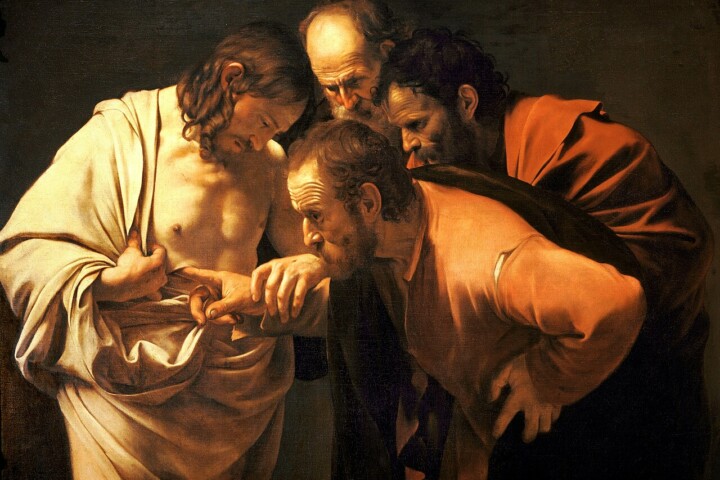
Reach out your hand and put it in my side. Do not doubt but believe’… ‘My Lord and my God!’ (Jn. 20:18)). Today is Divine Mercy Sunday, and as we celebrate the end of the Easter Octave, we contemplate the wounded side of our Saviour, the Church’s source of life. On Good Friday in the[…]Continue reading→

Saint Stanislaus of Szczepanów
We celebrate Saint Stanislaus today (+ April 11, 1079), in light of this Easter Octave, a bishop and martyr who accepted the episcopacy only at the direct order of Pope Alexander II. He proved a wise and courageous leader of his flock, put to death by his own king, Boleslaus, for rebuking the monarch’s ‘immoral[…]Continue reading→
First Holy Communion: Sermon from May 16, 1943
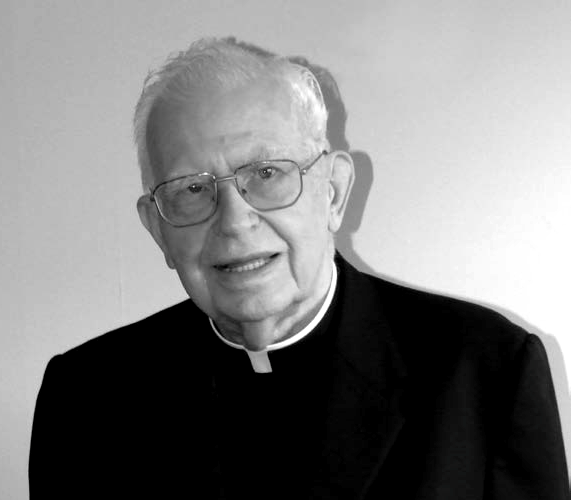
Here is a sermon from the good old days by +Rev. Msgr. Vincent Nicholas Foy (August 14, 1915 – March 13, 2017), from 1943. Readers may recall that Pope Saint Pius X, by the decree Quam Singulari in 1910, lowered the customary age of reception of Holy Communion – after the rigours of the plague[…]Continue reading→
In the Glorious Light of Easter, Alleluia!
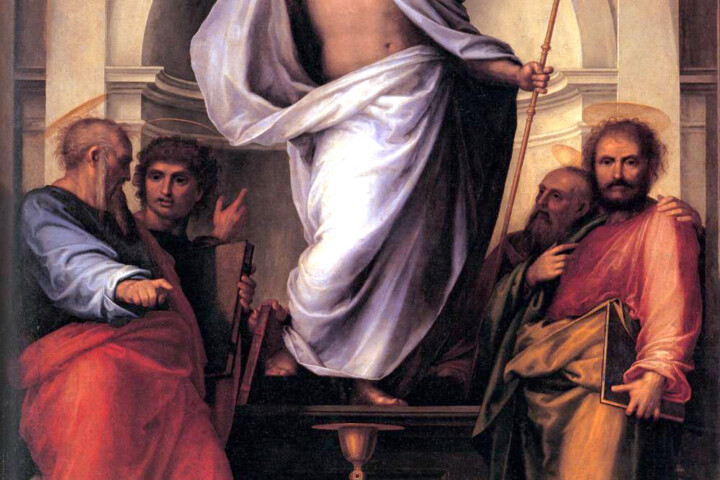
Set your minds on things that are above, not on things that are on earth, for you have died, and your life is hidden with Christ in God. When Christ who is your life is revealed, then you also will be revealed with him in glory (Col. 3:3-4). The Resurrection of Our Lord and Saviour[…]Continue reading→
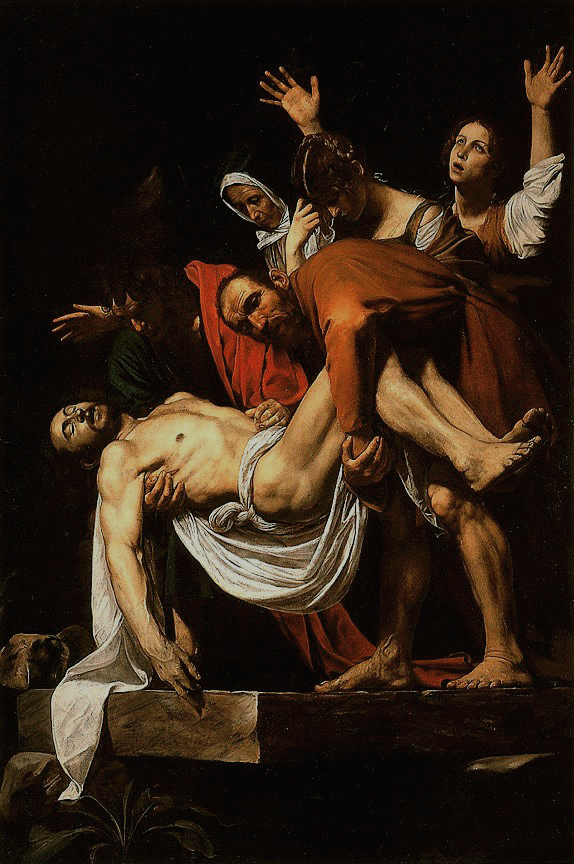
An Ancient Homily for Holy Saturday
The time between Good Friday and Easter Sunday is one of waiting, in silence, as the world wonders – anticipates – what will happen, after the death of Christ. We re-live this time each year in the anamnesis of our liturgy, and in turn look forward to the glorious re-creation of all things at the[…]Continue reading→
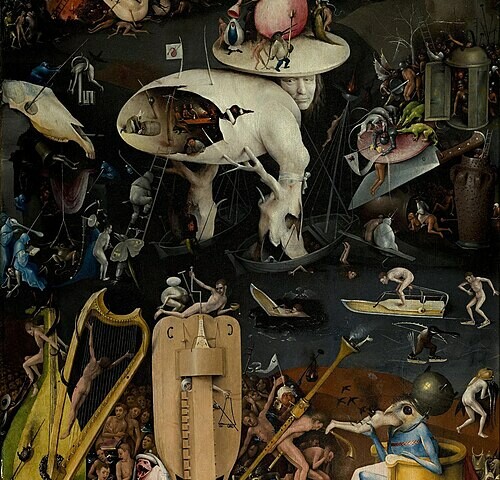
Europe’s Long Descent
(As we meditate on this day on Christ’s burial, and His descent into hell, it is fitting to ponder here with contributor Peter Marcus how the world seems to be heading there as well. The difference is that, although God cannot ‘redeem’ hell, nor those therein, He can and did redeem the world. There is[…]Continue reading→