
A.J. Cronin: Take a look
I thoroughly enjoy books which give great insight to the inner workings of man’s character and soul while being breathtakingly eloquent. Character-driven, the substance of my preferred novels are usually heavy with tight-lipped drama and caged passion which cannot seem to break its chains, and usually span years and decades in their timelines. Reading, for me (and I would hope for everyone) is not just a form of entertainment by which one passes time: it is the stepping into worlds; the vicarious experience of lives and loves; the plunging into the great depths of human emotion and motivation. Whether one is reading a simple story of two lovers or an epic, books are meant to instruct, and Plato would agree. Not all authors can do all this at once, and few stand the test of time. A. J. Cronin does both.
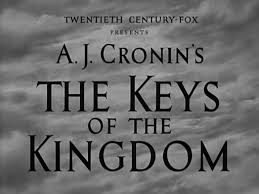
A. J. Cronin, perhaps known best for The Keys of the Kingdom (adapted for screen in 1944 starring Gregory Peck) is one of my favorite authors. His stories are heavily character-driven, span decades, and are mostly a study of the inner psyche of the main character, rather than a fast-paced adventure novel, and thus have little dialogue. They do tend to follow a set formula: 1) Most of his books are about a young doctor or businessman who loses his faith and either regains it or falls deeper into the muck of sin which he’s created for himself; 2) Most of his characters are insecure and weak, full of pretentious pride and superciliousness; they all think they’re better and stronger in character than they really are; 3) the common theme is “Pride goeth before the fall” and 4) You hate them for their stupid pride and pathetic ego (so be prepared to curse the page every now and then).
Despite these similarities in plot, Cronin is an adept storyteller and astute social commentator. He shies away from few topics, medical, moral, or spiritual, and he has few literary and technical weaknesses. It is his own life story which seems to grant him so much insight into the modern man: his characters seem to mimic his own spiritual journey. The loss and regaining of faith informs all of his novels.
Cronin himself was a doctor-turned-author-turned-Hollywood-screenwriter. He lost his Catholic faith while in medical school because of his own pride. He recounts this loss in his autobiography Adventures of Two Worlds: “When I thought of God it was with a superior smile, indicative of biological scorn for such an outworn myth.” Later on, however, while working in the poor, faith-filled communities of Wales, he realized that there must be something more than he wanted to think there was. In his medical experiences, he saw life, death, and everything in between, and he started to wonder whether “the compass of existence held more than my text-books had revealed, more than I had ever dreamed of.” It was at this point, he says, he “lost my superiority, and this, though I was not then aware of it, is the first step towards finding God.”
He speaks about an incident which further solidified his faith when he invited a prominent zoologist to speak at one of his boys’ club meetings. The speaker had adopted a “frankly atheistic” approach, in which he described the sequence of events to the emergence of the first primitive life-form from lifeless matter, though “he did not say how.” When the speaker finished, he was greeted by the sound of polite applause. But then there was silence as “a mild and very average youngster rose nervously to his feet,” and asked how there came to be anything in the first place. “The lecturer,” continues Cronin, “looked annoyed, hesitated, slowly turned red. Then, before he could answer, the whole club burst into a howl of laughter. The elaborate structure of logic offered by the test-tube realist had been crumpled by one word of challenge from a simple-minded boy.”
He later on writes: “If we consider the physical universe, … we cannot escape the notion of a primary Creator. … Accept evolution with its fossils and elementary species, its scientific doctrine of natural causes. And still you are confronted with the same mystery, primary and profound. Ex nihilo nihil, as the Latin tag of our schooldays has it: nothing can come of nothing.”
Nothing can come from nothing and in this day and age of agnosticism, atheism, and apathy, we would do well to remember it. Cronin’s novels are a constant reminder of how frail human nature is and how little we can do when we turn inwards, away from God and away from Faith.
I can only but highly recommend him for anyone to read.
Addendum:
1) Reading Cronin is like standing in a dark tunnel with nowhere to go while a speeding locomotive comes screaming towards you—you know something bad is going to happen, you just don’t know when and how.
2) His books can be gently explicit—consider yourself forewarned.
3) Suggested novels (the first two are my personal favorites): The Citadel, The Judas Tree, The Keys of the Kingdom, Desmonde.
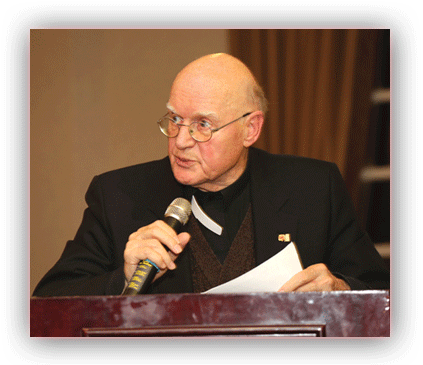
Remembering Father Alphonse de Valk
(Today marks the sixth anniversary of the death of Father Alphonse de Valk, C.S.B., a faithful, courageous and indefatigable Basilian priest, pro-life-and-family apostle, and the founder of Catholic Insight magazine. Here is what we wrote those on his entering into eternity five years ago, as we continue to remember him in our prayers and thoughts)[…]Continue reading→
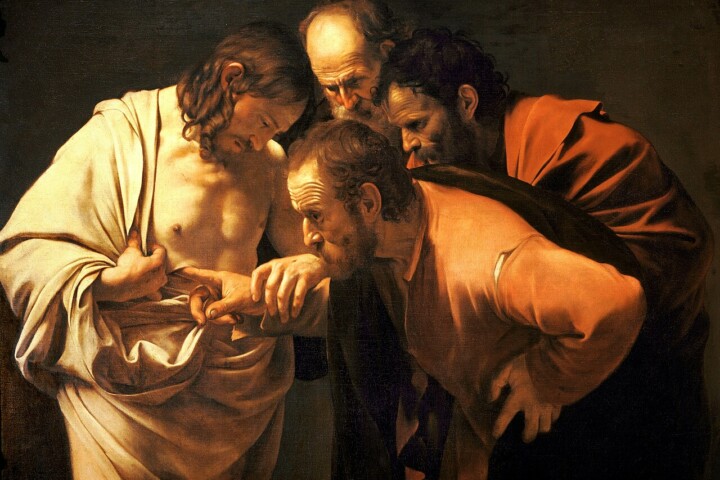
Divine Mercy Sunday – An Echo of Every Mass
Reach out your hand and put it in my side. Do not doubt but believe’… ‘My Lord and my God!’ (Jn. 20:18)). Today is Divine Mercy Sunday, and as we celebrate the end of the Easter Octave, we contemplate the wounded side of our Saviour, the Church’s source of life. On Good Friday in the[…]Continue reading→

Saint Stanislaus of Szczepanów
We celebrate Saint Stanislaus today (+ April 11, 1079), in light of this Easter Octave, a bishop and martyr who accepted the episcopacy only at the direct order of Pope Alexander II. He proved a wise and courageous leader of his flock, put to death by his own king, Boleslaus, for rebuking the monarch’s ‘immoral[…]Continue reading→
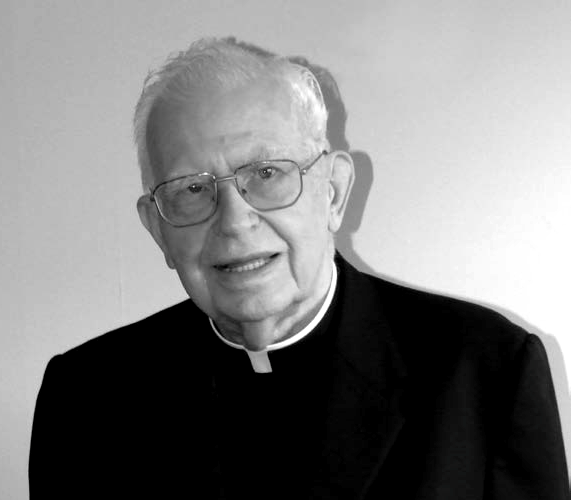
First Holy Communion: Sermon from May 16, 1943
Here is a sermon from the good old days by +Rev. Msgr. Vincent Nicholas Foy (August 14, 1915 – March 13, 2017), from 1943. Readers may recall that Pope Saint Pius X, by the decree Quam Singulari in 1910, lowered the customary age of reception of Holy Communion – after the rigours of the plague[…]Continue reading→
In the Glorious Light of Easter, Alleluia!
Set your minds on things that are above, not on things that are on earth, for you have died, and your life is hidden with Christ in God. When Christ who is your life is revealed, then you also will be revealed with him in glory (Col. 3:3-4). The Resurrection of Our Lord and Saviour[…]Continue reading→
An Ancient Homily for Holy Saturday
The time between Good Friday and Easter Sunday is one of waiting, in silence, as the world wonders – anticipates – what will happen, after the death of Christ. We re-live this time each year in the anamnesis of our liturgy, and in turn look forward to the glorious re-creation of all things at the[…]Continue reading→
Europe’s Long Descent
(As we meditate on this day on Christ’s burial, and His descent into hell, it is fitting to ponder here with contributor Peter Marcus how the world seems to be heading there as well. The difference is that, although God cannot ‘redeem’ hell, nor those therein, He can and did redeem the world. There is[…]Continue reading→
Pope Saint John Paul II’s First Good Friday Homily
ADDRESS OF HIS HOLINESS JOHN PAUL II AT THE CONCLUSION OF THE STATIONS OF THE CROSS AT THE COLOSSEUM Good Friday, 13 April 1979 When we make the Way of the Cross from one station to the next, in spirit we are always at the spot wherethis journey had its “historical” place: where it[…]Continue reading→
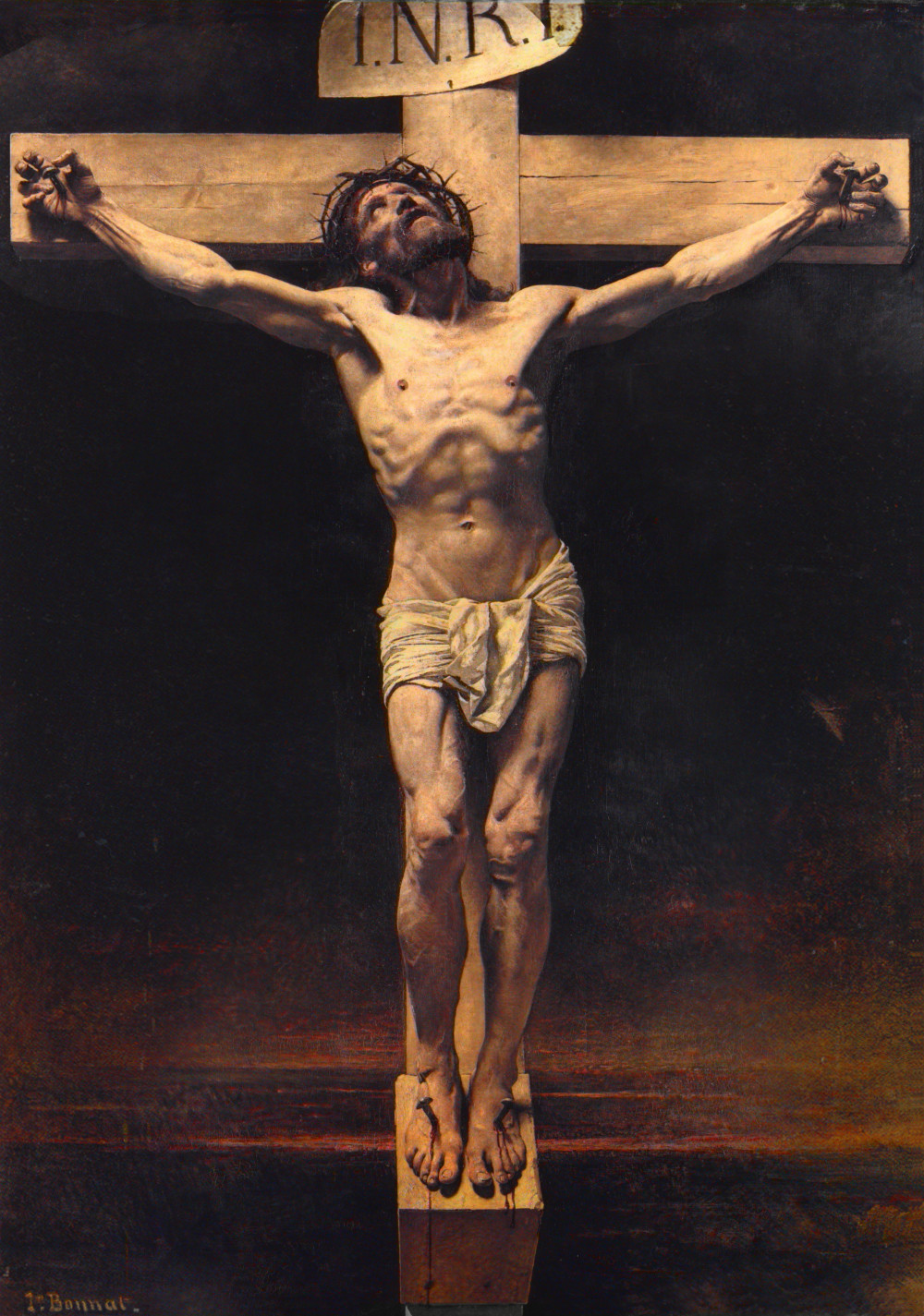
A Meditation for Good Friday: How To Undo the Effects of Sin?
Cardinal Newman, now Saint John Henry Newman, was a towering figure of nineteenth-century Catholicism who is almost universally admired. I say “almost” because not everyone likes him. I knew a priest once, Arthur Caulkins, who has become disenchanted with Newman. As an undergraduate Arthur had been enamoured of Newman, and this interest continued when he[…]Continue reading→
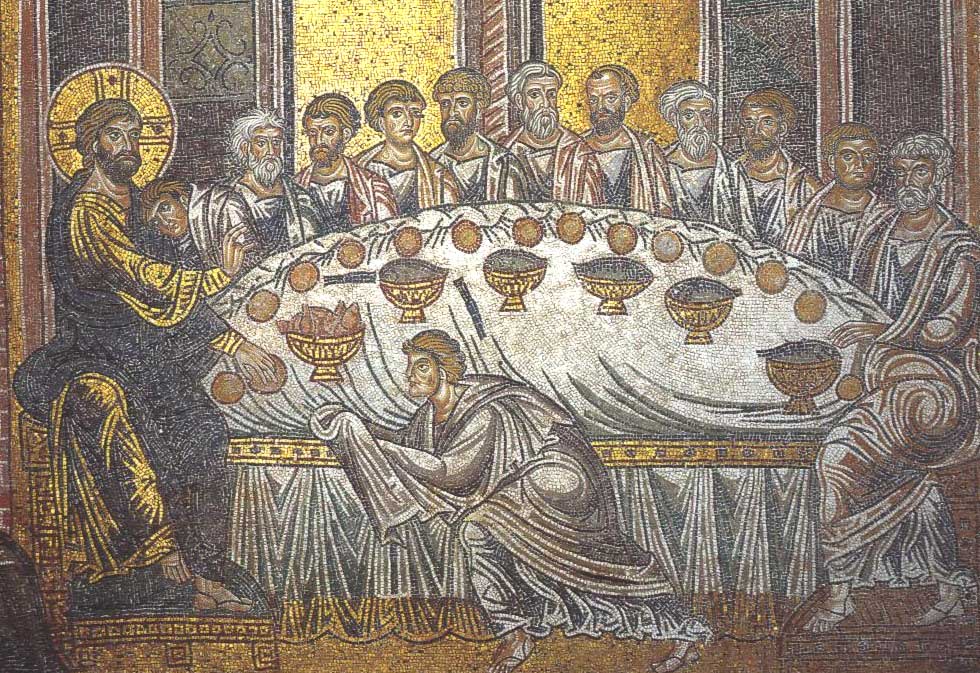
Pope Benedict’s Last Holy Thursday Homily
MASS OF THE LORD’S SUPPER HOMILY OF HIS HOLINESS BENEDICT XVI Basilica of St John Lateran Holy Thursday, 5 April 2012 Photo Gallery (Video) Dear Brothers and Sisters! Holy Thursday is not only the day of the institution of the Most Holy Eucharist, whose splendour bathes all else and in some ways draws it to[…]Continue reading→