

True Patriotism
As an American freelance student of British history, I find it intriguing how the true meaning of patriotism has often been lost in the muck and mire of personal interpretation. Throughout history, the natural emotions that attach people to their native land have been twisted by advocates of various points of view to forward their own agendas. In the process, two extremes have sprung up, each equally dangerous if left unchecked: national jingoism and national defeatism.
The source of the first ideology was the self-righteous, high-handed extreme conservatives who gained precedence during the Victorian Period in Britain and America. Their belief in the natural superiority of their countries led them to believe they were ordained to forward their culture through conquest, both materially and psychologically, even if it was at the expense of other persons or groups. Their ideology could be succinctly summed up by the famous toast, “My country: right or wrong!”
The Imperialist project in Britain and “Manifest Destiny” in America were drenched in this way of thinking, and history books from that period often contain a nose-in-the-air snobbery towards other nations (including each other, since the mother country and her rebellious child seemed to have an equal sense of their own superiority!) that make most people today recoil. It’s hard to believe that such outrageous biases were ever taught to school children as a matter of course.
This unhealthy form of nationalism spurred on both Brits and Americans to commit acts of injustice and cruelty in the name of “patriotism” while expanding their burgeoning empires. The British misused the peoples of Africa, Asia, and Ireland; the Americans misused the Native Tribes that were sprawled across a massive continent. Assuredly, they also brought civilizing benefits to indigenous cultures, but the stain of their past sins continues to haunt us today. Fortunately, this haughty attitude that caused so much pain has almost completely passed out of style, but another equally bad distortion rose up to replace it.
Enter onto the world stage the self-destructive, guilt-ridden extreme liberals, who stepped into the vacuum created by post-imperial disillusionment and recession. They became self-proclaimed crusaders, determined to rid themselves of blame for past crimes by throwing out the baby with the bathwater and becoming social activists against all that has gone before. Their case in a nutshell could be phrased thusly: “My country: always wrong!”
Revisionist history books became en vogue, myth-busting generational preconceptions about secular saints and defining events that had been glorified during the Victorian Era. Some of these works were very well-written and long overdue to balance the score. But others teetered on the brink of character assassination. It also became fashionable to point fingers at anyone who expressed pride in or admiration for their national heritage, accusing them of being “romantic” and “insular”.
More extreme variants of this group have burned flags and desecrated national monuments, made gestures of solidarity with enemy nations (such as occurred in America during the Vietnam War), or sowed of the seeds of disunity on the home-front, such as in Britain during the rise of Celtic Nationalism. They blinded themselves to all that was good through bitterness for past and present imperfections, and in the process sought to lure everyone else down the same path.
Don’t let either patriotic heresy draw you in; avoid them equally, as two sides of the same counterfeit coin. Remember who you are and hold fast to it; neither faction can take away what you do not give them. After all, true patriotism is so much deeper than either alternate option, and too precious to cast away. It is a healthy, genuine love of one’s country and its institutions. It is not marred by a pride of race, nor is it dissimilated by a self-gratifying grinding against the past that cannot be altered. It is an acceptance of both the good and bad, lamenting what should be lamented, celebrating what should be celebrated, and having the wisdom to know which is which.
This quest to balance our passions and perceptions should be coupled by a determination to change our respective countries for the better, learning when to stand strong and when to be flexible. For example, Britain has learned, changed and grown through her empire experience which now has a direct descendent in The Commonwealth. This community of independent nations, many of which share a common heritage and head-of-state, is worthy of pride and admiration as visible proof of a willingness to ease up on heavy-handed policies of the past and bend without breaking.
America, in the same way, has made major strides in overcoming her own prejudices in an increasingly multicultural landscape and turning this “continental empire” into a union of mutual cooperation and affection for the benefit of all. Considering a bloody civil war between north and south, slavery, segregation, the dissolution of native cultures, and continued immigration influxes, unity and equality have always been difficult to grasp. And yet we have never stopped striving for it.
In our present time, there are all sorts of injustices that still need to be overcome, for Brits and Americans and everyone else. Pompousness and bitterness has never solved anything, but turn us in upon ourselves and against each other. Love is the only way to penetrate the evils of our world. So we must love our native lands and transform them a little at a time through prayer and good works. To quote a German immigrant to America, who put it simply and very well: “My country: if she be right, God keep her there; if she be wrong, God bring her to the right!”

Saint Kateri , Canada’s Protectress
This was the title given to Saint Kateri Tekakwitha, by Pope Benedict XVI, when he canonized her on October 28th, 2012, along with six others, in Saint Peter’ Square (she had been beatified by Pope John Paul II back in 1980). With Saint Joseph as our protector, along with the Canadian martyrs, we seem to[…]Continue reading→

Remembering Father Alphonse de Valk
(Today marks the sixth anniversary of the death of Father Alphonse de Valk, C.S.B., a faithful, courageous and indefatigable Basilian priest, pro-life-and-family apostle, and the founder of Catholic Insight magazine. Here is what we wrote those on his entering into eternity five years ago, as we continue to remember him in our prayers and thoughts)[…]Continue reading→

My Name is Bernadette
April 16th is a propitious day, for besides the anniversary of Father de Valk’s death, who founded Catholic Insight in its print form decades ago, and the commemoration of the ‘two Benedicts’, mentioned in accompanying posts, today we also recall Saint Bernadette Soubirous, the young visionary to whom the Virgin Mary appeared numerous times at[…]Continue reading→
Canonizing Sister Faustina and Divine Mercy
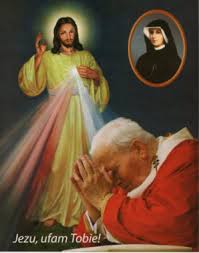
HOMILY OF THE HOLY FATHER MASS IN ST PETER’S SQUARE FOR THE CANONIZATION OF SR MARY FAUSTINA KOWALSKA Sunday, 30 April 2000 1. “Confitemini Domino quoniam bonus, quoniam in saeculum misericordia eius”; “Give thanks to the Lord for he is good; his steadfast love endures for ever” (Ps 118: 1). So the Church sings on the Octave of[…]Continue reading→

Divine Mercy Sunday – An Echo of Every Mass
Reach out your hand and put it in my side. Do not doubt but believe’… ‘My Lord and my God!’ (Jn. 20:18)). Today is Divine Mercy Sunday, and as we celebrate the end of the Easter Octave, we contemplate the wounded side of our Saviour, the Church’s source of life. On Good Friday in the[…]Continue reading→

Saint Stanislaus of Szczepanów
We celebrate Saint Stanislaus today (+ April 11, 1079), in light of this Easter Octave, a bishop and martyr who accepted the episcopacy only at the direct order of Pope Alexander II. He proved a wise and courageous leader of his flock, put to death by his own king, Boleslaus, for rebuking the monarch’s ‘immoral[…]Continue reading→

First Holy Communion: Sermon from May 16, 1943
Here is a sermon from the good old days by +Rev. Msgr. Vincent Nicholas Foy (August 14, 1915 – March 13, 2017), from 1943. Readers may recall that Pope Saint Pius X, by the decree Quam Singulari in 1910, lowered the customary age of reception of Holy Communion – after the rigours of the plague[…]Continue reading→
In the Glorious Light of Easter, Alleluia!
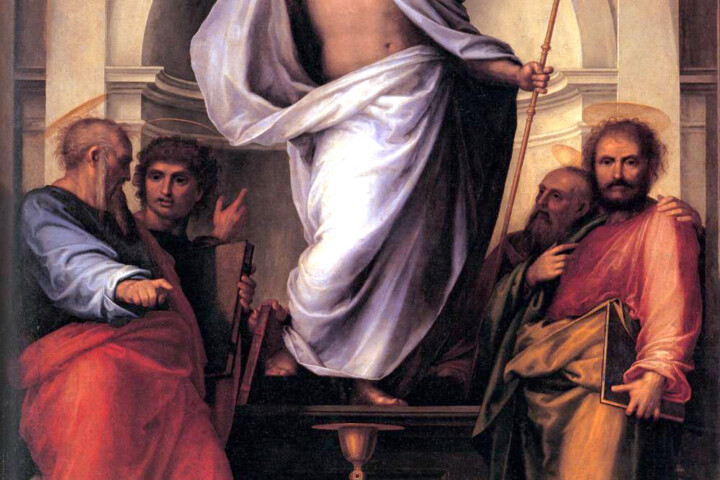
Set your minds on things that are above, not on things that are on earth, for you have died, and your life is hidden with Christ in God. When Christ who is your life is revealed, then you also will be revealed with him in glory (Col. 3:3-4). The Resurrection of Our Lord and Saviour[…]Continue reading→
An Ancient Homily for Holy Saturday
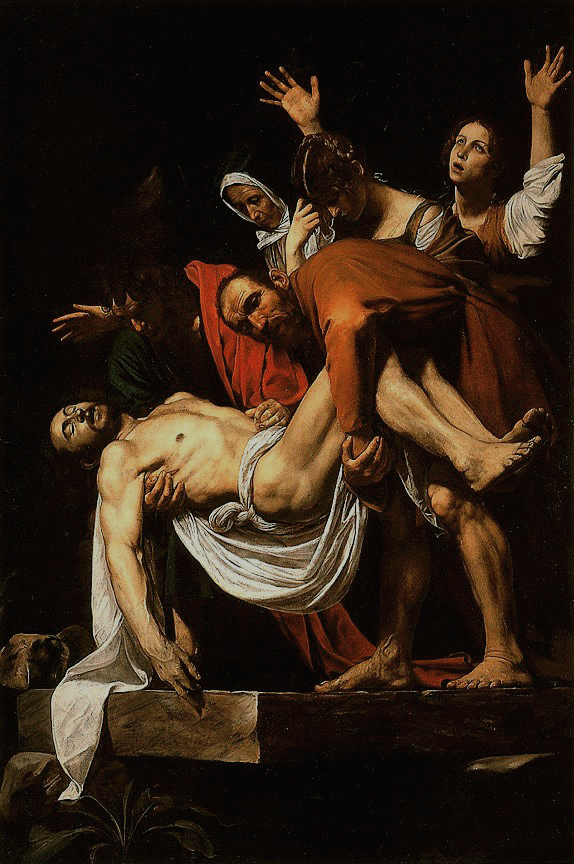
The time between Good Friday and Easter Sunday is one of waiting, in silence, as the world wonders – anticipates – what will happen, after the death of Christ. We re-live this time each year in the anamnesis of our liturgy, and in turn look forward to the glorious re-creation of all things at the[…]Continue reading→
Europe’s Long Descent
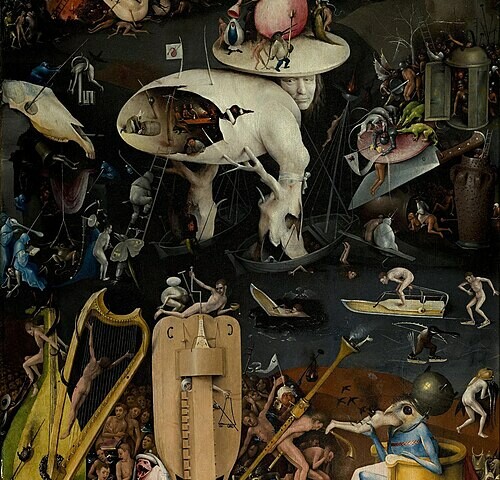
(As we meditate on this day on Christ’s burial, and His descent into hell, it is fitting to ponder here with contributor Peter Marcus how the world seems to be heading there as well. The difference is that, although God cannot ‘redeem’ hell, nor those therein, He can and did redeem the world. There is[…]Continue reading→