
A Student Interrogates his Law Professor
Professor: Who will be first? Yes, you Miss Ezjakina:
Student: Mr. Rechtson, a moment ago, you quoted a renowned jurist regarding the preamble to the Canadian Charter of rights and freedoms. It went something like this: Although the preamble is clearly part of the Constitution, it is equally clear that it has no enacting force. In other words, strictly speaking, it is not a source of positive law and is without legal effects. I am looking up the word preamble in my dictionary and it defines it as (I quote) “The introductory part of a statute, deed, constitution, or other documents stating the intent of what follows“. Is my Webster defining correctly?
Prof.: Miss Ezjakina, I can’t argue with Mr. Webster?
Stud.: Then, does the affirmation that Canada is founded upon principles that recognize the supremacy of God and the rule of law state the intent of the constitution that follows it?
Prof.: Well, I must admit that a preamble to a constitution may not be without legal effects. For example, preambles can be used to identify the purpose of a statute and also help to explain ambiguous language. A preamble also articulates the political theory which the Charter embodies.
Stud.: So, in this case it recognizes and affirms the basic principles which are the very source of the substantive provisions of the Charter of rights. Right?
Prof.: You are telling me so.
Stud.: Not exactly, Mr. Rechtson… I am only suggesting. But, I am also consulting my dictionary, again… looking for the word principle. So, do you mind?
Prof.: Go ahead!
Stud.: I find, here, many formulations for the definition of principle, but the one that appears to most appropriate is “a fundamental, primary, or general truth, on which other truths depend such as the principles of government.” Well, Sir, I am impressed by the fact that in our constitution rests upon principles that recognize the supremacy of God and the rule of law.
Prof.: How does that impress you? What is the reason?
Stud.: Since you are asking, I will tell you… This week in our Philosophy class we learned that nothing comes into existence of its own – nothing comes from nothing – everything has a cause, except for the First One, which is the Cause of all other causes. That One is the beginning and the end of everything. It is supreme and it identifies with God. The preamble of our Canadian Constitution affirms that the government of our nation rest on that truth. Is the preamble lying, Mr. Rechtson?
Prof.: It depends on how we understand it. Our jurists may understand it in different ways.
Stud.: Please, tell us the different ways they understand it!
Prof.: I think you and I have been reversing roles, here. I will now re-assume my teaching responsibility. Next week we can pick up on your answer to your question and by then I should well prepared to challenge it. So, who is next…?
(to follow…)
Jean-Nil Chabot, Ph.D. (Philosophy) has taught at Our Lady Seat of Wisdom Academy, but has been retired for a few years. He wrote his doctoral thesis on the preamble to the Canadian Charter of Rights and Freedoms, which is the introductory sentence to the Constitution of Canada‘s Charter of Rights and Constitution Act of 1982. In full, the preamble reads, “whereas Canada is founded upon principles that recognize the supremacy of God and the rule of law.”

Remembering Father Alphonse de Valk
(Today marks the sixth anniversary of the death of Father Alphonse de Valk, C.S.B., a faithful, courageous and indefatigable Basilian priest, pro-life-and-family apostle, and the founder of Catholic Insight magazine. Here is what we wrote those on his entering into eternity five years ago, as we continue to remember him in our prayers and thoughts)[…]Continue reading→

Divine Mercy Sunday – An Echo of Every Mass
Reach out your hand and put it in my side. Do not doubt but believe’… ‘My Lord and my God!’ (Jn. 20:18)). Today is Divine Mercy Sunday, and as we celebrate the end of the Easter Octave, we contemplate the wounded side of our Saviour, the Church’s source of life. On Good Friday in the[…]Continue reading→

Saint Stanislaus of Szczepanów
We celebrate Saint Stanislaus today (+ April 11, 1079), in light of this Easter Octave, a bishop and martyr who accepted the episcopacy only at the direct order of Pope Alexander II. He proved a wise and courageous leader of his flock, put to death by his own king, Boleslaus, for rebuking the monarch’s ‘immoral[…]Continue reading→

First Holy Communion: Sermon from May 16, 1943
Here is a sermon from the good old days by +Rev. Msgr. Vincent Nicholas Foy (August 14, 1915 – March 13, 2017), from 1943. Readers may recall that Pope Saint Pius X, by the decree Quam Singulari in 1910, lowered the customary age of reception of Holy Communion – after the rigours of the plague[…]Continue reading→
In the Glorious Light of Easter, Alleluia!
Set your minds on things that are above, not on things that are on earth, for you have died, and your life is hidden with Christ in God. When Christ who is your life is revealed, then you also will be revealed with him in glory (Col. 3:3-4). The Resurrection of Our Lord and Saviour[…]Continue reading→
An Ancient Homily for Holy Saturday
The time between Good Friday and Easter Sunday is one of waiting, in silence, as the world wonders – anticipates – what will happen, after the death of Christ. We re-live this time each year in the anamnesis of our liturgy, and in turn look forward to the glorious re-creation of all things at the[…]Continue reading→
Europe’s Long Descent
(As we meditate on this day on Christ’s burial, and His descent into hell, it is fitting to ponder here with contributor Peter Marcus how the world seems to be heading there as well. The difference is that, although God cannot ‘redeem’ hell, nor those therein, He can and did redeem the world. There is[…]Continue reading→
Pope Saint John Paul II’s First Good Friday Homily
ADDRESS OF HIS HOLINESS JOHN PAUL II AT THE CONCLUSION OF THE STATIONS OF THE CROSS AT THE COLOSSEUM Good Friday, 13 April 1979 When we make the Way of the Cross from one station to the next, in spirit we are always at the spot wherethis journey had its “historical” place: where it[…]Continue reading→
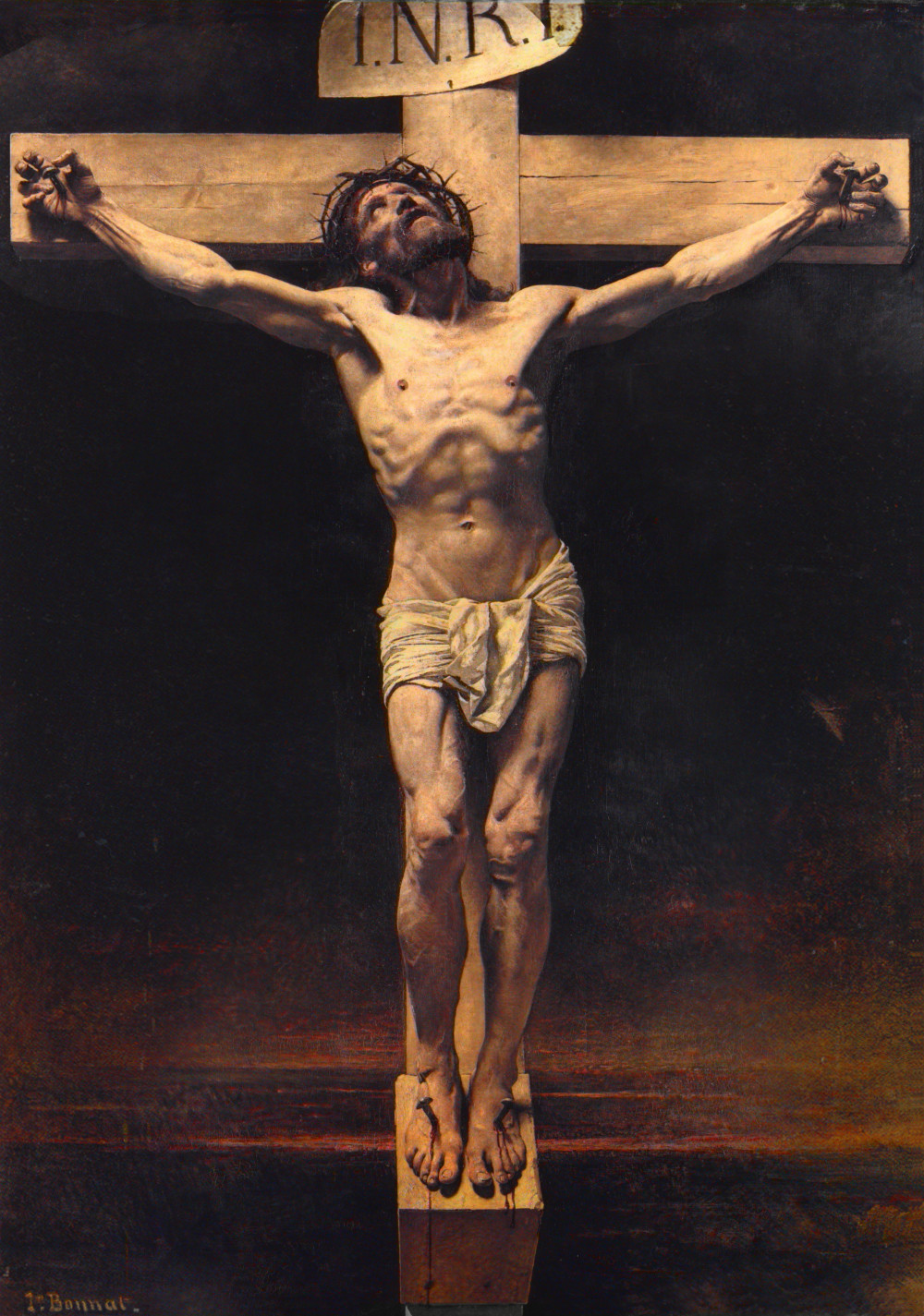
A Meditation for Good Friday: How To Undo the Effects of Sin?
Cardinal Newman, now Saint John Henry Newman, was a towering figure of nineteenth-century Catholicism who is almost universally admired. I say “almost” because not everyone likes him. I knew a priest once, Arthur Caulkins, who has become disenchanted with Newman. As an undergraduate Arthur had been enamoured of Newman, and this interest continued when he[…]Continue reading→
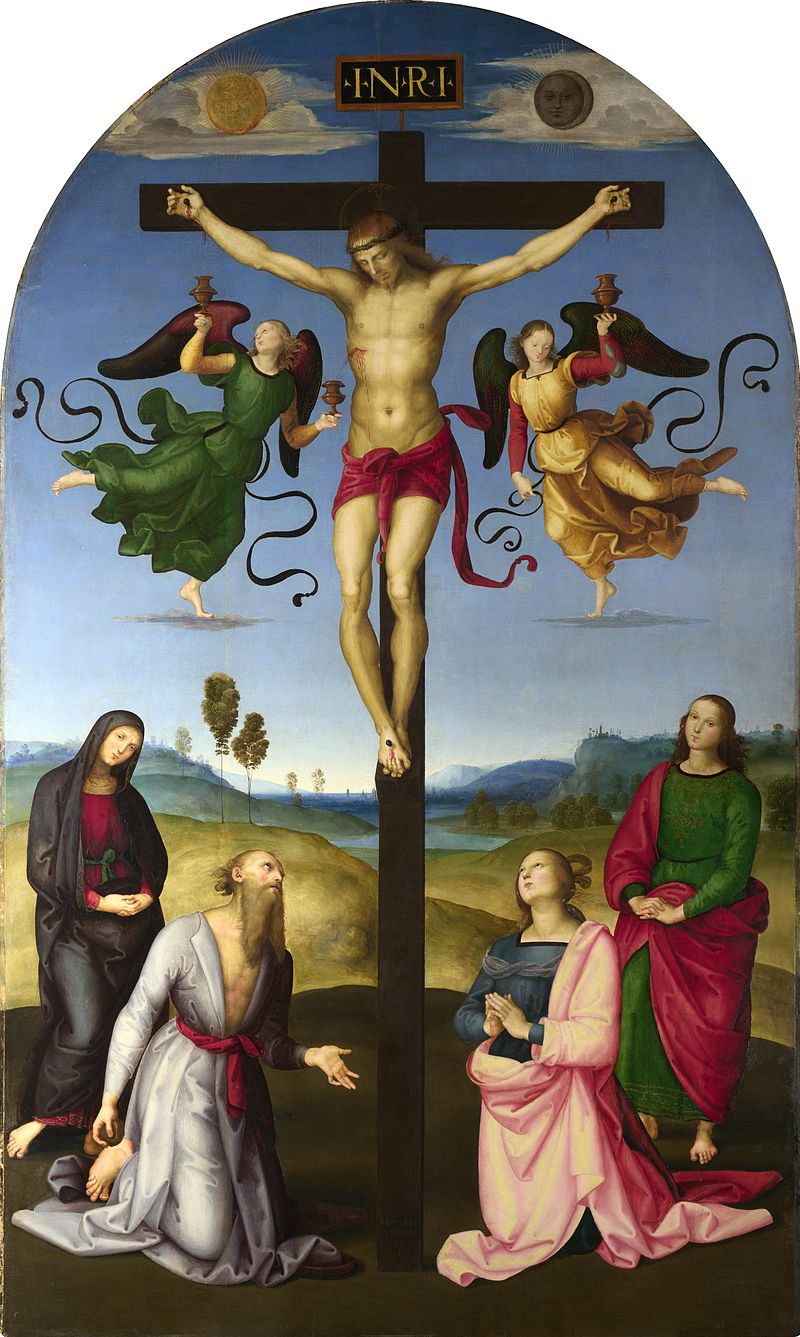
Pope Saint John Paul II’s Last Passion Sunday
(This is the last of Pope Saint John Paul II’s Passion-Palm Sunday homilies, given in 2004, before his own passion and death the following year, when he was unable – for the first time – to celebrate Mass on this Holy Day. Yet he worked in the Lord’s vineyard right up until the end, having[…]Continue reading→