
19th Sunday: The Sacred Host
Whoever eats of this bread will live forever; and the bread that I will give for the life of the world is my flesh. (Jn 6:51)
In our meditations on the Holy Sacrifice of the Mass we have considered the unchangeable heart of the Mass, the Canon or Eucharistic Prayer. It is the very heart of the Mass because this priestly prayer brings about the consecration of the offerings into the Body and Blood of our Saviour, the Bread of Life. We have noted that the sacred liturgy nourishes our human nature since it addresses the totality of our being: mind and body, intellect, memory, and will. The Eucharist specifically nourishes the seed of immortality which is an undeniable aspect of our personhood. “Whoever eats of this bread will live forever; and the bread that I will give for the life of the world is my flesh” (Jn 6:51).
The worship that we give to the Most Holy Trinity in the celebration of the Mass is, in fact, a foretaste and participation in the heavenly liturgy or the Beatific Vision. The Canon of the Mass is always preceded by the singing of the Sanctus, a hymn also called the Tersanctus from the Latin words ter and sanctus, meaning thrice holy. The first part of this hymn is the praise of the angels that both the Prophet Isaiah and St. John heard during their visions of heaven. St. John wrote in the Book of Revelation: “I looked, and behold a door was opened in heaven, and the first voice said: Come up hither … And immediately I was in the spirit: and behold there was a throne set in heaven, and upon the throne one sitting … And they rested not day and night, saying: Holy, holy, holy, Lord God Almighty, who was, and who is, and who is to come” (4:1-2, 8). The second half is the acclamation of the people when Jesus entered Jerusalem. “Hosanna in the highest. Blessed is he who comes in the name of the Lord.” The word Hosanna is Aramaic Hebrew and its literal meaning is Save me! I pray! but it has traditionally been used as a liturgical formula of praise. As we prepare to greet our Lord who will become present on the Altar we are one in adoration and in humble petition: Save me! I pray! Save me from my sins and from eternal death. Save not only me but the whole world.
The doxology which ends the Canon (Through Him, with Him, in Him…) is the solemn crowning of the Canon and it mirrors the Tersanctus which preceded the Canon. The Great Amen is our collective affirmation that you have united yourselves to this priestly prayer and that your prayers and voluntary sacrifices have been offered up with the Sacrifice of Our Lord. Now the sacrificial part of the Mass is complete and we seek to apply the fruits of this perfect Sacrifice to our souls. What follows is the recitation of the Our Father, the prayer which Our Lord Himself taught us to pray. In Christian tradition this prayer is seen as the perfect prayer. Give us this day our daily bread. This petition echoes the request made by those present at Our Lord’s Eucharistic discourse: “Sir, give us this bread always.” Jesus said to them, “I am the bread of life. Whoever comes to me will never be hungry, and whoever believes in me will never be thirsty” (Jn 6:35). The Our Father is a summary of what our life should be—a sacrifice of praise made possible through the grace of the Eucharist, the Bread from Heaven that enables us to obtain forgiveness of sin, the resisting of temptation and the deliverance from the penalty of sin. The priestly prayer that follows the Our Father is called the Embolism, an interpolation that expands the last petition of the Lord’s Prayer.
At this point the priest breaks the Bread and places a particle or small piece of the Host in the Chalice. To understand the symbolism of this action we need to recall that the blessing and breaking of unleavened bread is a central feature of the Jewish Passover ceremony. At the Last Supper, Our Lord broke the bread—signifying the separation of His Body and Soul at the moment of His death; and in so doing He brought to fulfillment what had been prefigured. The early Christians referred to the celebration of the Eucharist as the breaking of Bread. As the Priest breaks the Sacred Host at Mass, we also recall the miracle of the feeding of the five thousand which prefigures the feeding of Christians throughout the ages and the post-Resurrection appearance of Our Lord to the disciples on the road to Emmaus. “When he was at table with them, he took the bread and blessed, and broke it, and gave it to them. And their eyes were opened and they recognized him” (Lk 24: 30-31).
This action of placing a particle of the Host in the chalice symbolizes the miraculous reunion of Our Lord’s Body and Blood at the Resurrection. Just as the fraction of the Host symbolizes the death of the Lord, so the commingling symbolizes the Resurrection. What we receive at Holy Mass is the Lord’s Risen Body. This action also recalls the ancient practice of reserving a particle from the Host for the next day’s Mass. It was also customary for the communities to receive a Sacred Particle from the Mass celebrated by the Bishop. These particles were referred to as the Fermentum, the Latin word for leaven. These shared particles signified the unity of each and every Mass in the one Sacrifice of the Cross, and the Eucharistic unity of the Church.
Our knowledge and understanding of the sacred actions that are part of the celebration of the Holy Sacrifice of the Mass enable us to follow the ritual intelligently and to approach every Mass with awe and wonder. This is the spiritual disposition that the saints brought to the Mass. On 4 August we celebrated the Feast of St. John Marie Vianney, the Curé of Ars, Patron of Priests. They said of him that he celebrated Holy Mass with a devotion that was inspiring, to say the least. These simple yet profound words of his may help us to appreciate what happens to us when we assist at Holy Mass with devotion. My little children, your hearts are small, but prayer stretches them and makes them capable of loving God. Through prayer we receive a foretaste of heaven and something of paradise comes down upon us (Liturgy of the Hours, vol. IV, p. 1270). He transformed a parish that knew little of the adoration of God into a truly Eucharistic community whose life was centred on the celebration of the sacred mysteries in the liturgy. Though personally very humble and poor, he spared no expense in the worship of God. As we offer the sacrifice of our worship to our heavenly Father, let us ask St. John Vianney to intercede for each one of us individually and for our parish collectively that the Sacrifice of the Mass may truly be the pattern of our prayer and of our life. The life of the world and the wellbeing and salvation of the human family are at the heart of our prayer. Holy Communion is the fruit of Our Lord’s Sacrifice and the consummation of our prayerful union with Him in His saving work. Our reverent reception of this Sacrament is an act of adoration which in turn becomes love towards our neighbour.

Saint Kateri , Canada’s Protectress
This was the title given to Saint Kateri Tekakwitha, by Pope Benedict XVI, when he canonized her on October 28th, 2012, along with six others, in Saint Peter’ Square (she had been beatified by Pope John Paul II back in 1980). With Saint Joseph as our protector, along with the Canadian martyrs, we seem to[…]Continue reading→

Remembering Father Alphonse de Valk
(Today marks the sixth anniversary of the death of Father Alphonse de Valk, C.S.B., a faithful, courageous and indefatigable Basilian priest, pro-life-and-family apostle, and the founder of Catholic Insight magazine. Here is what we wrote those on his entering into eternity five years ago, as we continue to remember him in our prayers and thoughts)[…]Continue reading→

My Name is Bernadette
April 16th is a propitious day, for besides the anniversary of Father de Valk’s death, who founded Catholic Insight in its print form decades ago, and the commemoration of the ‘two Benedicts’, mentioned in accompanying posts, today we also recall Saint Bernadette Soubirous, the young visionary to whom the Virgin Mary appeared numerous times at[…]Continue reading→
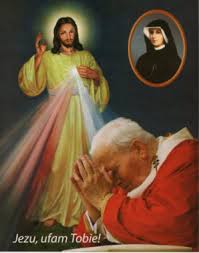
Canonizing Sister Faustina and Divine Mercy
HOMILY OF THE HOLY FATHER MASS IN ST PETER’S SQUARE FOR THE CANONIZATION OF SR MARY FAUSTINA KOWALSKA Sunday, 30 April 2000 1. “Confitemini Domino quoniam bonus, quoniam in saeculum misericordia eius”; “Give thanks to the Lord for he is good; his steadfast love endures for ever” (Ps 118: 1). So the Church sings on the Octave of[…]Continue reading→

Divine Mercy Sunday – An Echo of Every Mass
Reach out your hand and put it in my side. Do not doubt but believe’… ‘My Lord and my God!’ (Jn. 20:18)). Today is Divine Mercy Sunday, and as we celebrate the end of the Easter Octave, we contemplate the wounded side of our Saviour, the Church’s source of life. On Good Friday in the[…]Continue reading→

Saint Stanislaus of Szczepanów
We celebrate Saint Stanislaus today (+ April 11, 1079), in light of this Easter Octave, a bishop and martyr who accepted the episcopacy only at the direct order of Pope Alexander II. He proved a wise and courageous leader of his flock, put to death by his own king, Boleslaus, for rebuking the monarch’s ‘immoral[…]Continue reading→
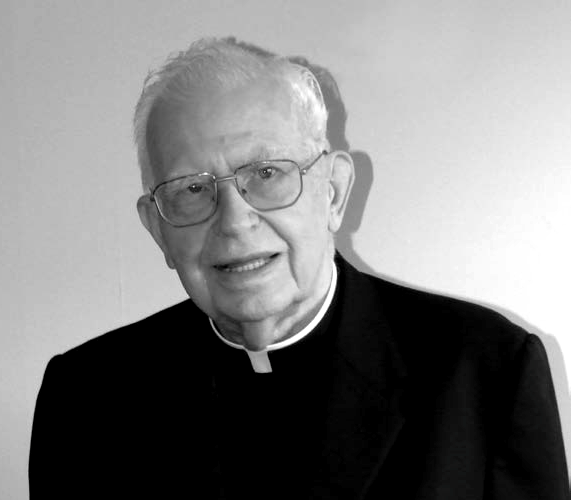
First Holy Communion: Sermon from May 16, 1943
Here is a sermon from the good old days by +Rev. Msgr. Vincent Nicholas Foy (August 14, 1915 – March 13, 2017), from 1943. Readers may recall that Pope Saint Pius X, by the decree Quam Singulari in 1910, lowered the customary age of reception of Holy Communion – after the rigours of the plague[…]Continue reading→
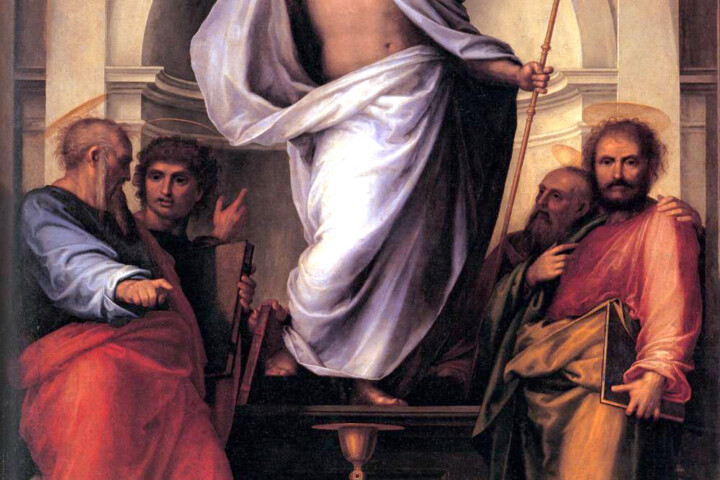
In the Glorious Light of Easter, Alleluia!
Set your minds on things that are above, not on things that are on earth, for you have died, and your life is hidden with Christ in God. When Christ who is your life is revealed, then you also will be revealed with him in glory (Col. 3:3-4). The Resurrection of Our Lord and Saviour[…]Continue reading→
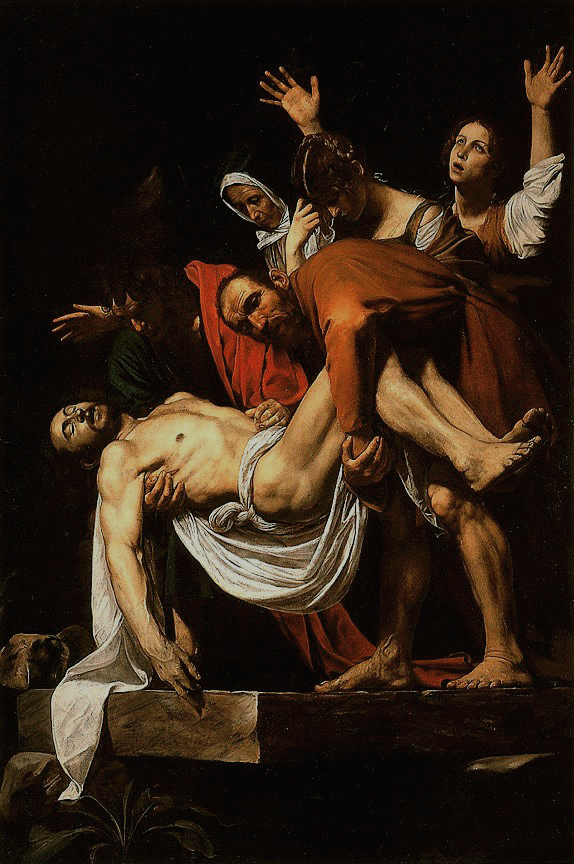
An Ancient Homily for Holy Saturday
The time between Good Friday and Easter Sunday is one of waiting, in silence, as the world wonders – anticipates – what will happen, after the death of Christ. We re-live this time each year in the anamnesis of our liturgy, and in turn look forward to the glorious re-creation of all things at the[…]Continue reading→
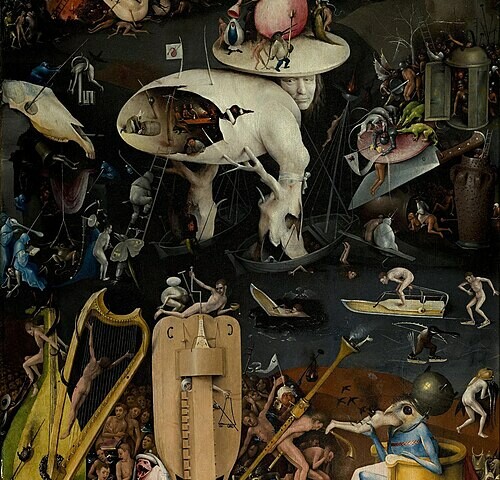
Europe’s Long Descent
(As we meditate on this day on Christ’s burial, and His descent into hell, it is fitting to ponder here with contributor Peter Marcus how the world seems to be heading there as well. The difference is that, although God cannot ‘redeem’ hell, nor those therein, He can and did redeem the world. There is[…]Continue reading→