
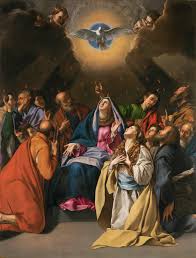
Pentecost Sunday: The Spirit of Truth
When the Advocate comes, whom I will send to you from the Father, the Spirit of truth who comes from the Father, he will testify on my behalf. You also are to testify because you have been with me from the beginning. (Jn 15:26)
With the Solemnity of Pentecost which today we celebrate with joy and thanksgiving, the seven weeks of Easter come to an end and Christ our Lord’s “Passover is fulfilled in the outpouring of the Holy Spirit, manifested, given and communicated as a divine person: of his fullness, Christ, our Lord, pours out the Spirit in abundance” (Catechism of the Catholic Church 731). As the Feast of Pentecost is described in the Old Testament, it is a harvest festival reckoned by counting seven weeks from the beginning of the grain harvest (Cf. Lv 23:15-21). Hence its name, which in Greek means the fiftieth day (hé pentekosté hemerâ). In the Christian era this Jewish Feast received a historical motif and became the anniversary of the giving of the law to Moses. Both motifs help us to celebrate the Christian Feast of Pentecost and understand the gift of the Holy Spirit as the fruit of the Paschal Mystery and the gift of the New Law of grace.
The gift of the Holy Spirit begun at Pentecost never ceases and the Holy Spirit “causes the world to enter into the ‘last days,’ the time of the Church, the Kingdom already inherited though not yet consummated” (Catechism of the Catholic Church 732). What this means practically is that there exists a state of tension (to put it mildly) between the Kingdom of Christ and the world. Our first reading from the Acts of the Apostles lists peoples of varied lands and cultures who on that first Pentecost day heard the saving message of the Gospel: Parthians, Medes Elamites, residents of Mesopotamia, Cretans and Arabs and so on. In the third millennium of the Christian era many other peoples could be added to this list. Our long history is a chronicle of efforts to spread the saving message of the Gospel; to declare to others what we ourselves have received from the Holy Spirit (Cf. Jn 16:15).
“When the Advocate comes, whom I will send to you from the Father, the Spirit of truth who comes from the Father, he will testify on my behalf” (Jn 15:26). St. Hilary, one of the early Church’s great theologians, explains that “we receive the Spirit of truth so that we can know the things of God” (“On the Trinity” in The Liturgy of the Hours, Vol. II, p. 999). To know the things of God is to know the truth about everything—not necessarily the how of things as in, for example, how the world came to be—but the why of things. To understand the purpose of any given thing is ultimately more important because this enables us to judge and use it wisely. And more importantly, to understand ourselves in view of our ultimate purpose; both in relation to God and in relation to one another. Today’s great Feast clearly reveals to us that we were created for glory, to share in God’s own life through the gift of the Holy Spirit. This is our ultimate purpose.
In the absence of an ultimate purpose, things and even people can be viewed in isolation and this perspective is more easily prone to abuse. This is why the preaching of the Gospel is almost always met with opposition and even violence. Authentically preached and received, the Gospel always brings about a conversion, a change from darkness to light, from vice to virtue. For this reason, at the forefront of our minds and hearts we keep the words of our Lord: “In the world you have tribulation; but be of good cheer, I have overcome the world” (Jn 16:33). The world is becoming increasingly more intolerant and even violent in the face of Christian truth. In discussions and debates that concern the meaning and purpose of human life, human sexuality and truth itself, there is little or no tolerance for the moral absolutes that we have received from God Himself. Though it is at first hearing quite incredible, it is estimated that in the world today, every five minutes a Christian is murdered for his faith in Christ. It is estimated that one hundred thousand Christians are killed every year for their faith. These are staggering numbers in a world that prides itself on its alleged tolerance. Our own society has been tilted forcibly from virtue to vice and it seems that there is little room for the Spirit of truth promised by our Lord.
What are we to do? We must do what others have done before us and speak the truth in love (Cf. Eph 4:15), mindful of our Lord’s consoling words: “Fear not, little flock, for it is the Father’s pleasure to give you the kingdom” (Lk 12:32). Our age is no different from others in the sense that discipleship is always, first and foremost, a personal endeavour. Though the gift of the Holy Spirit is offered to everyone who believes, it is given to each man in proportion to his readiness to receive it (“On the Trinity” in The Liturgy of the Hours, Vol. II, p. 999). Are we willing to be one with Christ in His saving mission? Are we willing to bear witness to the truth?
Christian discipleship is not easy, evidently—but it is meaningful and purposeful. For each one of us, our Lady, Mary the Mother of Jesus, is a model of faithful discipleship and of humble cooperation with the work of the Holy Spirit. As she was one in prayer with Apostles and the Lord’s disciples awaiting the gift of the Holy Spirit (Cf. Acts 1:14), she is one with us who today celebrate the outpouring of the Holy Spirit. The Church of God, to which we by His grace belong, in her whole being and in all her members is the sacrament of the mission of Christ our Lord and of the Holy Spirit. In all humility we pray that the Holy Spirit who at Pentecost began the teaching of the Gospel may continue to work in our world through the hearts of all of us who believe.

Remembering Father Alphonse de Valk
(Today marks the sixth anniversary of the death of Father Alphonse de Valk, C.S.B., a faithful, courageous and indefatigable Basilian priest, pro-life-and-family apostle, and the founder of Catholic Insight magazine. Here is what we wrote those on his entering into eternity five years ago, as we continue to remember him in our prayers and thoughts)[…]Continue reading→

Divine Mercy Sunday – An Echo of Every Mass
Reach out your hand and put it in my side. Do not doubt but believe’… ‘My Lord and my God!’ (Jn. 20:18)). Today is Divine Mercy Sunday, and as we celebrate the end of the Easter Octave, we contemplate the wounded side of our Saviour, the Church’s source of life. On Good Friday in the[…]Continue reading→

Saint Stanislaus of Szczepanów
We celebrate Saint Stanislaus today (+ April 11, 1079), in light of this Easter Octave, a bishop and martyr who accepted the episcopacy only at the direct order of Pope Alexander II. He proved a wise and courageous leader of his flock, put to death by his own king, Boleslaus, for rebuking the monarch’s ‘immoral[…]Continue reading→
First Holy Communion: Sermon from May 16, 1943
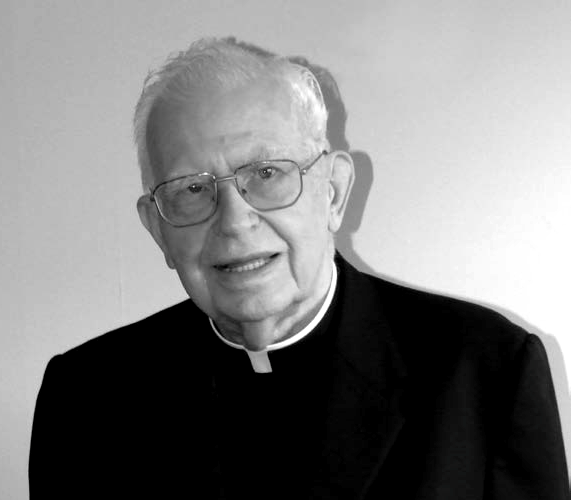
Here is a sermon from the good old days by +Rev. Msgr. Vincent Nicholas Foy (August 14, 1915 – March 13, 2017), from 1943. Readers may recall that Pope Saint Pius X, by the decree Quam Singulari in 1910, lowered the customary age of reception of Holy Communion – after the rigours of the plague[…]Continue reading→
In the Glorious Light of Easter, Alleluia!
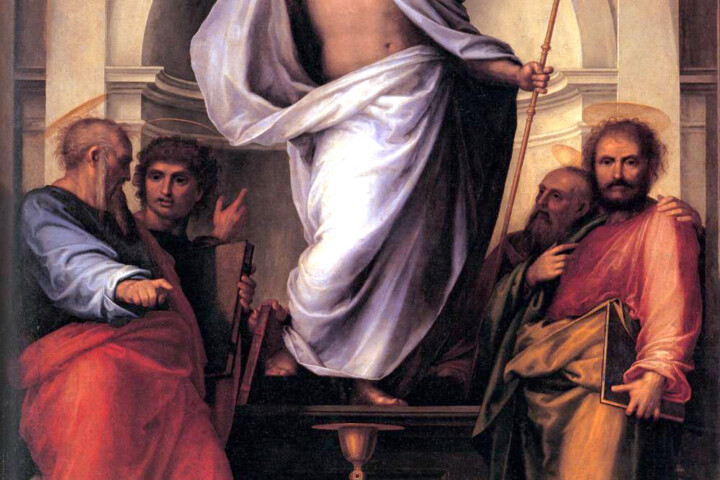
Set your minds on things that are above, not on things that are on earth, for you have died, and your life is hidden with Christ in God. When Christ who is your life is revealed, then you also will be revealed with him in glory (Col. 3:3-4). The Resurrection of Our Lord and Saviour[…]Continue reading→
An Ancient Homily for Holy Saturday
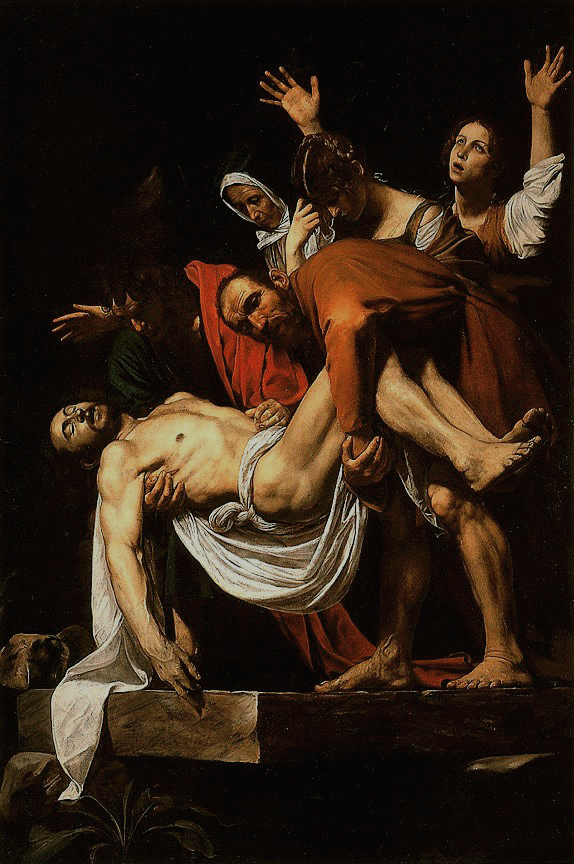
The time between Good Friday and Easter Sunday is one of waiting, in silence, as the world wonders – anticipates – what will happen, after the death of Christ. We re-live this time each year in the anamnesis of our liturgy, and in turn look forward to the glorious re-creation of all things at the[…]Continue reading→
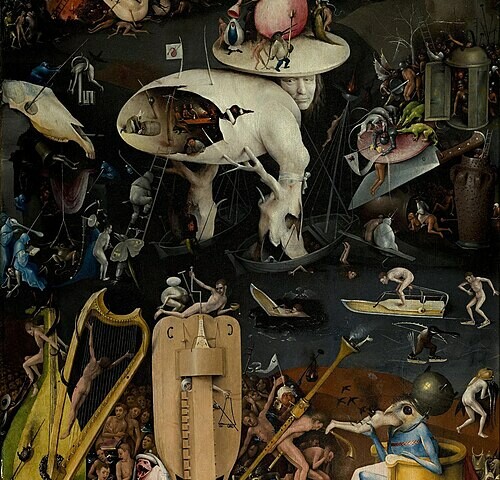
Europe’s Long Descent
(As we meditate on this day on Christ’s burial, and His descent into hell, it is fitting to ponder here with contributor Peter Marcus how the world seems to be heading there as well. The difference is that, although God cannot ‘redeem’ hell, nor those therein, He can and did redeem the world. There is[…]Continue reading→
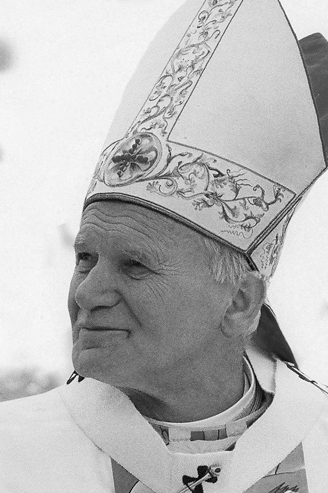
Pope Saint John Paul II’s First Good Friday Homily
ADDRESS OF HIS HOLINESS JOHN PAUL II AT THE CONCLUSION OF THE STATIONS OF THE CROSS AT THE COLOSSEUM Good Friday, 13 April 1979 When we make the Way of the Cross from one station to the next, in spirit we are always at the spot wherethis journey had its “historical” place: where it[…]Continue reading→
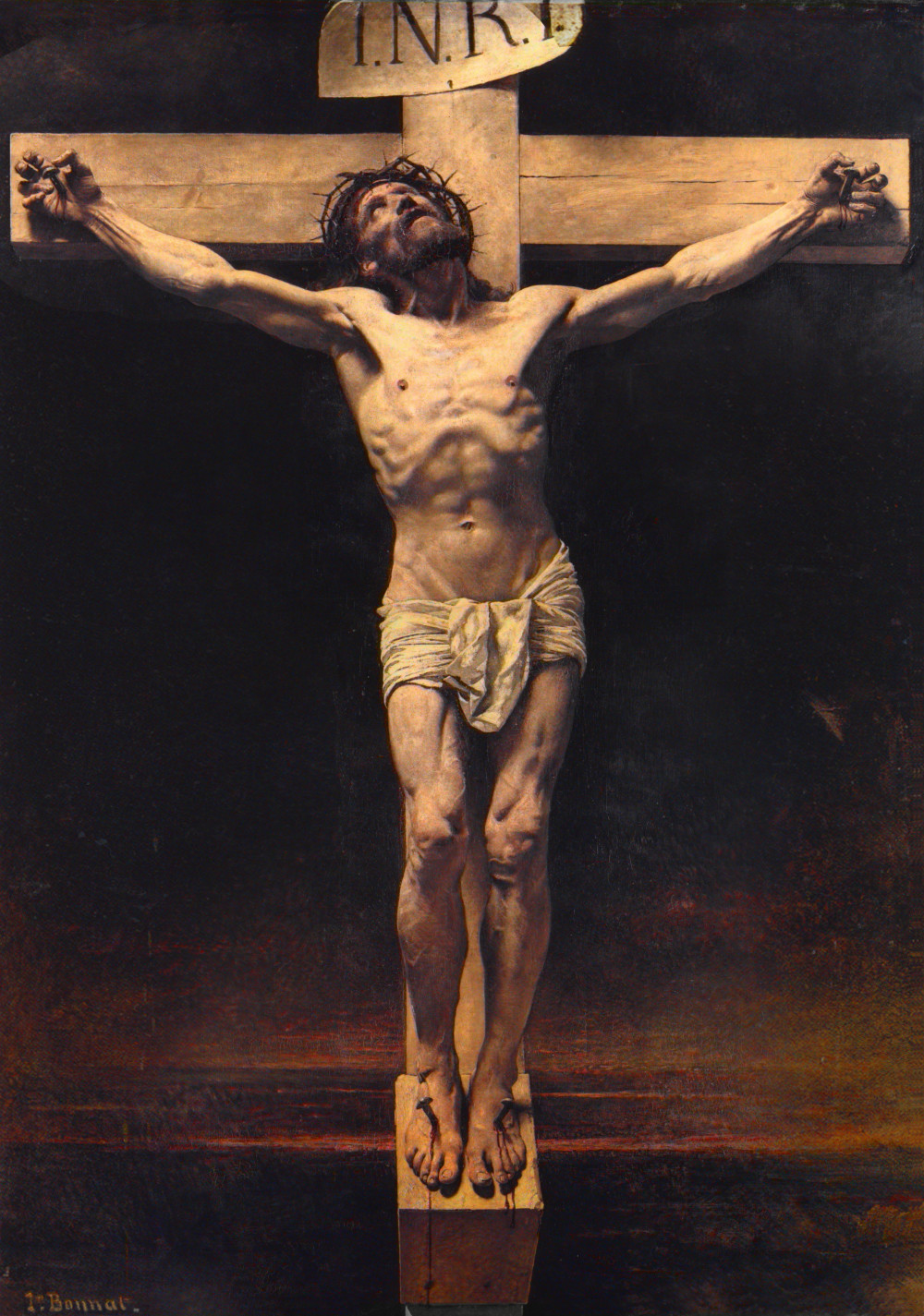
A Meditation for Good Friday: How To Undo the Effects of Sin?
Cardinal Newman, now Saint John Henry Newman, was a towering figure of nineteenth-century Catholicism who is almost universally admired. I say “almost” because not everyone likes him. I knew a priest once, Arthur Caulkins, who has become disenchanted with Newman. As an undergraduate Arthur had been enamoured of Newman, and this interest continued when he[…]Continue reading→
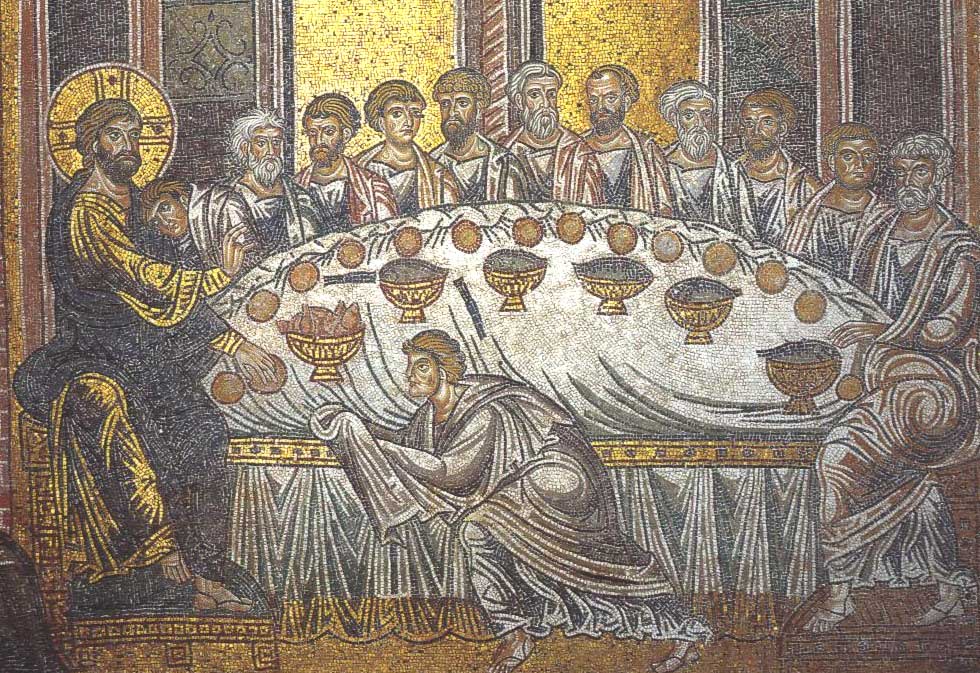
Pope Benedict’s Last Holy Thursday Homily
MASS OF THE LORD’S SUPPER HOMILY OF HIS HOLINESS BENEDICT XVI Basilica of St John Lateran Holy Thursday, 5 April 2012 Photo Gallery (Video) Dear Brothers and Sisters! Holy Thursday is not only the day of the institution of the Most Holy Eucharist, whose splendour bathes all else and in some ways draws it to[…]Continue reading→