
5th. Sunday of Easter: Abide in Me as I abide in you
Abide in me as I abide in you. Just as the branch cannot bear fruit by itself unless it abide in the vine, neither can you unless you abide in me. (Jn. 15:4).
In today’s Gospel reading, Our Lord speaks of the reality of our union with Him as a mutual indwelling (perichoresis). Abide in me as I abide in you. These words are not meant to be understood metaphorically or symbolically. They express the reality of our life in Christ through the Sacraments, especially the union that is brought about or effected through the Blessed Eucharist or what we logically call Holy Communion. As Christians, we bear the name of Christ and though each one of us is rightly constituted as an individual, through our mutual indwelling with our Lord, we share in His life. No words of Scripture express this truth as effectively as this well-known verse from St. Paul’s Epistle to the Galatians: “I have been crucified with Christ; it is no longer I who live, but Christ who lives in me; and the life I now live in the flesh I live by faith in the Son of God, who loved me and gave himself for me” (2:20).
When we renewed our Baptismal promises on Easter Sunday, we effectively vowed to deepen our union with Christ our Lord and to live the mystery of this life in all its fullness. In the traditional order in which the Sacraments are conferred, the Sacrament of the Eucharist completes our initiation in the Mystery of Christ. This is reflected in the liturgical season of Easter. Easter Sunday recalls our Baptism; Pentecost, our Confirmation; and the Solemnity of Corpus Christi, the Blessed Eucharist, the Sacrament in which we experience our Lord’s indwelling in a manner that is most intimate and personal. The Sacred Liturgy forms Christ in us so that we make our own the words of St John the Baptist: “He must increase, but I must decrease” (Jn. 3:30).
This unity or mutual indwelling is what we experience especially when we receive Holy Communion. Jesus Himself bore witness to the reality of this unity when He said: “He who eats my flesh and drinks my blood lives in me and I in him” (Jn. 6:56). This then, is our union with the Son, a union brought about through the Eucharist. Our Lord also said: “As the living Father sent me and I draw life from the Father, so he who eats my flesh will draw life from me” (Jn. 6:57). If we but take these words at face value, we see how great is our dignity; that God Himself shares His life with us and we also see how absolutely necessary it is for us to examine how and with what dispositions we approach the Altar for Holy Communion. Our devout participation in the Holy Sacrifice of the Mass is a clear expression of our understanding that the desired end or goal of our participation in the Church’s sacramental life is an experience of and a participation in the Mystery of God’s life, a mutual indwelling; a communion with the Father, and the children of the Father, God and neighbour. The Mass is a weekly reminder of the transcendent purpose of our life and it is always a much needed reminder because it is very easy for us to lose our way; and when this happens it is also easy to lose oneself.
The gift of salvation is not something external – simply a state received; but a sharing in the communion of life that is God. It is a work that Jesus accomplishes both for us and with us. If this is what we affirm to be true about revelation and salvation, then we must also affirm that God can only be truly known in a personal way; through prayer. When we arrive at this truth, everything changes because we change and we deliberately endeavour to be transformed into God’s likeness. We become aware of our dignity, we recognize the dignity of every person and we begin also to understand the mystery of the Church established by Jesus Christ as a communion of life, love and truth (Lumen Gentium, 9).
In the Mass we are one with our Lord in His Sacrifice and this Mystery is the source of our never-ending renewal and transformation. Here we heed the Apostle’s exhortation: “I appeal to you … by the mercies of God to present your bodies as a living sacrifice, holy and acceptable to God, which is your spiritual worship” (Rom. 12:1). St. Peter Chrysologus explains: “Each of us is called to be both a sacrifice to God and His priest. Do not forfeit what divine authority confers on you. Put on the garment of holiness…. Keep burning continually the sweet-smelling incense of prayer. Take up the sword of the spirit. Let your heart be an altar. Then with full confidence in God, present your body for sacrifice. God desires not death, but faith; God thirsts not for blood, but for self-surrender; God is appeased not by slaughter, but by the offering of your free will” (St. Peter Chrysologus, Sermon 108, Liturgy of the Hours, Vol. II, p. 772). The offering of our very selves in imitation of our Saviour is a logical consequence of this mutual indwelling that is ours in Christ our Lord who has left us an example; that we should follow in his footsteps (Cf. 1Pet. 2:21). Each Sunday, daily even, we have the privilege of celebrating the immolation of Christ sacramentally in the Eucharist. Each Sunday is truly a new beginning of our lives until at last, having gone from Sabbath to Sabbath we enter into the rest of God in the eternal Sabbath; when God the Father calls us to Himself to dwell in the Heavenly Jerusalem, the city that gleams with the splendour of God (Cf. Rev. 21:11).
The prayer of the Mass, especially our prayer of adoration and thanksgiving, is extended in the form of prayer known as Eucharistic Adoration. During his long pontificate Pope St. John Paul II did very much to foster Eucharistic Adoration because the practice had almost disappeared in many parts of the world. In a document he reminded us: “The Church and the world have great need for Eucharistic worship. Jesus waits for us in this sacrament of love. Let us be generous with our time in going to meet Him in adoration and contemplation that is full of faith and ready to make reparation for the great faults and crimes of the world. May our adoration never cease: (Apostolic Exhortation On the Mystery and Worship of the Eucharist, Dominicae Cenae, February 24, 1980). As we begin the month of Our Lady, may Our Lady of the Blessed Sacrament obtain for us a deep and generous devotion to the Mystery of the Eucharist for this is the Mystery that we celebrate and venerate and on this Mystery we pattern our lives.
A Closed, Unsustainable, Descending Loop
As a follow-up to my thoughts on Payette’s payout, here be a stark image of where are here in Canada. As the graph shows in, well, graphic terms, since 2025, the public sector has contributed to 95.5% of economic growth. The private sector – which funds the public sector, or is supposed to – has[…]Continue reading→
Pope Leo and a Rosary for Peace
Pope Leo XIV has asked Catholics across the world to join him in a Rosary for peace today, at 18:00 Rome time (6 pm), which would be noon from where I write (EST). If you are able, whether at that time or another, and in whatever way you pray, to join in intercession with the[…]Continue reading→
Payette’s Payout
I was glancing through some headlines, and noticed a mention of Julie Payette – engineer and astronaut and sometime the Queen’s representative in Canada – which brought back vague memories. She was appointed Governor-General by Justin Trudeau in 2017. Ms. Payette resigned in 2021, amidst claims that she created a ‘toxic work environment’, with allegations[…]Continue reading→
Your Easter Prayer
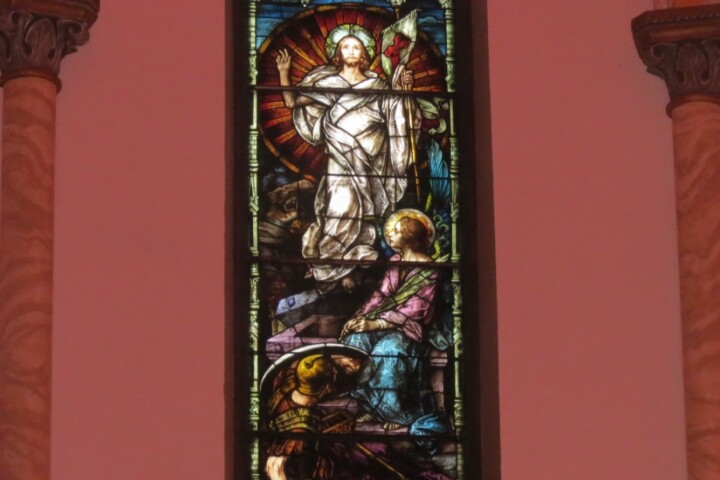
Happy Easter Lord Jesus Christ. It’s Easter day and we smile In the Lord’s in gentle light and His tomb is bare the stone is rolled A story new that must be told And Lord Jesus Christ We love you it’s so true and Lord Jesus Christ has risen From his sleep and the Promises[…]Continue reading→
Three Musical Offerings for the Annunciation
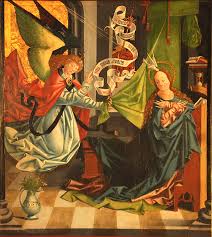
A very blessed Solemnity of the Annunciation to one and all! This March 25th marking the greatest event in history – the Incarnation of the Son of God – goes back to the very origins of the Church, and changed everything. What was lost, is now found, what was dead, is now very much alive.[…]Continue reading→
Eleganti Sums up the SSPX
Bishop Marian Eleganti, auxiliary emeritus of Chur, Switzerland, through which I happened to pilgrimage last summer, sums up the irregular situation of the SSPX. His thoughts bear pondering: Firstly, acting with full autonomy without papal mandate or confirmed mission; secondly, operating with bishops not in union with the Pope and the episcopal college; thirdly, maintaining[…]Continue reading→
The Perils of Sedevacantism
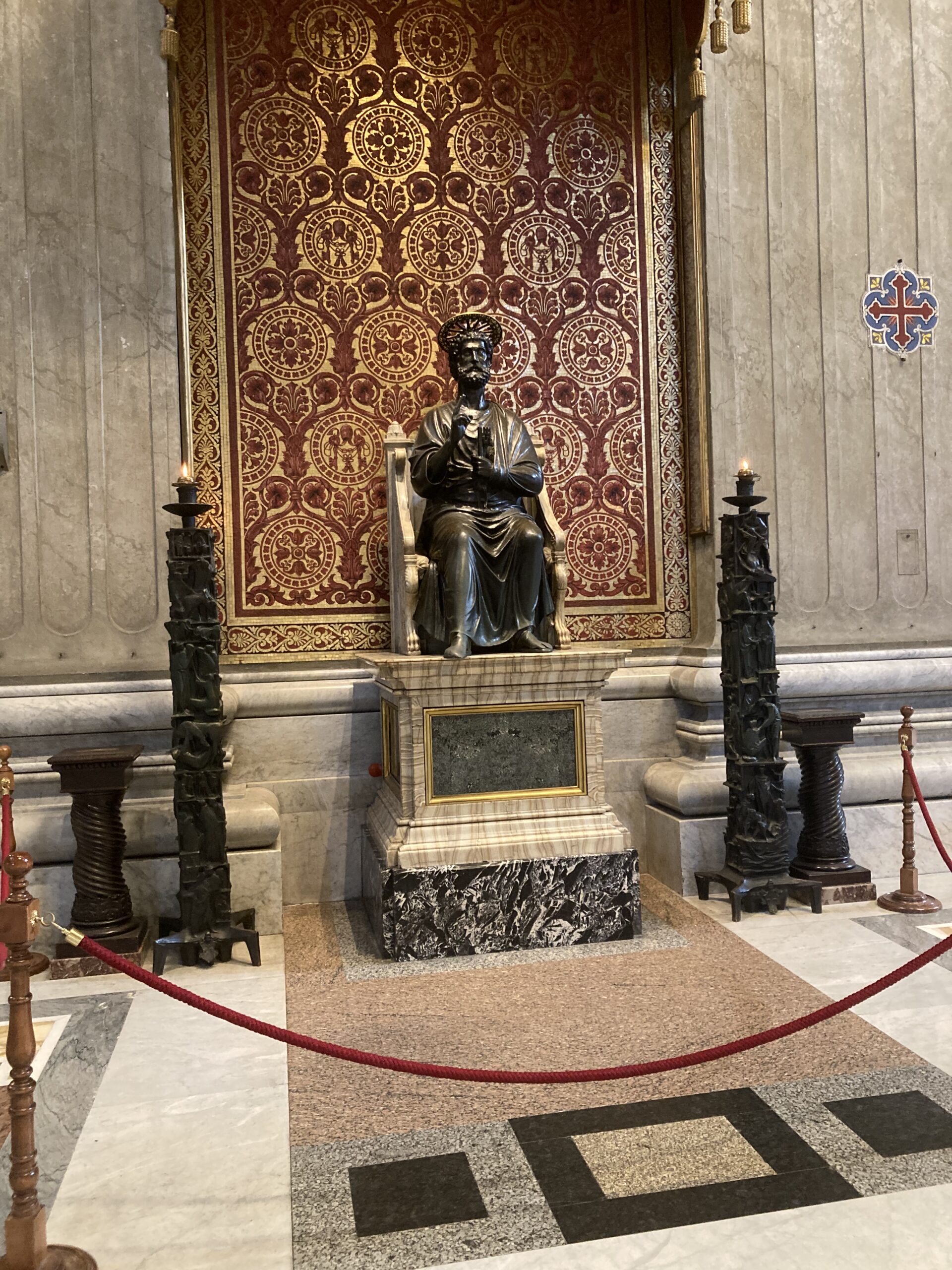
(With John-Henry Westen of LifeSite raising the question of sedevacantism, urging a petition for the cardinals to question the validity of Francis’ and Leo’s papacies, here is a re-post of something I wrote earlier, on why we must tread with great caution in declaring a papacy, or any given pope, null and void. Whatever good[…]Continue reading→

Entropic AI
Entropy may be described as the tendency of all things degrade, to move from order to disorder, from cosmos to chaos, from specificity to entropy. It is the inevitable consequence of any closed system, and encapsulated as the Second Law of Thermodynamics. Any such system – whether that be a machine, a living organism, a[…]Continue reading→
How Do We Know Christ Really Lived?
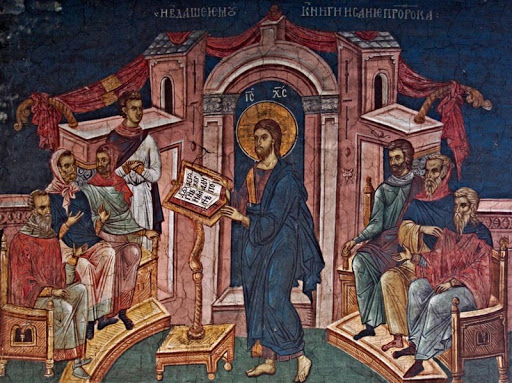
Every now and then we hear in various and sundry places one of the greatest blasphemies of them all: that Jesus never really lived and that the reports of his life and teachings, his death and resurrection, were all made up by unscrupulous men apparently bent on exploiting others for greed and power. At this[…]Continue reading→
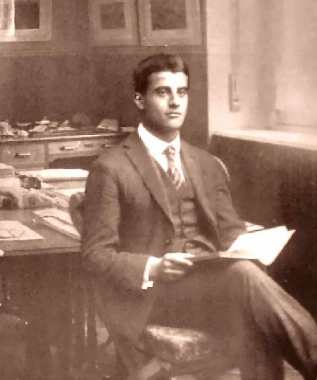
“Verso L ’Alto” – A Meditation on the Hidden Sanctity of Pier Giorgio Frassati
The Italian Alps — that formidable stretch of Europe’s great mountain arc — rise in dramatic splendour above the landscape that so enduringly shaped St. Pier Giorgio Frassati’s life of prayer and adventure. The Australian Alps, sharing the name only in part, resemble their European counterparts more in spirit than in scale. In the former,[…]Continue reading→