
Where have all the new religions gone?
It’s been a while since anyone started a new religion. It’s not as easy as you think. You have to get a believable number of people to believe that you have some special insight into ultimate things. In recent times, we call these clusterings “cults” (though, like so much of our modern English usage, it is the wrong word), and they center around one charismatic (also the wrong word) individual, who calls all the shots. They generally do not last more than a generation. When the leader does not survive, neither does his following.
Generally, a new religion does not offer anything new. It is usually one of two things: a new Protestant sect (both “Protestant” and “sect” are accurate words here—something that has reacted against traditional Christianity, that is, the Catholic Church, and has broken away from the main body of it, become a “section”), or it is a western variation of eastern religion: vaguely pantheistic, vaguely Buddhistic, vaguely interiorized, vaguely vague. It is derived from generalizations about the transcendent or the other and, of course, the brotherhood of all mankind. Or rather, the oneness of all peoples. Or all things.
What new religions lack is a theology. A dogma. And of course, its constituents hold this up as a good thing. It is the lack of dogma that has drawn them to the new religion. It is certain dogmas they dislike that have driven them from the old religion. But it is also that attractive lack of dogma that will guarantee the demise of the new religion. Religions that grow have strong dogmas, religions that wither have weak dogmas. Generalizations do not satisfy. Platitudes do not provide permanence. As G.K. Chesterton says, “When men worship the All, they produce the Nothing.”
A religion cannot be based on a mood. Ultimately, people want the ultimate. They want the rule, and they want the dogma. They want definitions. They want answers to their questions. They will be satisfied with bad answers before they are satisfied with no answers. The new religions may soothe like a salve, but they do not heal.
Listen to this amazing observation from Chesterton from almost one hundred years ago:
“The New Religions profess to be new; but they never really venture beyond the most ancient and general maxims about the unity of God and the fellowship of mankind. They profess to be bold and innovating, but in truth they are too timid to trust themselves beyond the most grandmotherly truisms. They profess to be skeptical and inquiring, but in fact they never venture to ask any of the controversial questions, any of the questions on which men have disagreed and might disagree again—Can suicide be noble? May sex be abnormal? Is the Will free? Can the soul be lost? They follow everywhere the line of least resistance. . .”
Following the path of least resistance is similar to how Jesus described the broad road to hell.
Dogmas have to deal with what Chesterton calls “the disputable matters”: sex and suicide, free will and justice. The religion has to make definitions and decisions about these things. If it does not define things clearly, the lines blur between itself anything else.
And of course, the disputable matters will be disputed. But to avoid them is to avoid God. And what is the legacy of the new religions? What is the result of trying to do away with answering the controversial questions? Today we face the normalization of suicide, the bland acceptance of sexual perversion, the shunning of responsibility because of the theories that leave out free will, and the disregard for the eternal, especially the eternal disposition of the soul. The things that the new religions would not deal with are very things we cannot now talk about in regards to the moral responsibility in the major matters of our lives. We certainly do not talk about Heaven and Hell.
And as the new religions of the last century quickly bloomed and quickly withered, what replaced them? Did people return to the traditional faith? A few did. The sincere soul who seeks will find the truth. But for the most part, we have seen a movement away from religion altogether. We have moved from “It doesn’t matter what your religion is,” to “It doesn’t matter if you have a religion.” Because the false religions proved themselves to be false, people gave up on religion rather than seeking a religion that is true. They realized that a religion that more or less approved their sins was not genuine, but it was easier to get rid of the religion than to get rid of their sins.
A genuine religious revival begins with a call to repentance. This explains the popularity of St. John the Baptist. People flocked to hear an obviously holy man tell them turn from their sins. He paved the way to Christ who provided the redemption they knew they needed. It explains why we begin the way to Easter and the promise renewal with a long Lent, a time of penance. The Catholic Church is clear about sin, clear about the controversial questions, the “disputable matters.” That is why it has outlasted all the new religions.
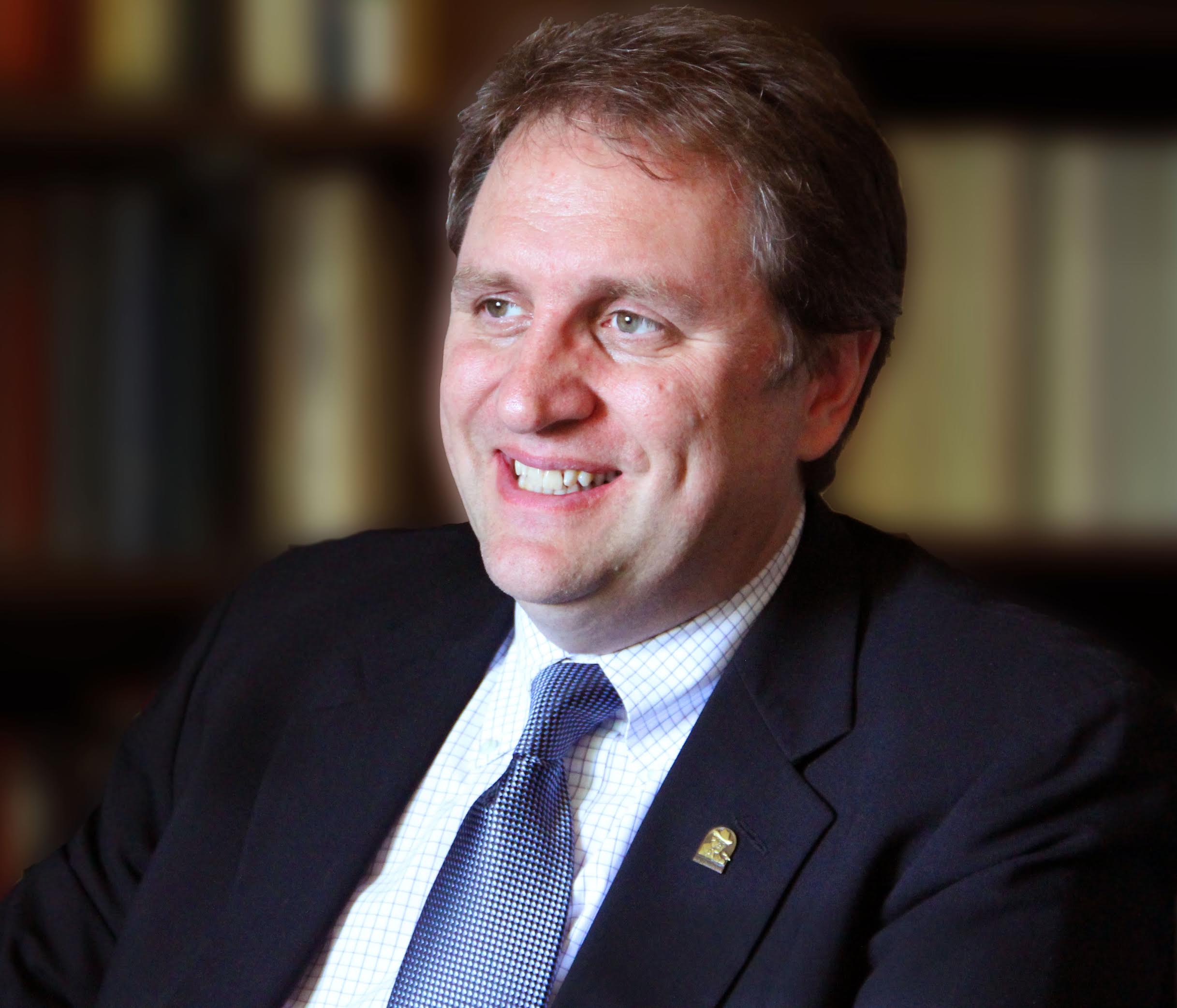
Dale Ahlquist is the president and co-founder of the American Chesterton Society (www.chesterton.org). He is the creator and host of the Eternal Word Television Network series, “G.K. Chesterton: The Apostle of Common Sense,” and the author of G.K. Chesterton: Apostle of Common Sense, The Complete Thinker, and All Roads: Roamin’ Catholic Apologetics. Dale is also the publisher of Gilbert magazine and associate editor of the Collected Works of G.K. Chesterton (Ignatius Press). He lives near Minneapolis, Minnesota with his wife and six children.

Saint Kateri , Canada’s Protectress
This was the title given to Saint Kateri Tekakwitha, by Pope Benedict XVI, when he canonized her on October 28th, 2012, along with six others, in Saint Peter’ Square (she had been beatified by Pope John Paul II back in 1980). With Saint Joseph as our protector, along with the Canadian martyrs, we seem to[…]Continue reading→

Remembering Father Alphonse de Valk
(Today marks the sixth anniversary of the death of Father Alphonse de Valk, C.S.B., a faithful, courageous and indefatigable Basilian priest, pro-life-and-family apostle, and the founder of Catholic Insight magazine. Here is what we wrote those on his entering into eternity five years ago, as we continue to remember him in our prayers and thoughts)[…]Continue reading→

My Name is Bernadette
April 16th is a propitious day, for besides the anniversary of Father de Valk’s death, who founded Catholic Insight in its print form decades ago, and the commemoration of the ‘two Benedicts’, mentioned in accompanying posts, today we also recall Saint Bernadette Soubirous, the young visionary to whom the Virgin Mary appeared numerous times at[…]Continue reading→
Canonizing Sister Faustina and Divine Mercy
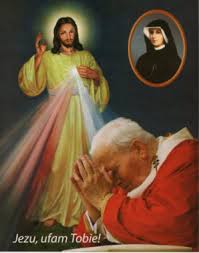
HOMILY OF THE HOLY FATHER MASS IN ST PETER’S SQUARE FOR THE CANONIZATION OF SR MARY FAUSTINA KOWALSKA Sunday, 30 April 2000 1. “Confitemini Domino quoniam bonus, quoniam in saeculum misericordia eius”; “Give thanks to the Lord for he is good; his steadfast love endures for ever” (Ps 118: 1). So the Church sings on the Octave of[…]Continue reading→

Divine Mercy Sunday – An Echo of Every Mass
Reach out your hand and put it in my side. Do not doubt but believe’… ‘My Lord and my God!’ (Jn. 20:18)). Today is Divine Mercy Sunday, and as we celebrate the end of the Easter Octave, we contemplate the wounded side of our Saviour, the Church’s source of life. On Good Friday in the[…]Continue reading→
First Holy Communion: Sermon from May 16, 1943
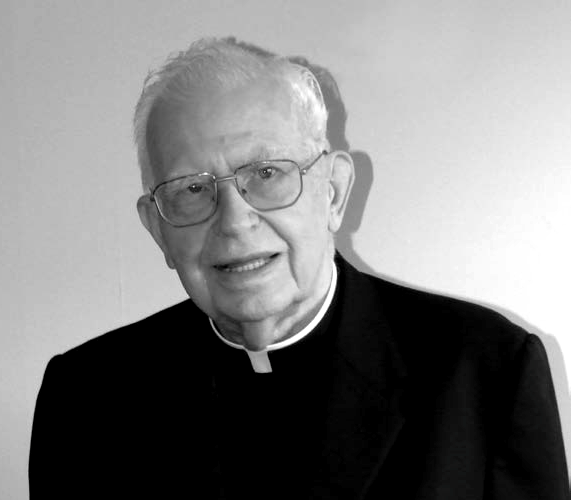
Here is a sermon from the good old days by +Rev. Msgr. Vincent Nicholas Foy (August 14, 1915 – March 13, 2017), from 1943. Readers may recall that Pope Saint Pius X, by the decree Quam Singulari in 1910, lowered the customary age of reception of Holy Communion – after the rigours of the plague[…]Continue reading→
In the Glorious Light of Easter, Alleluia!
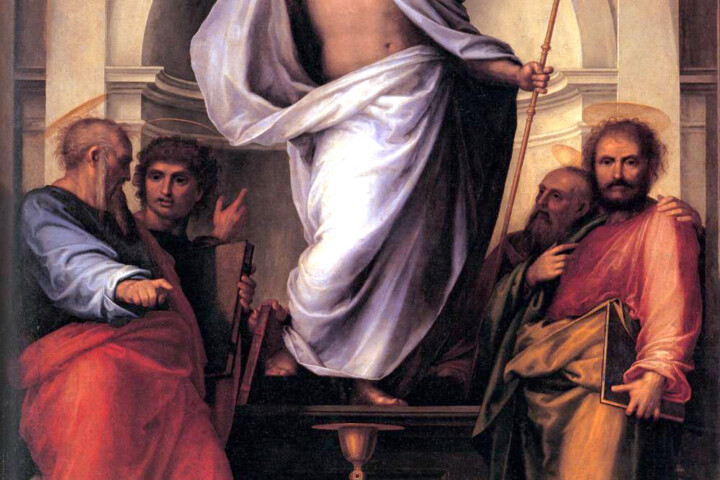
Set your minds on things that are above, not on things that are on earth, for you have died, and your life is hidden with Christ in God. When Christ who is your life is revealed, then you also will be revealed with him in glory (Col. 3:3-4). The Resurrection of Our Lord and Saviour[…]Continue reading→

An Ancient Homily for Holy Saturday
The time between Good Friday and Easter Sunday is one of waiting, in silence, as the world wonders – anticipates – what will happen, after the death of Christ. We re-live this time each year in the anamnesis of our liturgy, and in turn look forward to the glorious re-creation of all things at the[…]Continue reading→
Europe’s Long Descent
(As we meditate on this day on Christ’s burial, and His descent into hell, it is fitting to ponder here with contributor Peter Marcus how the world seems to be heading there as well. The difference is that, although God cannot ‘redeem’ hell, nor those therein, He can and did redeem the world. There is[…]Continue reading→
Pope Saint John Paul II’s First Good Friday Homily
ADDRESS OF HIS HOLINESS JOHN PAUL II AT THE CONCLUSION OF THE STATIONS OF THE CROSS AT THE COLOSSEUM Good Friday, 13 April 1979 When we make the Way of the Cross from one station to the next, in spirit we are always at the spot wherethis journey had its “historical” place: where it[…]Continue reading→