
6th Sunday: Be made clean!
Moved with pity, Jesus stretched out his hand and touched him, and said to him, “I do choose. Be made clean! (Mk 1:41)
This Sunday’s Gospel reading, in continuation with last Sunday’s text, describes another healing—a miracle. In fact, in the Gospel of St. Mark which we are reading this year, the miracles of Jesus comprise one fourth of the entire text. Jesus, we are told, is moved with pity; touches the leper, heals him, and instructs him to fulfill the prescriptions of the law concerning leprosy (Lev 13, 14) and, what is strange, Jesus sternly warns the leper to say nothing to anyone about his healing.
Though the miracles of Jesus comprise one fourth of the text of St. Mark’s Gospel, they were never intended to prove our Lord’s divinity and His mission and purpose among us on earth. They illustrate these things. This is why Jesus sternly warns the leper to say nothing about the healing. What matters is not the healing—though it is important—but faith in Jesus as the Son of God. So we see that miracles and miraculous cures are often joined to the forgiveness of sins as a way of legitimising our Lord’s act of forgiveness. What matters most is repentance and faith in Jesus Christ.
The Gospel of St. Mark speaks to our powerlessness. In the ancient world and specifically in the Jewish milieu, no one was more powerless than a leper. Lepers were outcasts; literally cast out of the community, forced to wear distinctive clothing and to be segregated, as we heard in the first Reading from the Book of Leviticus. Jesus however, touches the leper. In so doing Jesus becomes ritually impure but in this action He illustrates that God can heal everything. Jesus is not afraid to touch our leprosy—whatever it may be, because His grace is infinitely more powerful. Christ our Lord is the divine physician.
“If you choose you can make me clean” (Mk 1: 40). Just as the leper invited Jesus into his life, we too must invite Jesus to heal what is wounded in us either because of our own sins or because we have been sinned against. Jesus enters into our lives and shows us that we never have to be alone and out of control. The poor leper was out of control because his whole existence, his whole life was defined by his illness. He was a leper. His illness gave him his identity. It is not difficult to be out of control when we allow anything other than God to determine our lives, our identity. Before we are defined by what we do or what may be afflicting us, we are defined by who we are—God’s children. In the turmoil that our lives can become, we sometimes forget this. This is why the prescription for the healing of the human condition—wounded as it is—is always the same: repentance and faith in Christ Jesus, in whom we are sons and daughters of God. This is the medicine which we can never do without.
“If you choose you can make me clean” (Mk 1: 40). On Wednesday will begin the holy season of Lent, a time of prayer, penance, fasting, almsgiving, and repentance. Individually and together with Christians throughout out the world we will heed the Gospel message of repentance; a message that is always relevant because it is essential to the transformative manner of life that God offers us in Jesus Christ our Lord—a life of growth and unity with God in whose image and likeness we have been created. It is a manner of living which is characterised by peace; the peace of victory over sin and self, and the banishment of the illusion of self-sufficiency. The Gospel is indeed the good news of salvation and liberation. It is a life of freedom from sin and its consequences. Though you never hear it, a silent prayer is said by the priest at the end of the Gospel reading. Per evangelica dicta, deleantur nostra delicta: By the words of the Gospel may our sins be blotted out. This silent prayer affirms our belief that in the hearing of the Gospel we are brought to faith in Jesus Christ who came into the world “not to condemn the world but that the world might be saved through him” (Jn 3:17). The reading of the Gospel is much more than proclamation; in it Christ becomes present. Jesus who healed the leper is no less present to us today with his offer of salvation. We need not be bound by the limitations of sin. We are defined neither by our illnesses nor by our sins. God can heal us. Let us pray for one another as we enter into the Holy Season of Lent; that all of us may discover anew the healing that comes to us in the Word of the Gospel and the Word made Flesh, the Holy Eucharist.
http://youtu.be/fVpEvPn-YDw

Saint Kateri , Canada’s Protectress
This was the title given to Saint Kateri Tekakwitha, by Pope Benedict XVI, when he canonized her on October 28th, 2012, along with six others, in Saint Peter’ Square (she had been beatified by Pope John Paul II back in 1980). With Saint Joseph as our protector, along with the Canadian martyrs, we seem to[…]Continue reading→

Remembering Father Alphonse de Valk
(Today marks the sixth anniversary of the death of Father Alphonse de Valk, C.S.B., a faithful, courageous and indefatigable Basilian priest, pro-life-and-family apostle, and the founder of Catholic Insight magazine. Here is what we wrote those on his entering into eternity five years ago, as we continue to remember him in our prayers and thoughts)[…]Continue reading→

My Name is Bernadette
April 16th is a propitious day, for besides the anniversary of Father de Valk’s death, who founded Catholic Insight in its print form decades ago, and the commemoration of the ‘two Benedicts’, mentioned in accompanying posts, today we also recall Saint Bernadette Soubirous, the young visionary to whom the Virgin Mary appeared numerous times at[…]Continue reading→

Canonizing Sister Faustina and Divine Mercy
HOMILY OF THE HOLY FATHER MASS IN ST PETER’S SQUARE FOR THE CANONIZATION OF SR MARY FAUSTINA KOWALSKA Sunday, 30 April 2000 1. “Confitemini Domino quoniam bonus, quoniam in saeculum misericordia eius”; “Give thanks to the Lord for he is good; his steadfast love endures for ever” (Ps 118: 1). So the Church sings on the Octave of[…]Continue reading→

Divine Mercy Sunday – An Echo of Every Mass
Reach out your hand and put it in my side. Do not doubt but believe’… ‘My Lord and my God!’ (Jn. 20:18)). Today is Divine Mercy Sunday, and as we celebrate the end of the Easter Octave, we contemplate the wounded side of our Saviour, the Church’s source of life. On Good Friday in the[…]Continue reading→

First Holy Communion: Sermon from May 16, 1943
Here is a sermon from the good old days by +Rev. Msgr. Vincent Nicholas Foy (August 14, 1915 – March 13, 2017), from 1943. Readers may recall that Pope Saint Pius X, by the decree Quam Singulari in 1910, lowered the customary age of reception of Holy Communion – after the rigours of the plague[…]Continue reading→

In the Glorious Light of Easter, Alleluia!
Set your minds on things that are above, not on things that are on earth, for you have died, and your life is hidden with Christ in God. When Christ who is your life is revealed, then you also will be revealed with him in glory (Col. 3:3-4). The Resurrection of Our Lord and Saviour[…]Continue reading→

An Ancient Homily for Holy Saturday
The time between Good Friday and Easter Sunday is one of waiting, in silence, as the world wonders – anticipates – what will happen, after the death of Christ. We re-live this time each year in the anamnesis of our liturgy, and in turn look forward to the glorious re-creation of all things at the[…]Continue reading→

Europe’s Long Descent
(As we meditate on this day on Christ’s burial, and His descent into hell, it is fitting to ponder here with contributor Peter Marcus how the world seems to be heading there as well. The difference is that, although God cannot ‘redeem’ hell, nor those therein, He can and did redeem the world. There is[…]Continue reading→
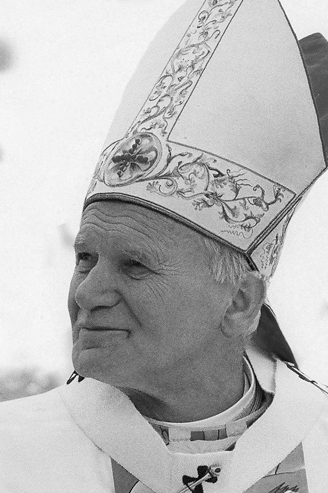
Pope Saint John Paul II’s First Good Friday Homily
ADDRESS OF HIS HOLINESS JOHN PAUL II AT THE CONCLUSION OF THE STATIONS OF THE CROSS AT THE COLOSSEUM Good Friday, 13 April 1979 When we make the Way of the Cross from one station to the next, in spirit we are always at the spot wherethis journey had its “historical” place: where it[…]Continue reading→