
Needs and Wants
When my husband and I were first married we lived on the outskirts of a pretty uppity community. Wednesday was trash day so Tuesday evenings we would drive around the neighbourhood, “shopping.” We picked up a wide array of furniture and décor in those days—the things that people were “donating” to the landfill were amazing: headboards, antiques, area rugs, bookshelves, and lots more. We pretty near furnished our whole apartment with found items and made a comfortable home for ourselves for next to nothing. Sure, some of the stuff didn’t last, but some of it did and after 5 moves in 10 years, there are still a few solid items we found for free that inhabit our home today.
I think back to those days and the things we collected when I peruse home decorating magazines. The editors (and likely many others) would probably think we were silly for shopping other people’s throwaways, but I really don’t care. Seems to me those magazines are selling a life, or a lifestyle, that is unreachable for 99% of the world’s population. Who else but the uber-rich can afford $115 for a wooden wheeled dog toy? Or $2,598 for a 5×7 wool rug? Or $870 for two children’s stools to outfit little Johnny’s bedroom? (I just about fell off my three-dollar chair when I saw that in the magazine.) They were solid wood stools, mind you, but still. $435? For a single child’s stool? Are the editors (and buyers of such fripperies) so completely out of touch with the reality who is a toddler? Do they not know what will happen to all 435 dollars of that pristine wooden sitting contraption? Scratching, denting, puking, snotting, biting, smearing, licking and breaking—that’s what.
And before you say it, I’m not sure the “they’ll probably last forever” argument holds water here. Yes those stools may last through the zombie apocalypse but do you think a $100 chair might last? What about a $200 one? Just think – if you bought a fairly well-made children’s chair for $50 and it breaks, you could buy 8 more to equal the approximate amount someone else has spent on that one little stool. Basically you could buy one chair every year until your precious bundle of joy turns 8 years old. How much longer do think you’ll need a three-legged stool to last?
Although there is something to be said for quality—a feature I find sorely wanting in our “Made in China” culture. Recently I found an online style guru, Madame Chic, who advocates strongly for having a very small number of timeless, yet durable articles of clothing: a 10-item “capsule” wardrobe as she calls it. Her stance is that well-made clothes fit better and keep better so you don’t need 6 closets full of them to live well. She thinks you should buy the best quality clothing you can afford, and only the things that look and feel good on you. Clothes should do what they’re meant to do: cover the body appropriately and communicate your personality and personhood to the world, neither of which are done by flimsy fabrics or ill-fitting cuts. The trick, I suppose, is knowing what is true quality and what is overpriced rubbish and here I must admit I’ve won some and I’ve lost some. Brand names can be deceiving and marketing is relentless, but I’m slowly figuring out what I need and what I don’t.
And that’s the point. We own so much, here in North America; we’re surrounded by things, and by the promise (or threat?) of more things. Do we ever ask ourselves what is it we actually need? Fr. Thomas Dubay in his book Happy Are You Poor describes four types of needs all people have: survival needs, health needs, spiritual needs, and functional needs. Clearly, certain needs outrank others—survival needs like food, clean water, and shelter topping the list—but that doesn’t mean that things like computers and jet planes are unimportant. They are for certain people, and might be the very objects that help to provide survival needs. But computers and planes, for many, are not that important, at least not important enough to acquire at the expense of others. Fr. Dubay states, “If a brother or sister is literally starving for sheer lack of nourishment, I must be willing to give up my less pressing needs if by so doing I can alleviate his dire lack.” In other words paying $400 for a single child-size stool when people—our very brothers and sisters in Christ—are going without food, water, and shelter should be the exception, not the rule. Yes there will always be needy people in the world, but that fact just makes the issue even more urgent. We must ask ourselves the tough questions. What is it I need? How much of what I own (or want to buy) is superfluous? How much do I give to the poor? How much can I give? What can I live without? These aren’t easy questions to ask, (as I sit here at my desk surrounded by stuff) nor are they easy to answer. But that doesn’t mean we shouldn’t regularly ponder them. Dear friends of mine financially support 5 children through Chalice International, an organization that provides for every kind of need for the impoverished of the world. She read a story once about a woman who carried everything she owned in a small plastic bag: a penny, a pair of underwear, a water bottle, and a few other items. My friend gathered the listed things into a bag and hung it in her kitchen as a reminder of the world’s poor.
All this isn’t to say that we mustn’t spend money or that we should never buy anything expensive, but rather that it’s crucial we be good stewards of what’s been entrusted to us: being conscious and attentive in our spending, mindful and generous in our giving to the poor, and willingly ruthless in making the appropriate changes to our lifestyles. Then, with the poor in the forefront of our minds, we can go about our day confident in the knowledge that we did what we could with what we’d been given—even if that means buying a $400 stool. And if you do buy those kids chairs, just tell me one thing. When is your neighbourhood garbage day? Because I’ll be ready and waiting.

Saint Kateri , Canada’s Protectress
This was the title given to Saint Kateri Tekakwitha, by Pope Benedict XVI, when he canonized her on October 28th, 2012, along with six others, in Saint Peter’ Square (she had been beatified by Pope John Paul II back in 1980). With Saint Joseph as our protector, along with the Canadian martyrs, we seem to[…]Continue reading→

Remembering Father Alphonse de Valk
(Today marks the sixth anniversary of the death of Father Alphonse de Valk, C.S.B., a faithful, courageous and indefatigable Basilian priest, pro-life-and-family apostle, and the founder of Catholic Insight magazine. Here is what we wrote those on his entering into eternity five years ago, as we continue to remember him in our prayers and thoughts)[…]Continue reading→

My Name is Bernadette
April 16th is a propitious day, for besides the anniversary of Father de Valk’s death, who founded Catholic Insight in its print form decades ago, and the commemoration of the ‘two Benedicts’, mentioned in accompanying posts, today we also recall Saint Bernadette Soubirous, the young visionary to whom the Virgin Mary appeared numerous times at[…]Continue reading→

Canonizing Sister Faustina and Divine Mercy
HOMILY OF THE HOLY FATHER MASS IN ST PETER’S SQUARE FOR THE CANONIZATION OF SR MARY FAUSTINA KOWALSKA Sunday, 30 April 2000 1. “Confitemini Domino quoniam bonus, quoniam in saeculum misericordia eius”; “Give thanks to the Lord for he is good; his steadfast love endures for ever” (Ps 118: 1). So the Church sings on the Octave of[…]Continue reading→

Divine Mercy Sunday – An Echo of Every Mass
Reach out your hand and put it in my side. Do not doubt but believe’… ‘My Lord and my God!’ (Jn. 20:18)). Today is Divine Mercy Sunday, and as we celebrate the end of the Easter Octave, we contemplate the wounded side of our Saviour, the Church’s source of life. On Good Friday in the[…]Continue reading→
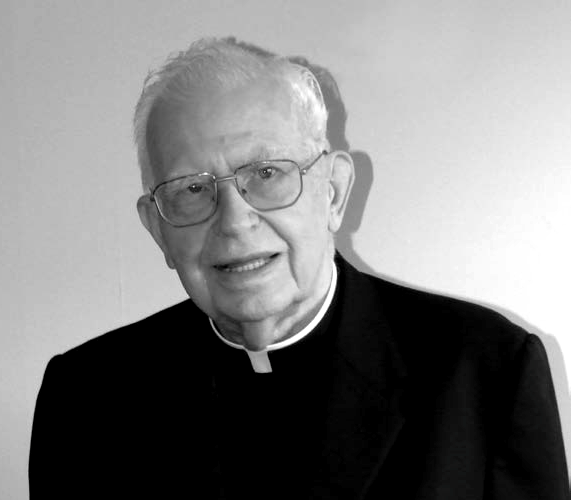
First Holy Communion: Sermon from May 16, 1943
Here is a sermon from the good old days by +Rev. Msgr. Vincent Nicholas Foy (August 14, 1915 – March 13, 2017), from 1943. Readers may recall that Pope Saint Pius X, by the decree Quam Singulari in 1910, lowered the customary age of reception of Holy Communion – after the rigours of the plague[…]Continue reading→
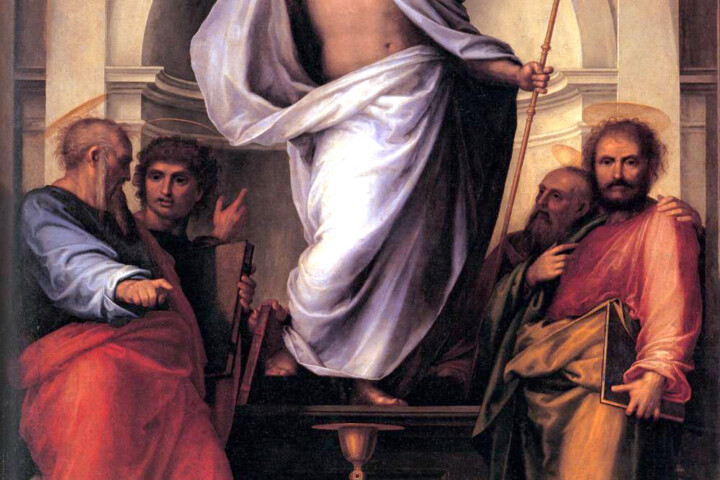
In the Glorious Light of Easter, Alleluia!
Set your minds on things that are above, not on things that are on earth, for you have died, and your life is hidden with Christ in God. When Christ who is your life is revealed, then you also will be revealed with him in glory (Col. 3:3-4). The Resurrection of Our Lord and Saviour[…]Continue reading→
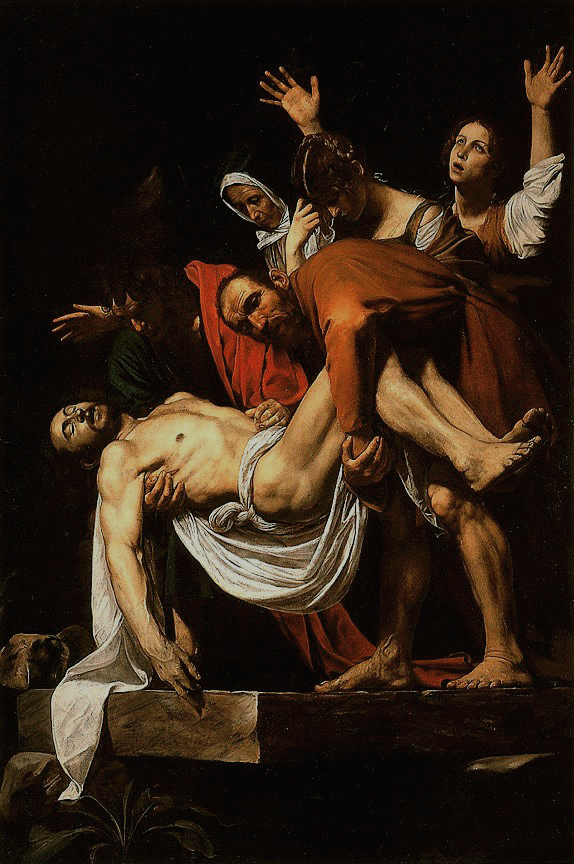
An Ancient Homily for Holy Saturday
The time between Good Friday and Easter Sunday is one of waiting, in silence, as the world wonders – anticipates – what will happen, after the death of Christ. We re-live this time each year in the anamnesis of our liturgy, and in turn look forward to the glorious re-creation of all things at the[…]Continue reading→
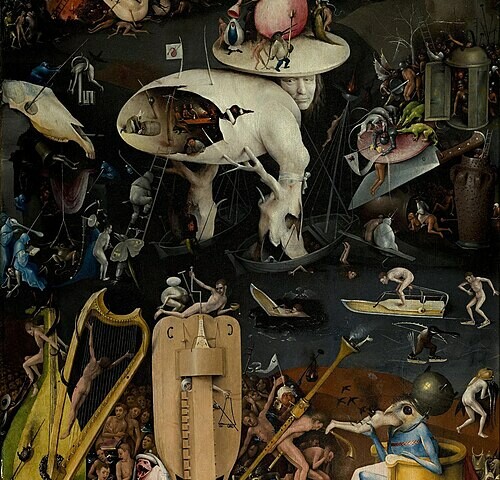
Europe’s Long Descent
(As we meditate on this day on Christ’s burial, and His descent into hell, it is fitting to ponder here with contributor Peter Marcus how the world seems to be heading there as well. The difference is that, although God cannot ‘redeem’ hell, nor those therein, He can and did redeem the world. There is[…]Continue reading→
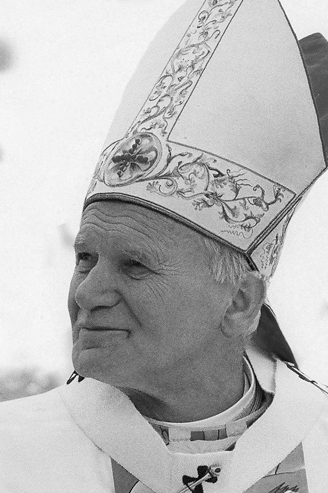
Pope Saint John Paul II’s First Good Friday Homily
ADDRESS OF HIS HOLINESS JOHN PAUL II AT THE CONCLUSION OF THE STATIONS OF THE CROSS AT THE COLOSSEUM Good Friday, 13 April 1979 When we make the Way of the Cross from one station to the next, in spirit we are always at the spot wherethis journey had its “historical” place: where it[…]Continue reading→