
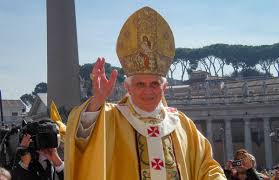
The Last Easter Homily of Pope Benedict XVI
(Last words are always – or almost always – indicative, and one could reach much into these words of Pope Benedict XVI on his last Easter Vigil as Pope. The light cannot be extinguished, for, as Christ promised, the darkness cannot overcome it. Truth and goodness always win, in the end…A very blessed Easter to one and all. Christus resurrexit vere, alleluia!)
HOMILY OF HIS HOLINESS BENEDICT XVI
Saint Peter’s Basilica
Holy Saturday, 7 April 2012
Dear Brothers and Sisters,
Easter is the feast of the new creation. Jesus is risen and dies no more. He has opened the door to a new life, one that no longer knows illness and death. He has taken mankind up into God himself. “Flesh and blood cannot inherit the kingdom of God”, as Saint Paul says in the First Letter to the Corinthians (15:50). On the subject of Christ’s resurrection and our resurrection, the Church writer Tertullian in the third century was bold enough to write: “Rest assured, flesh and blood, through Christ you have gained your place in heaven and in the Kingdom of God” (CCL II, 994). A new dimension has opened up for mankind. Creation has become greater and broader. Easter Day ushers in a new creation, but that is precisely why the Church starts the liturgy on this day with the old creation, so that we can learn to understand the new one aright. At the beginning of the Liturgy of the Word on Easter night, then, comes the account of the creation of the world. Two things are particularly important here in connection with this liturgy. On the one hand, creation is presented as a whole that includes the phenomenon of time. The seven days are an image of completeness, unfolding in time. They are ordered towards the seventh day, the day of the freedom of all creatures for God and for one another. Creation is therefore directed towards the coming together of God and his creatures; it exists so as to open up a space for the response to God’s great glory, an encounter between love and freedom. On the other hand, what the Church hears on Easter night is above all the first element of the creation account: “God said, ‘let there be light!’” (Gen 1:3). The creation account begins symbolically with the creation of light. The sun and the moon are created only on the fourth day. The creation account calls them lights, set by God in the firmament of heaven. In this way he deliberately takes away the divine character that the great religions had assigned to them. No, they are not gods. They are shining bodies created by the one God. But they are preceded by the light through which God’s glory is reflected in the essence of the created being.
What is the creation account saying here? Light makes life possible. It makes encounter possible. It makes communication possible. It makes knowledge, access to reality and to truth, possible. And insofar as it makes knowledge possible, it makes freedom and progress possible. Evil hides. Light, then, is also an expression of the good that both is and creates brightness. It is daylight, which makes it possible for us to act. To say that God created light means that God created the world as a space for knowledge and truth, as a space for encounter and freedom, as a space for good and for love. Matter is fundamentally good, being itself is good. And evil does not come from God-made being, rather, it comes into existence only through denial. It is a “no”.
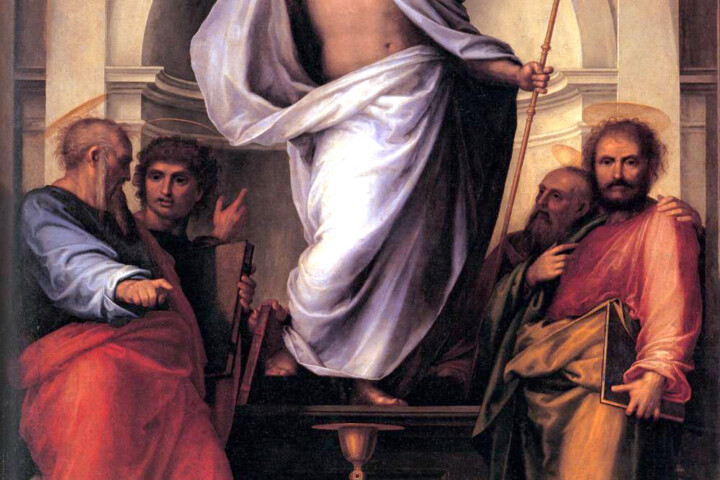
At Easter, on the morning of the first day of the week, God said once again: “Let there be light”.
(To continue reading, please see here).
A Closed, Unsustainable, Descending Loop
As a follow-up to my thoughts on Payette’s payout, here be a stark image of where are here in Canada. As the graph shows in, well, graphic terms, since 2025, the public sector has contributed to 95.5% of economic growth. The private sector – which funds the public sector, or is supposed to – has[…]Continue reading→

Remembering Father Alphonse de Valk
(Today marks the sixth anniversary of the death of Father Alphonse de Valk, C.S.B., a faithful, courageous and indefatigable Basilian priest, pro-life-and-family apostle, and the founder of Catholic Insight magazine. Here is what we wrote those on his entering into eternity five years ago, as we continue to remember him in our prayers and thoughts)[…]Continue reading→
Presidential Pardon of Weronika Krawczyk
As a good news, follow-up to our story from Poland, of the persecution of Weronika Krawczyk for her pro-life views, we heard that she has been granted a presidential pardon. One might still wonder why one needs a presidential pardon for simply holding the long-held belief that the child within the womb is a child,[…]Continue reading→
Divine Mercy Sunday – An Echo of Every Mass
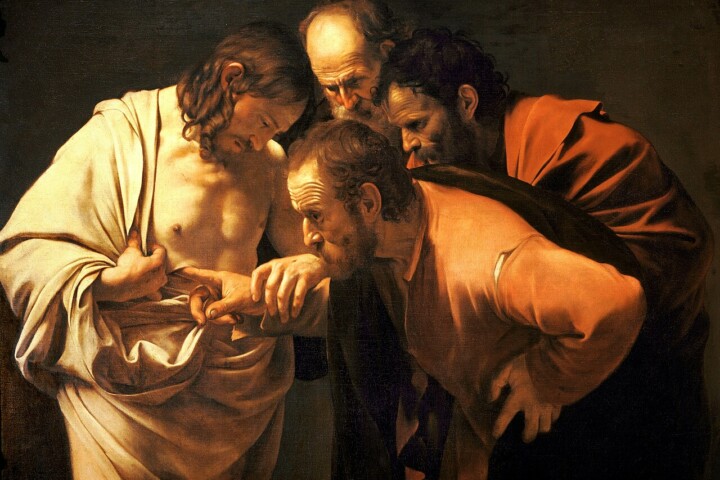
Reach out your hand and put it in my side. Do not doubt but believe’… ‘My Lord and my God!’ (Jn. 20:18)). Today is Divine Mercy Sunday, and as we celebrate the end of the Easter Octave, we contemplate the wounded side of our Saviour, the Church’s source of life. On Good Friday in the[…]Continue reading→
Pope Leo and a Rosary for Peace
Pope Leo XIV has asked Catholics across the world to join him in a Rosary for peace today, at 18:00 Rome time (6 pm), which would be noon from where I write (EST). If you are able, whether at that time or another, and in whatever way you pray, to join in intercession with the[…]Continue reading→
Payette’s Payout
I was glancing through some headlines, and noticed a mention of Julie Payette – engineer and astronaut and sometime the Queen’s representative in Canada – which brought back vague memories. She was appointed Governor-General by Justin Trudeau in 2017. Ms. Payette resigned in 2021, amidst claims that she created a ‘toxic work environment’, with allegations[…]Continue reading→

Saint Stanislaus of Szczepanów
We celebrate Saint Stanislaus today (+ April 11, 1079), in light of this Easter Octave, a bishop and martyr who accepted the episcopacy only at the direct order of Pope Alexander II. He proved a wise and courageous leader of his flock, put to death by his own king, Boleslaus, for rebuking the monarch’s ‘immoral[…]Continue reading→
First Holy Communion: Sermon from May 16, 1943
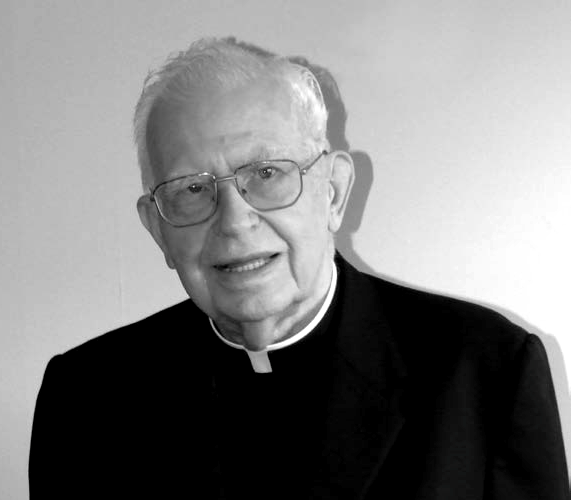
Here is a sermon from the good old days by +Rev. Msgr. Vincent Nicholas Foy (August 14, 1915 – March 13, 2017), from 1943. Readers may recall that Pope Saint Pius X, by the decree Quam Singulari in 1910, lowered the customary age of reception of Holy Communion – after the rigours of the plague[…]Continue reading→
Three Easter Musical Gems: Bach, Palestrina and Byrd
A very blessed and glorious Easter! Christus surrexit vere, alleluia! As we begin this Easter Octave with the great Solemnity of Easter, music to lift the soul would be one of Bach’s Easter cantatas, composed during his time at Leipzig in the early 1700’s, for the six Sundays of this festive season, leading up to[…]Continue reading→
In the Glorious Light of Easter, Alleluia!
Set your minds on things that are above, not on things that are on earth, for you have died, and your life is hidden with Christ in God. When Christ who is your life is revealed, then you also will be revealed with him in glory (Col. 3:3-4). The Resurrection of Our Lord and Saviour[…]Continue reading→