
Apologetics 101, Question 2: The Scandal of Evil
Recently, Catholic Insight posted a thoughtful note from Carl Sundell on the essential questions we should be prepared to answer about our faith.
This list of questions was likely meant to inspire readers to find and research their own answers to these questions. There are over 2,000 years of resources one could sift through in order to adequately answer and confidently respond to these questions.
This inspired me to work through these 39 questions in order to provide clear and concise answers for readers. None of these would, or could, be conclusive, but they could help simplify answers and provide a framework for how one can approach these questions.
- How do you answer the argument that the problem of evil proves there is no God?
There are essentially two responses one can give to this objection, one that goes back at least to Thomas Aquinas. He presents it as one of his two objections in his brief treatment on the existence of God in his Summa Theologiae (I. q.2, a.3, ad 1). Aquinas poses the objection more clinically than one may find it in a regular conversation, stating that if God is all good, this should eliminate the contrary. Yet there is evil, so there must not be Being that is all good, namely, God.
The first response is the logical one. It can be presented one of two ways. First, you must establish with your interlocutor on a non-arbitrary definition of good and evil. This is not as easy as it seems. It is not just about listing examples of things “everyone knows” are good or evil, but distinguishing what exactly makes anything “good” and “evil.” The first distinction must be made between metaphysical good and moral good. Metaphysical good refers to something’s existence, whereas moral good refers to something’s action.
Moral good actually follows from metaphysical, so one must determine what metaphysical good is first. When a substance exists, it must fully integrate its four causes, the material, the formal, the efficient and the final in order to be whole. This qualifies as a ‘well-made thing’. In order to be integrated, the first three causes must be ordered toward their final cause or purpose. For example, a “good” hammer should be made of hard material, shaped with a handle and head for swinging and held together. These things ensure the hammer fulfills its purpose, to hit nails. This is a good hammer. If its material or form were changed, the hammer would not fulfil its purpose and it would be a bad, or ‘evil’, hammer. To take away from the proper material or form would be to take away its goodness.
Moral actions are based on this but are applied to the end of humans actions, which is love. To deform an action by directing it away from its end would take away from its goodness. It would make it evil. This shows us the definition of evil as a privation of good. The goodness, either metaphysical or moral, was there first and it is only when it has been de-formed or dis-ordered that the action becomes evil.
The importance here is the preeminence of goodness when it comes to the existence of evil. Now one can show that in order for there to even be evil, there must be a concept of goodness that precedes it. This goodness, which Aquinas’s fourth way demonstrates, requires a standard of goodness that encompasses all goodness, namely, God (see previous article in this series). This means that for one to even have a concept of evil in the first place in order to have an objection one must already imply the existence of God.
The second response is the emotional one. One has to be attentive to what the person is really looking for when they bring up the problem of evil. It may not require a response from you beyond listening and acknowledging the hurt and apparent unfairness of the situation. It may require the gut-check of acknowledging when the Church has done wrong without an excuse (while this may seem unfair, if you represent “the Church” in that moment to that person then that may be what is needed). None of these responses will be satisfying to you, because you want to have the right answer to convince the person, but in considering what the other person needs and how God may want to use you in that moment, a humbling sacrifice of your will for another will prove a powerful witness.
There is actually a third response one can provide. It incorporates elements from the logical response and the emotional response and cohere closely with the reply Aquinas provides, but it is tricky to articulate sensitively. While the “God has a good reason for evil” response sounds dismissive, it is ultimately the most accurate from a Christian perspective. This is not just a convenient answer to an individual’s pain, it also happens to be the very basis of Christianity itself.
The primary cause of man’s reconciliation with God, arguably the greatest good from our perspective and God’s plan in sending his Son, Jesus, was brought about through the greatest evil, the murder of God Incarnate, and the terrible suffering in its execution. While it was not necessary in the philosophical sense of the word, God did allow this evil and suffering in order to bring about this great good. Logically, one could apply this principle to any other evil that might occur as well. Again, this is not saying that God requires evil to bring good, but that God can, and does, bring great good even out of evil. This may provide comfort to one experiencing evil, but it requires tact in our presentation.
Entire books have been written to address the problem of evil and these posts are meant to be simple primers for one beginning to work through these questions on an apologetics journey. To keep it simple, love is how you answer the objection. Love in how you respond, love in how you do not respond, love in the way you answer and love as the answer itself. Remember that 1 John 4:8 does not say “God is…reason or explanation or power,” but rather that “God is love.” That is because love is the reason, the explanation and the power, so go with love.
A Closed, Unsustainable, Descending Loop
As a follow-up to my thoughts on Payette’s payout, here be a stark image of where are here in Canada. As the graph shows in, well, graphic terms, since 2025, the public sector has contributed to 95.5% of economic growth. The private sector – which funds the public sector, or is supposed to – has[…]Continue reading→

Remembering Father Alphonse de Valk
(Today marks the sixth anniversary of the death of Father Alphonse de Valk, C.S.B., a faithful, courageous and indefatigable Basilian priest, pro-life-and-family apostle, and the founder of Catholic Insight magazine. Here is what we wrote those on his entering into eternity five years ago, as we continue to remember him in our prayers and thoughts)[…]Continue reading→

Divine Mercy Sunday – An Echo of Every Mass
Reach out your hand and put it in my side. Do not doubt but believe’… ‘My Lord and my God!’ (Jn. 20:18)). Today is Divine Mercy Sunday, and as we celebrate the end of the Easter Octave, we contemplate the wounded side of our Saviour, the Church’s source of life. On Good Friday in the[…]Continue reading→
Pope Leo and a Rosary for Peace
Pope Leo XIV has asked Catholics across the world to join him in a Rosary for peace today, at 18:00 Rome time (6 pm), which would be noon from where I write (EST). If you are able, whether at that time or another, and in whatever way you pray, to join in intercession with the[…]Continue reading→
Payette’s Payout
I was glancing through some headlines, and noticed a mention of Julie Payette – engineer and astronaut and sometime the Queen’s representative in Canada – which brought back vague memories. She was appointed Governor-General by Justin Trudeau in 2017. Ms. Payette resigned in 2021, amidst claims that she created a ‘toxic work environment’, with allegations[…]Continue reading→
Your Easter Prayer
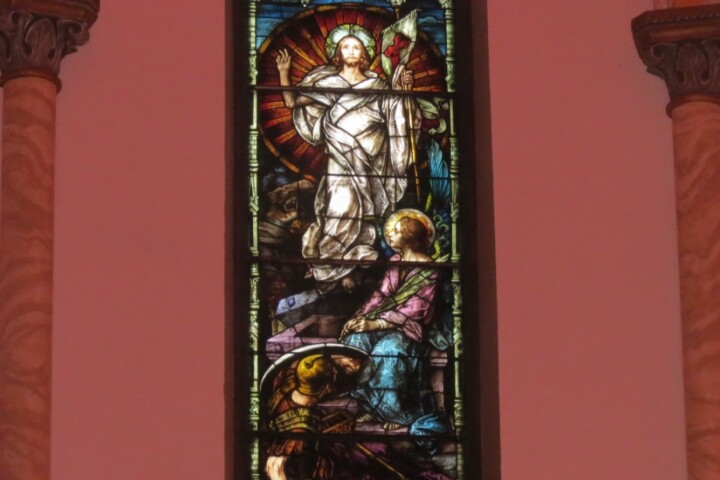
Happy Easter Lord Jesus Christ. It’s Easter day and we smile In the Lord’s in gentle light and His tomb is bare the stone is rolled A story new that must be told And Lord Jesus Christ We love you it’s so true and Lord Jesus Christ has risen From his sleep and the Promises[…]Continue reading→
In the Glorious Light of Easter, Alleluia!
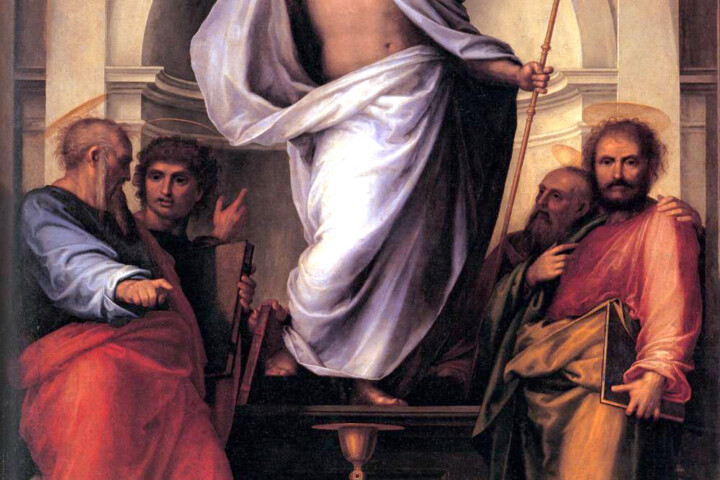
Set your minds on things that are above, not on things that are on earth, for you have died, and your life is hidden with Christ in God. When Christ who is your life is revealed, then you also will be revealed with him in glory (Col. 3:3-4). The Resurrection of Our Lord and Saviour[…]Continue reading→
An Ancient Homily for Holy Saturday
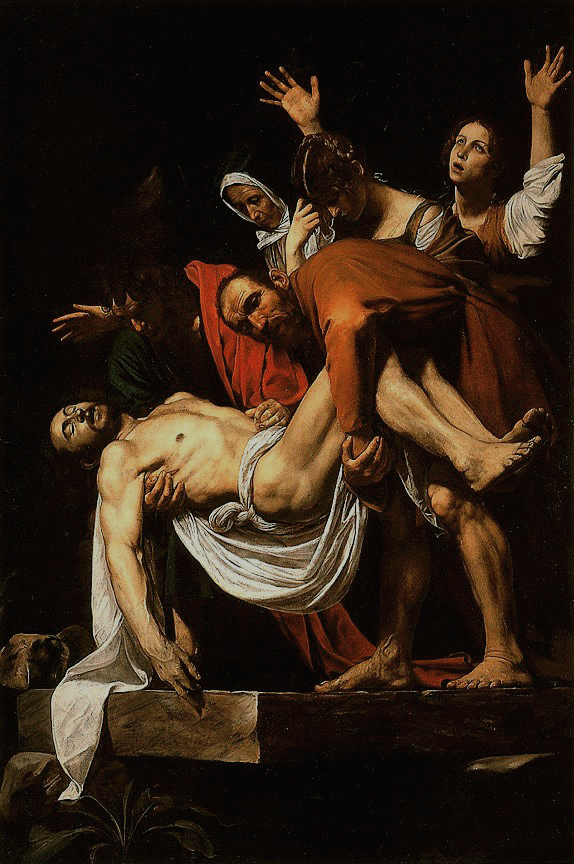
The time between Good Friday and Easter Sunday is one of waiting, in silence, as the world wonders – anticipates – what will happen, after the death of Christ. We re-live this time each year in the anamnesis of our liturgy, and in turn look forward to the glorious re-creation of all things at the[…]Continue reading→
Pope Saint John Paul II’s First Good Friday Homily
ADDRESS OF HIS HOLINESS JOHN PAUL II AT THE CONCLUSION OF THE STATIONS OF THE CROSS AT THE COLOSSEUM Good Friday, 13 April 1979 When we make the Way of the Cross from one station to the next, in spirit we are always at the spot wherethis journey had its “historical” place: where it[…]Continue reading→
Pope Benedict’s Last Holy Thursday Homily
MASS OF THE LORD’S SUPPER HOMILY OF HIS HOLINESS BENEDICT XVI Basilica of St John Lateran Holy Thursday, 5 April 2012 Photo Gallery (Video) Dear Brothers and Sisters! Holy Thursday is not only the day of the institution of the Most Holy Eucharist, whose splendour bathes all else and in some ways draws it to[…]Continue reading→