
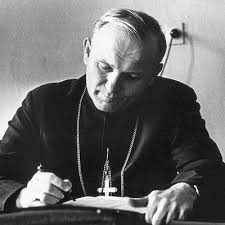
Pope John Paul II’s First Holy Thursday Letter to Priests
LETTER OF HIS HOLINESS JOHN PAUL II
TO ALL THE PRIESTS
ON THE OCCASION OF HOLY THURSDAY 1979
Dear Brother Priests,
- For you I am a Bishop, with you I am a Priest
AT THE BEGINNING of my new ministry in the Church, I feel the deep need to speak to you, to all of you without any exception, Priests both diocesan and religious, who are my brothers by virtue of the sacrament of Orders. From the very beginning I wish to express my faith in the vocation that unites you to your Bishops, in a special communion of sacrament and ministry, through which the Church, the mystical Body of Christ, is built up. To all of you therefore, who, by virtue of a special grace and through a singular gift of our Saviour, bear “the burden of the day and the heat” (cf. Mt 20:12) in the midst of the many tasks of the priestly and pastoral ministry, I have addressed my thoughts and my heart from the moment when Christ called me to this See, where Saint Peter, with his life and his death, had to respond until the end to the question: Do you love me? Do you love me more than these others do? (cf. Jn 21:15ff.).
I think of you all the time, I pray for you, with you I seek the ways of spiritual union and collaboration, because by virtue of the sacrament of Orders, which I also received from the hands of my Bishop (the Metropolitan of Cracow, Cardinal Adam Stephen Sapieha, of unforgettable memory), you are my brothers. And so, adapting the words of Saint Augustine, (Vobis enim sum episcopus, vobiscum sum Christianus: Serm. 340, 1: PL 38, 1483). I want to say to you today: “For you I am a Bishop, with you I am a Priest”. Today, in fact, there is a special circumstance that impels me to confide to you some thoughts that I enclose in this Letter: it is the nearness of Holy Thursday. It is this, the annual feast of our priesthood, that unites the whole Presbyterium of each Diocese about its Bishop in the shared celebration of the Eucharist. It is on this day that all Priests are invited to renew, before their own Bishop and together with him, the promises they made at their priestly Ordination; and this fact enables me, together with all my Brothers in the Episcopate, to be joined to you in a special unity, and especially to be in the very heart of the mystery of Jesus Christ, the mystery in which we all share.
The Second Vatican Council, which so explicitly highlighted the collegiality of the Episcopate in the Church, also gave a new form to the life of the priestly communities, joined together by a special bond of brotherhood, and united to the Bishop of the respective local Church. The whole priestly life and ministry serve to deepen and strengthen that bond; and a particular responsibility for the various tasks involved by this life and ministry is taken on by the Priests’ Councils, which, in conformity with the thought of the Council and the Motu Proprio Ecclesiae Sanctae (cf. I art. 15) of Paul VI, should be functioning in every diocese. All this is meant to ensure that each Bishop, in Union with his Presbyterium, can serve ever more effectively the great cause of evangelization. Through this service the Church realizes her mission, indeed her very nature. The importance of the unity of the Priests with their own Bishop on this point is confirmed by the words of Saint Ignatius of Antioch: “Strive to do all things in the harmony of God, with the Bishop presiding to represent God, the presbyters representing the council of the apostles, and the deacons, so dear to me, entrusted with the service of Jesus Christ” (Epistula ad Magnesios, VI, 1: Patres Apostolici I, ed. Funk, p. 235).
- Love for Christ and the Church unites us
It is not my intention to include in this Letter everything that makes up the richness of the priestly life and ministry. In this regard I refer to the whole tradition of the Magisterium and of the Church, and in a special way to the doctrine of the Second Vatican Council, contained in the Council’s various documents, especially in the Constitution Lumen Gentium and the Decrees Presbyterorum Ordinis and Ad Gentes. I also wish to recall the Encyclical of my Predecessor Paul VI Sacerdotalis Caelibatus. Finally, I wish to place great importance upon the Document De Sacerdotio Ministeriali, which Paul VI approved as the fruit of the labours of the 1971 Synod of Bishops, because I find in this Document—although the session of the Synod that elaborated it had only a consultative form—a statement of essential importance regarding the specific aspect of the priestly life and ministry in the modern world.
Referring to all these sources, which you are familiar with, I wish in the present Letter only to mention a number of points which seem to me to be of extreme importance at this moment in the history of the Church and of the world. These are words that are dictated to me by my love for the Church, which will be able to carry out her mission to the world only if—in spite of all human weakness—she maintains her fidelity to Christ. I know that I am addressing those whom only the love of Christ has enabled, by means of a specific vocation, to give themselves to the service of the Church and, in the Church, to the service of man for the solution of the most important problems, and especially those regarding man’s eternal salvation.
Although at the beginning of these considerations I refer to many written sources and official documents, nevertheless I wish to refer especially to that living source which is our shared love for Christ and his Church, a love that springs from the grace of the priestly vocation, the love that is the greatest gift of the Holy Spirit (cf. Rom 5:5; 1 Cor 12:31; 13).
- “Chosen from among men… appointed to act on behalf of men” (Heb 5:1)
The Second Vatican Council deepened the idea of the Priesthood and presented it, throughout its teaching, as the expression of the inner forces, those “dynamisms”, whereby the mission of the whole People of God in the Church is constituted. Here one should refer especially to the Constitution Lumen Gentium, and reread carefully the relevant paragraphs. The mission of the People of God is carried out through the sharing in the office and mission of Jesus Christ himself, which, as we know, has a triple dimension: it is the mission and office of Prophet, Priest and King. If we analyse carefully the conciliar texts, it is obvious that one should speak of a triple dimension of Christ’s service and mission, rather than of three different functions. In fact, these functions are closely linked to one another, explain one another, condition one another and clarify one another. Consequently, it is from this threefold unity that our sharing in Christ’s mission and office takes its origin. As Christians, members of the People of God, and subsequently, as priests, sharers in the hierarchical order, we take our origin from the combination of the mission and office of our Teacher, who is Prophet, Priest and King, in order to witness to him in a special way in the Church and before the world.
The priesthood in which we share through the sacrament of Orders, which has been for ever “imprinted” on our souls through a special sign from God, that is to say the “character”, remains in explicit relationship with the common priesthood of the faithful, that is to say the priesthood of all the baptized, but at the same time it differs from that priesthood “essentially and not only in degree” (Dogmatic Constitution Lumen Gentium, 10). In this way the words of the author of the Letter to the Hebrews about the priest, who has been “chosen from among men… appointed to act on behalf of men” (Heb 5:1), take on their full meaning.
At this point, it is better to reread once more the whole of this classical conciliar text, which expresses the basic truths on the theme of our vocation in the Church: “Christ the Lord, high priest taken from among men (cf. Heb 5:1), made the new people ‘a kingdom of priests to God, his Father’ (Rev 1:6, cf. 5:9-10). The baptized, by regeneration and the anointing of the Holy Spirit, are consecrated to be a spiritual house and a holy priesthood, that through all the works of Christian men they may offer spiritual sacrifices and proclaim the perfection of him who has called them out of darkness into his marvellous light (cf. 1 Pt 2:4-10). Therefore all the disciples of Christ, persevering in prayer and praising God together (cf. Acts 2:42-47), should present themselves as a sacrifice, living, holy and pleasing to God (cf. Rom 12:1). They should everywhere on earth bear witness to Christ and give an answer to everyone who asks a reason for the hope of an eternal life which is theirs (cf. 1 Pt 3:15).
Though they differ essentially and not only in degree, the common priesthood of the faithful and the ministerial or hierarchical priesthood are none the less ordered one to another; each in its own proper way shares in the one priesthood of Christ. The ministerial priest, by the sacred power that he has, forms and rules the priestly people; in the person of Christ he effects the Eucharistic Sacrifice and offers it to God in the name of all the people. The faithful indeed, by virtue of their royal priesthood, participate in the offering of the Eucharist. They exercise that priesthood, too, by the reception of the sacraments, prayer and thanksgiving, the witness of a holy life, abnegation and active charity” (Dogmatic Constitution Lumen Gentium, 10).
(To continue reading, please see here).

Remembering Father Alphonse de Valk
(Today marks the sixth anniversary of the death of Father Alphonse de Valk, C.S.B., a faithful, courageous and indefatigable Basilian priest, pro-life-and-family apostle, and the founder of Catholic Insight magazine. Here is what we wrote those on his entering into eternity five years ago, as we continue to remember him in our prayers and thoughts)[…]Continue reading→
Canonizing Sister Faustina and Divine Mercy
HOMILY OF THE HOLY FATHER MASS IN ST PETER’S SQUARE FOR THE CANONIZATION OF SR MARY FAUSTINA KOWALSKA Sunday, 30 April 2000 1. “Confitemini Domino quoniam bonus, quoniam in saeculum misericordia eius”; “Give thanks to the Lord for he is good; his steadfast love endures for ever” (Ps 118: 1). So the Church sings on the Octave of[…]Continue reading→

Divine Mercy Sunday – An Echo of Every Mass
Reach out your hand and put it in my side. Do not doubt but believe’… ‘My Lord and my God!’ (Jn. 20:18)). Today is Divine Mercy Sunday, and as we celebrate the end of the Easter Octave, we contemplate the wounded side of our Saviour, the Church’s source of life. On Good Friday in the[…]Continue reading→
In the Glorious Light of Easter, Alleluia!
Set your minds on things that are above, not on things that are on earth, for you have died, and your life is hidden with Christ in God. When Christ who is your life is revealed, then you also will be revealed with him in glory (Col. 3:3-4). The Resurrection of Our Lord and Saviour[…]Continue reading→
An Ancient Homily for Holy Saturday
The time between Good Friday and Easter Sunday is one of waiting, in silence, as the world wonders – anticipates – what will happen, after the death of Christ. We re-live this time each year in the anamnesis of our liturgy, and in turn look forward to the glorious re-creation of all things at the[…]Continue reading→
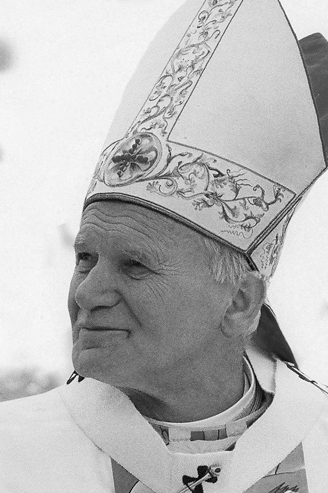
Pope Saint John Paul II’s First Good Friday Homily
ADDRESS OF HIS HOLINESS JOHN PAUL II AT THE CONCLUSION OF THE STATIONS OF THE CROSS AT THE COLOSSEUM Good Friday, 13 April 1979 When we make the Way of the Cross from one station to the next, in spirit we are always at the spot wherethis journey had its “historical” place: where it[…]Continue reading→
Allegri’s Miserere and Mozart’s Memory
On this Good Friday, a fitting help to our devotion is Allegri’s Miserere, his unsurpassed musical setting of Psalm 51, recited in Lauds (Morning Prayer) every Friday. Composed around 1638, under the patronage of Pope Urban VIII- the same one who battled Galileo – the sublime piece was performed only on certain occasions in the[…]Continue reading→
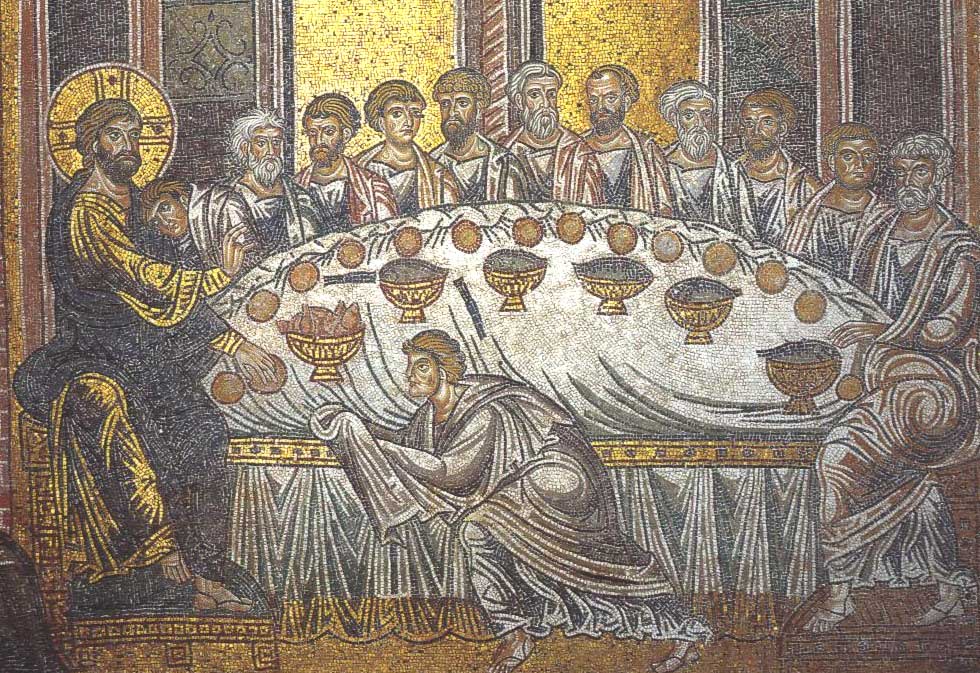
Pope Benedict’s Last Holy Thursday Homily
MASS OF THE LORD’S SUPPER HOMILY OF HIS HOLINESS BENEDICT XVI Basilica of St John Lateran Holy Thursday, 5 April 2012 Photo Gallery (Video) Dear Brothers and Sisters! Holy Thursday is not only the day of the institution of the Most Holy Eucharist, whose splendour bathes all else and in some ways draws it to[…]Continue reading→
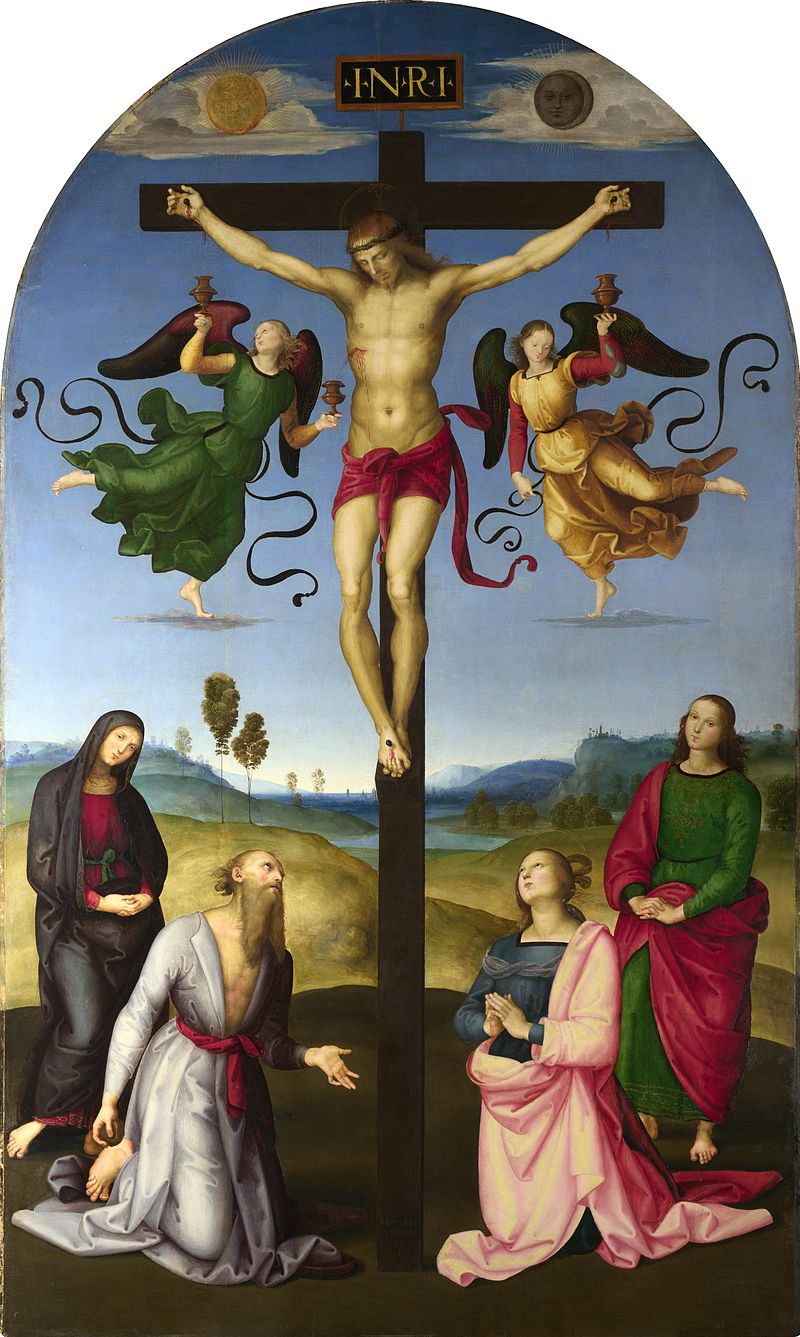
Pope Saint John Paul II’s Last Passion Sunday
(This is the last of Pope Saint John Paul II’s Passion-Palm Sunday homilies, given in 2004, before his own passion and death the following year, when he was unable – for the first time – to celebrate Mass on this Holy Day. Yet he worked in the Lord’s vineyard right up until the end, having[…]Continue reading→
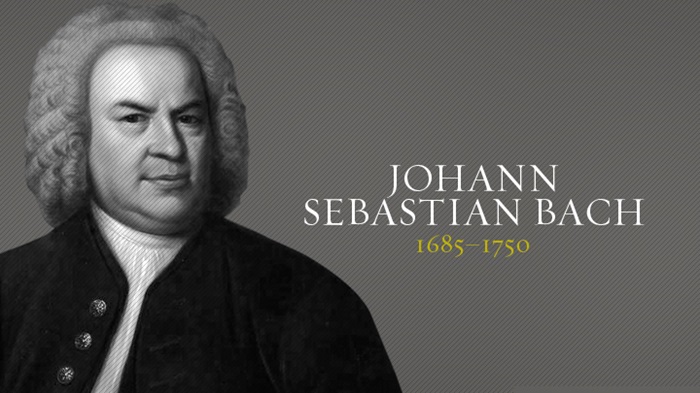
The Two Passions of J.S. Bach
As we enter in Holy Week, it is fitting to suggest some solemn music to fit the season, here the two settings of the ‘Passion’ put to music by Johann Sebastian Bach. According to sources, Bach wrote five ‘Passions’, orchestral chorales based on the final days in the life of Christ, but only two have[…]Continue reading→