
Ontario’s Holy Lands
I come from the Holy Lands of Ontario.
These are the small towns in which the Irish settled over the 19th century, and built imposing Catholic churches that became a centrepiece for the community.
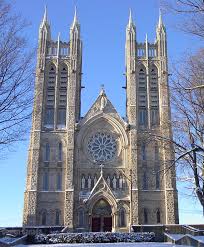
The phrase “the Holy Lands of Ontario” was coined by Edward Jackman. O. P., in an essay in the 1988 collection The Untold Story: The Irish in Canada (Robert O’Driscoll and Lorna Reynolds, Toronto: Celtic Arts of Canada). He mentions Westport, Mt. St. Patrick, Ennismore, Lucan, Colgan, and Maidstone, stretching the length of the lower province. I would add Guelph as a kind of capital city, its centrepiece Joseph Connolly’s magnificent Basilica of Our Lady Immaculate.
Properly speaking, these holy lands are not only in Ontario. They extend into New Brunswick: St. Michael’s Basilica in Chatham, one of the largest churches in Canada, in what is still a small town.
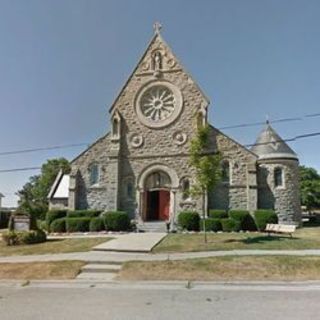 My own home town is Gananoque. The romanesque St. John the Evangelist where I was baptized, with its altar of pink Italian marble, dominates a cliff above the harbour. Downriver a bit, little St. Brendan’s commands the harbour of Rockport from another cliff, a statue of the virgin blessing the moored tour boats and pleasure craft. Forty minutes or so north, the tall steeple of St. Edward the Confessor overtops the skyline of Westport.
These are large, impressive churches for the size of their towns and congregations. They are especially impressive when you consider the poverty of the first Irish Catholic immigrants in the area. Some were granted land in resettlement schemes; but it was forested land, which they had to reclaim from wilderness. Many or most came in the plague ships, famine-wracked, packed in the hold like lumber, dying by the day of typhus or cholera. Many died on the docks. Those who survived had to take any work available. And yet within a few decades they built these huge stone churches. Chartres is scarcely more a miracle.
Most Canadians and even most Ontarians seem unaware of the existence of the Holy Lands. But I grew up with the sense that such places were home, and that even nearby places like Kingston or Toronto were by comparison, if friendly enough, rather soulless. Lacking in something that might as well be described by the word “holiness.”
To understand the sense of those high steeples to any of Irish ancestry, it helps to visit to England or Ireland. In Sheffield, where I studied, the Catholic cathedral can be entered only by a little side street: this was once by law. In East London, the nearest Catholic Church to my hotel was in a basement, invisible from the street. Dublin has two beautiful Anglican (Church of Ireland) cathedrals, and, technically, no Catholic cathedral. Dublin is 96% Catholic.
It was not easy being Catholic whence these people came.
In Ireland, the last penal laws discriminating against Catholics were repealed only in 1920. At their height, Catholics could not vote, could not hold public office, could not own a firearm, could not attend university, could not buy land, and could not own a horse worth more than five pounds. All Catholic education was prohibited. And churches, when permitted, could only be built of wood, never stone.
When my Irish forebears arrived in Canada, Canada was to Irish Catholics a paradise of religious liberty. Finally able to build churches, they were going to make the most of it. And they were going to build in stone; when they could, in granite. And build high.
This is all in great part thanks to another Irishman, a Protestant, Sir Guy Carleton, Lord Dorchester. He fought on the Plains of Abraham, then in 1768 was named, after General James Murray, the second British governor of Quebec. He lobbied in London to ensure that, by the original Quebec Act of 1774, Canada’s first constitution since the French regime, Catholics could hold public office, and the Catholic Church kept all its “accustomed dues and rights.”
It is hard to grasp today how revolutionary this was. Catholics had no such rights in England, Scotland, or Ireland. Catholics had no such rights anywhere else in the British Empire.
This included the Thirteen Colonies to the south. When they arose soon after in rebellion, it was in part because of this Quebec Act, one of the “Intolerable Acts,” as it supposedly enshrined a foreign form of government. Benjamin Franklin and his band sent a delegation to Montreal hoping to find common cause. It was not going to happen. In Canada, Catholics were free. In the Thirteen Colonies, even in Maryland, originally founded on tolerance of Catholics, they were not. That original tolerance had lasted only five years, and had been last repealed in 1692.
Canada as we know it was founded on religious freedom, and was in its day something of a radical experiment in religious freedom. Nowhere else did it seem so possible for Catholics and Protestants to live together in freedom and relative peace. Including, notably, Irish Catholics and Irish Protestants, both of whom arrived in large numbers, and often were near neighbours in these Holy Lands. Of course there were incidents, but there has never been anything here like the troubles seen in Ireland.
The Constitution Act of 1791, also passed on Carleton’s watch, gave Canada the same constitutional arrangement with the Crown as Ireland had been force-fed in 1782: an elected legislature with an appointed executive. But it added the one thing demanded by the Irish reformers at the time, and denied: Catholic enfranchisement.
One can see why the early settlers in places like Gananoque or Rockport or Westport built their little churches so high, and with such pride.
For all the rebellious sentiments in Ireland, for all that the Irish, Catholic and Protestant, were in the vanguard of the demand here for responsible government, men like the Baldwins, Hincks, or the Uniackes, there was no Irish interest in, or participation in, Mackenzie’s call to arms. Papineau’s policy was largely inspired by Daniel O’Connell’s in Ireland; he personally represented a largely Irish riding. But when the patriotes resorted to violence, their Irish support melted away. Canada was an applecart no Irishman wished to upset.
When the few hundred Fenians attacked from the US after the Civil War, they expected, given the huge number of Irish residents, to be met with open arms after an initial skirmish. Canada was to be, in effect, an independent Ireland in the New World.
Instead, they found general resistance, and no local support.
The Irish were grateful for their religious liberty. Canada was their new home. It was Holy Ground.
For some of us, it remains so.
A Closed, Unsustainable, Descending Loop
As a follow-up to my thoughts on Payette’s payout, here be a stark image of where are here in Canada. As the graph shows in, well, graphic terms, since 2025, the public sector has contributed to 95.5% of economic growth. The private sector – which funds the public sector, or is supposed to – has[…]Continue reading→

Remembering Father Alphonse de Valk
(Today marks the sixth anniversary of the death of Father Alphonse de Valk, C.S.B., a faithful, courageous and indefatigable Basilian priest, pro-life-and-family apostle, and the founder of Catholic Insight magazine. Here is what we wrote those on his entering into eternity five years ago, as we continue to remember him in our prayers and thoughts)[…]Continue reading→

Divine Mercy Sunday – An Echo of Every Mass
Reach out your hand and put it in my side. Do not doubt but believe’… ‘My Lord and my God!’ (Jn. 20:18)). Today is Divine Mercy Sunday, and as we celebrate the end of the Easter Octave, we contemplate the wounded side of our Saviour, the Church’s source of life. On Good Friday in the[…]Continue reading→
Pope Leo and a Rosary for Peace
Pope Leo XIV has asked Catholics across the world to join him in a Rosary for peace today, at 18:00 Rome time (6 pm), which would be noon from where I write (EST). If you are able, whether at that time or another, and in whatever way you pray, to join in intercession with the[…]Continue reading→
Payette’s Payout
I was glancing through some headlines, and noticed a mention of Julie Payette – engineer and astronaut and sometime the Queen’s representative in Canada – which brought back vague memories. She was appointed Governor-General by Justin Trudeau in 2017. Ms. Payette resigned in 2021, amidst claims that she created a ‘toxic work environment’, with allegations[…]Continue reading→

Saint Stanislaus of Szczepanów
We celebrate Saint Stanislaus today (+ April 11, 1079), in light of this Easter Octave, a bishop and martyr who accepted the episcopacy only at the direct order of Pope Alexander II. He proved a wise and courageous leader of his flock, put to death by his own king, Boleslaus, for rebuking the monarch’s ‘immoral[…]Continue reading→
First Holy Communion: Sermon from May 16, 1943
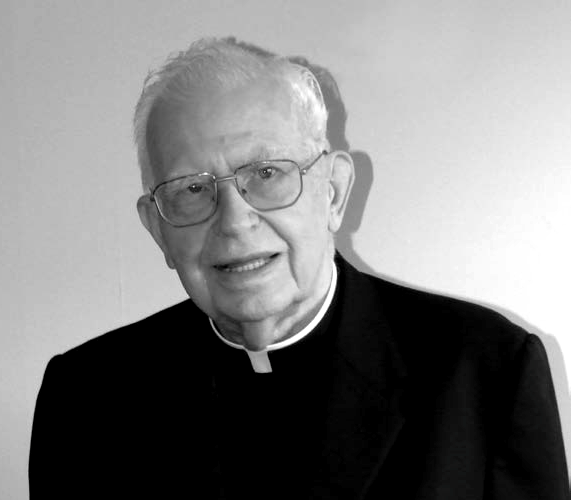
Here is a sermon from the good old days by +Rev. Msgr. Vincent Nicholas Foy (August 14, 1915 – March 13, 2017), from 1943. Readers may recall that Pope Saint Pius X, by the decree Quam Singulari in 1910, lowered the customary age of reception of Holy Communion – after the rigours of the plague[…]Continue reading→
Your Easter Prayer
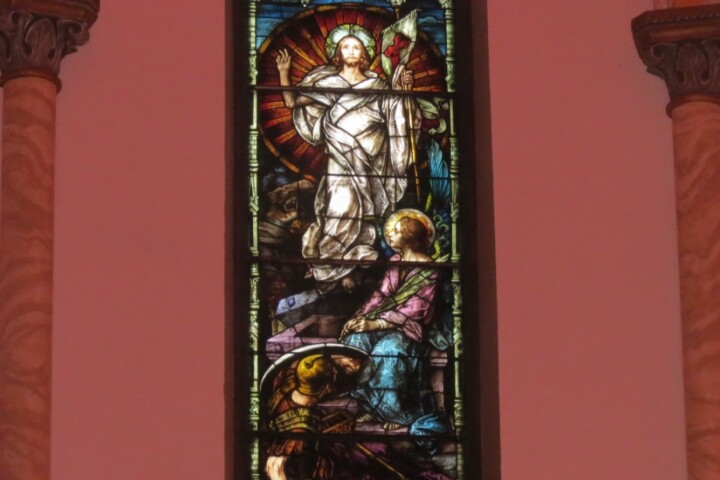
Happy Easter Lord Jesus Christ. It’s Easter day and we smile In the Lord’s in gentle light and His tomb is bare the stone is rolled A story new that must be told And Lord Jesus Christ We love you it’s so true and Lord Jesus Christ has risen From his sleep and the Promises[…]Continue reading→
In the Glorious Light of Easter, Alleluia!
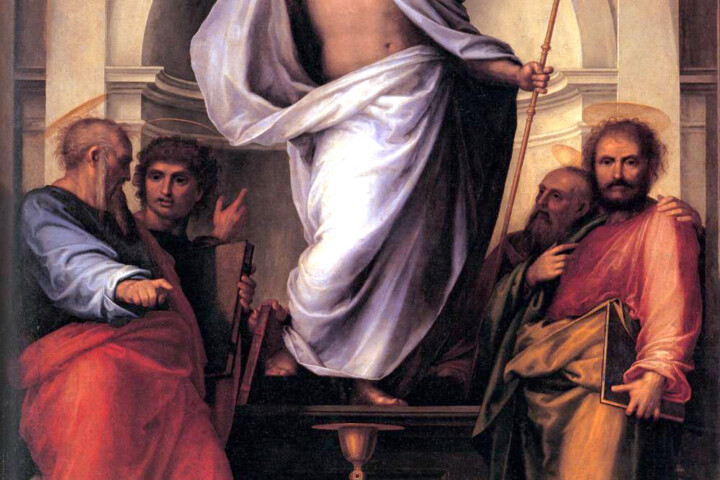
Set your minds on things that are above, not on things that are on earth, for you have died, and your life is hidden with Christ in God. When Christ who is your life is revealed, then you also will be revealed with him in glory (Col. 3:3-4). The Resurrection of Our Lord and Saviour[…]Continue reading→
An Ancient Homily for Holy Saturday
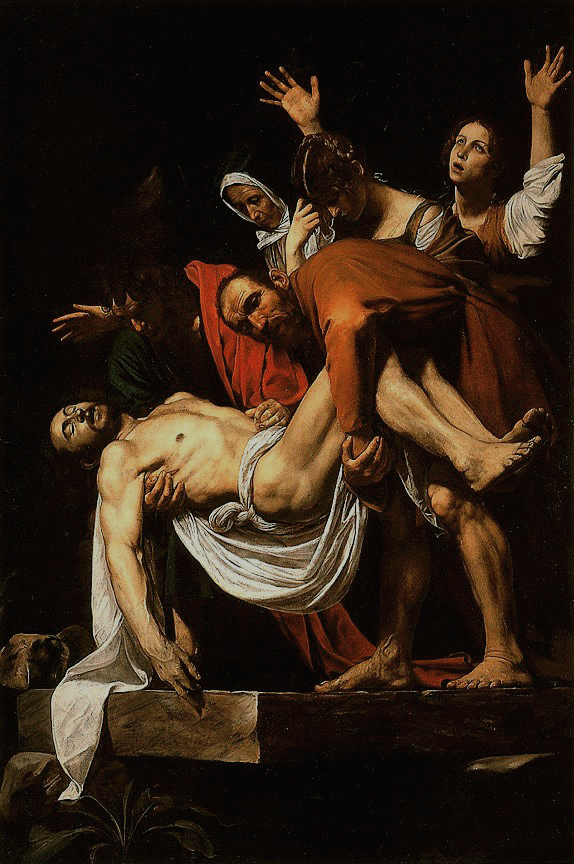
The time between Good Friday and Easter Sunday is one of waiting, in silence, as the world wonders – anticipates – what will happen, after the death of Christ. We re-live this time each year in the anamnesis of our liturgy, and in turn look forward to the glorious re-creation of all things at the[…]Continue reading→